

Archive position — measured, not model output
0 likes on Devpost
2,263 of the 7,850 archived projects have more likes, and 5,587 share exactly 0 — so this project's #5,577 place in the like-ranked listing is a tie-break inside that group, not a ranking.
Projects (log scale)
Likes on Devpost. ▲ marks this project's group.
Show the figures
| Likes | Projects | Share of archive |
|---|---|---|
| 0 | 5,587 | 71.2% |
| 1 | 1,758 | 22.4% |
| 2 | 284 | 3.6% |
| 3–4 | 132 | 1.7% |
| 5–9 | 75 | 1.0% |
| 10+ | 14 | 0.2% |
 User Stories BotA demo video on every pull request
Get a demo video on every new feature
GitHub App that watches your pull requests and records a narrated, captioned demo.
Save time on demo prep and make informed decisions faster with a video walkthrough of every new feature.
Executive Summary
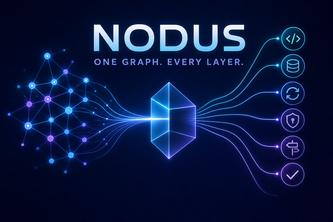
What the company appears to be: Nodus is a code-generation tool for Flutter developers that takes a typed product model and compiles it into multiple mechanical layers of an application: UI logic, local data storage (Drift), backend schema (Supabase), sync protocol, routes, and tests. It aims to reduce duplication across these layers by centralizing the definition of entities and their relationships.
What changed: The author states that Nodus began as a project built during a "Build Week" and evolved from earlier experiments in a package called pacely's model_first. It was designed to address the problem of "duplicated models and configuration" that persist across state models, local tables, API payloads, sync logic, backend constraints, permissions, routes, and test doubles — even when UI code is shared.
Single most important open question: Is there evidence of real-world usage or adoption beyond the author's own development work? The description contains no information about customers, revenue, or product-market fit beyond a demo application.
Note: This analysis is based entirely on the self-reported project description provided by the caller. No external verification or historical data is available.
What The Product Actually Is
The description states that Nodus is:
- A multi-phase compiler for Flutter applications.
- It takes an abstract entity declaration with fields, constraints, relationships, capabilities, and actions.
- It resolves those declarations into a canonical entity graph.
- From this graph, it deterministically emits:
- Reactive, identity-stable Dart entities and typed create/edit/action APIs
- Drift tables, constraints, migrations, observable queries, and durable work
- A transport-neutral sync protocol with operations, codecs, cursors, retries, idempotency, and conflict rebase
- Supabase PostgreSQL schema, checks, grants, RLS, push functions, change history, and receipts
- Typed file-system routes and a production-runtime in-memory test harness
It also states that Nodus was created during Build Week and informed by prior work in pacely's model_first package.
Claim: The product is described as a code-generation tool that centralizes application logic into one typed model and emits multiple layers of code.
Positioning & Claim Evolution
The author positions Nodus as:
- A solution to duplication in multiplatform Flutter development.
- An approach that shifts from "UI shared, but product meaning drifts" to a single typed product model that generates all mechanical layers.
- A tool that makes AI-assisted coding easier by narrowing what a coding agent must invent — the prompt becomes typed domain intent and the compiler owns repetitive cross-layer mechanics.
The claim evolution appears to be:
- Initial problem: Flutter removes UI duplication but not backend/product logic duplication.
- Proposed solution: One typed product model generates all mechanical layers.
- AI integration: AI coding agents can work more effectively when architecture is coherent and inspectable.
- Architectural boundary: Not just "model vs boilerplate", but "real domain decision vs safely derivable fact".
Claim: Nodus positions itself as an architectural approach that reduces drift, improves AI-assisted development, and centralizes product logic.
Target Customer & ICP
The description does not explicitly state the target customer or ideal customer profile (ICP). However, it implies:
- Primary users: Flutter developers working on multiplatform applications.
- Use case: Developers building local-first apps with backend sync capabilities.
- Context: Those who want to reduce duplication in their app’s architecture and improve maintainability.
Inference: Based on the technical scope and use of Supabase, Nodus likely targets mid-to-senior-level Flutter developers working in teams or on complex applications requiring backend integration.
Business Model & Pricing Evidence
There is no evidence provided about business model or pricing. The description does not mention:
- Revenue streams
- Subscription tiers
- Licensing models
- Customer acquisition costs
- Pricing structure
Not evidenced
Technical & Delivery Signals
The description provides several technical signals:
- Built with:
build-runner,code-generation,codex,dart,drift,flutter,gorouter,gpt-5.6,mobx,postgresql,supabase - Uses a multi-phase compiler:
- Discover declarations
- Parse and normalize
- Infer safe facts
- Validate ambiguity and graph invariants
- Freeze one EntityGraphDefinition
- Run independent emitters
- Emitters are forbidden from reinterpreting annotations.
- Supports Supabase as the first built-in schema-capable target.
- Implements a generic Nodus protocol for sync, allowing adapters to be added later (e.g., Firebase, REST).
- Demonstrated with a Tasks app showing offline creation, editing, transitions, ordering, collaboration, activity, tombstones, paging, deep links, and durable sync scheduling.
Claim: The tool is built on a compiler architecture that ensures consistency across multiple layers of code generation.
Traction & Maturity Signals
The description includes:
- Built during Build Week
- Created as a standalone documented package, CLI, CI project, and executable reference application
- Passed 316 package Dart tests, 14 package Flutter tests, 12 application tests, static analysis, dartdoc validation, generated-output checks, and pub dry-run
- Built the Tasks demo as a universal release-mode macOS application
- Repository: https://github.com/sidux/nodus
However, there is no evidence of:
- Customers or users
- Revenue or monetization
- Market traction beyond the author’s own development
- Adoption metrics or usage data
Not evidenced
Competitive Context
The description does not mention specific competitors. However, it implies Nodus operates in a space related to:
- Flutter multiplatform development
- Code generation tools
- Local-first architecture frameworks
- Backend-as-a-service integrations (e.g., Supabase)
It also mentions that the approach is informed by earlier experiments (model_first) and that AI-assisted coding tools are relevant.
Inference: Nodus likely competes with or complements existing Flutter tooling, local-first frameworks, and backend services like Supabase.
Open Questions & Risks
Key risks and open questions based on the description:
- Single-person team: Only one member listed (Ahmed Lebbada), which may limit scalability.
- No external validation or traction: No evidence of customers, revenue, or product-market fit.
- Early-stage tooling: Version 0.1.0 is mentioned; not yet stable or widely adopted.
- AI integration claims: The description makes strong claims about AI-assisted development but lacks measurable data to back them up.
- Limited backend support: Supabase is the only production-ready target in version 0.1.0; other adapters are not bundled yet.
Inference: The tool may be technically sound, but its commercial viability depends on adoption and feedback from real users.
Questions the description leaves open
- What specific problems do you see in current Flutter development workflows that Nodus solves?
- How does Nodus handle edge cases or ambiguous declarations in the product model?
- Have you tested Nodus with larger teams or enterprise-level projects?
- What is your plan for expanding beyond Supabase as a backend target?
- Can you share any feedback from early adopters or internal testing?
- How do you plan to monetize this tool, and what are the key assumptions behind that strategy?
- What are the main challenges in maintaining compatibility with future versions of Flutter and Supabase?
Overall Assessment
Assessment: Early-stage technical tooling with strong architectural foundations but no demonstrated traction or commercial viability.
- Strengths: Well-thought-out compiler architecture, clear problem definition, alignment with trends in local-first development and AI-assisted coding.
- Weaknesses: Single-founder project, no revenue or customer data, limited backend support, unproven market demand.
- Risk Level: High — depends on whether the author can scale beyond personal use and attract real-world adoption.
Not evidenced: No financials, no customers, no revenue, no competitive analysis.
User Stories BotA demo video on every pull request
Get a demo video on every new feature
GitHub App that watches your pull requests and records a narrated, captioned demo.
Save time on demo prep and make informed decisions faster with a video walkthrough of every new feature.
Source
Submitted to the OpenAI 2026 hackathon on Devpost. Project home on Devpost. Back to the full gallery on Devpost.
This competitive analysis was produced by top-founders.com (opens in a new tab)
Generated by a language model from this project's public Devpost page — its tagline, the author's own write-up and any built-with tags listed there — as captured in August 2026. Short quotations are the author's words. It is an opinion on the idea as a business, not on the people behind it, and it reflects the description as published then. If the project has moved on, request a correction below. The analysis is not independent research and contains no verified traction, revenue or customer data.
An independent guide by KFG International LLC — not affiliated with, endorsed by, or connected to Devpost or OpenAI.