

Archive position — measured, not model output
0 likes on Devpost
2,263 of the 7,850 archived projects have more likes, and 5,587 share exactly 0 — so this project's #5,486 place in the like-ranked listing is a tie-break inside that group, not a ranking.
Projects (log scale)
Likes on Devpost. ▲ marks this project's group.
Show the figures
| Likes | Projects | Share of archive |
|---|---|---|
| 0 | 5,587 | 71.2% |
| 1 | 1,758 | 22.4% |
| 2 | 284 | 3.6% |
| 3–4 | 132 | 1.7% |
| 5–9 | 75 | 1.0% |
| 10+ | 14 | 0.2% |
 User Stories BotA demo video on every pull request
Get a demo video on every new feature
GitHub App that watches your pull requests and records a narrated, captioned demo.
Save time on demo prep and make informed decisions faster with a video walkthrough of every new feature.
Executive Summary
What the company appears to be
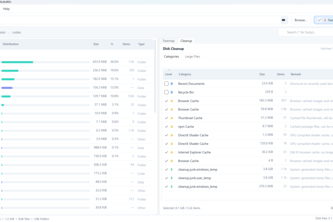
NcduWin is a self-reported desktop application for Windows that brings the functionality of the Linux terminal-based disk usage analyzer ncdu into a modern GUI environment using Qt. It is described as a personal project built by one developer (dingfeng xiao) and submitted to a hackathon.
What changed
The description indicates this is a standalone, self-developed tool with no evidence of prior commercialization or product-market fit. It was built for personal learning and demonstration purposes, not as a commercial offering.
Single most important open question
Is there any indication that the project has evolved into a product with traction, revenue, or customer adoption beyond its author's own use and hackathon submission?
Note: This analysis is based entirely on the self-reported description provided by the author. No third-party verification, archived data, or external sources are available.
What The Product Actually Is
The description states that NcduWin is a disk usage analyzer for Windows, inspired by the Linux tool ncdu. It is implemented as a Qt-based desktop application with treemap visualizations and a light theme. Key components include:
- A core scanning engine (
DiskScanner,CleanupScanner) that traverses file systems. - Windows API wrappers (
WinApi.*) to handle filesystem enumeration, reparse points, and special-case handling. - UI elements such as
TreemapWidget,SizeBarDelegate, andBreadcrumbBar. - Cleanup features with safety mechanisms like confirmation prompts and Recycle Bin integration.
- Localization support in English and Chinese.
It is built using C++, CMake, and Qt 6, with cross-platform build configurations via CMakePresets.json and CMakeSettings.json.
Claim: The project is a desktop application for Windows.
Evidence: Author’s own write-up.
Positioning & Claim Evolution
The description does not indicate any commercial positioning or market strategy beyond the author's personal interest in recreating ncdu's functionality on Windows. It was submitted to a hackathon and is described as a learning exercise rather than a product intended for public consumption or monetization.
Claim: The project is positioned as a tool inspired by
ncdu.Evidence: Author’s own write-up.
Target Customer & ICP
There is no evidence of target customer segments, personas, or an identified ideal customer profile (ICP). The project appears to be a personal endeavor with no indication of market research or user feedback.
Claim: No target customer or ICP defined.
Evidence: Not evidenced.
Business Model & Pricing Evidence
There is no evidence of any business model, pricing strategy, monetization plans, or revenue streams. The project is described as a personal tool and hackathon submission with no commercial intent.
Claim: No business model or pricing information provided.
Evidence: Not evidenced.
Technical & Delivery Signals
The author reports that the application:
- Uses Qt 6 for GUI components.
- Implements background scanning using threads to keep UI responsive.
- Handles Windows-specific edge cases like reparse points and long paths.
- Supports localization and cross-toolchain builds via CMake.
- Includes cleanup features with safety checks.
It is built with a modular architecture, separating core logic from UI and using Qt signals/slots for thread coordination.
Claim: The project uses modern C++/Qt practices and handles complex filesystem operations safely.
Evidence: Author’s own write-up.
Traction & Maturity Signals
There is no evidence of user adoption, downloads, or usage metrics. The project was submitted to a hackathon and has no mention of public release, marketing, or customer engagement.
Claim: No traction or maturity signals.
Evidence: Not evidenced.
Competitive Context
The author references ncdu, a well-known open-source disk usage analyzer for Unix systems. However, there is no evidence of competitive analysis, market positioning, or awareness of existing Windows alternatives.
Claim: The project is inspired by
ncdu.Evidence: Author’s own write-up.
Open Questions & Risks
- No commercial traction: The project is a personal tool with no evidence of adoption.
- Single developer: Only one person involved, which may limit scalability or long-term maintenance.
- Hackathon submission: Not a product intended for market entry or commercial viability.
- No monetization strategy: No indication of how the tool would be sold or supported.
Inference: The project lacks commercial viability without further development or evidence of traction.
Evidence: Author’s own write-up.
Questions the description leaves open
- What is the intended use case for this tool beyond personal learning?
- Are there any plans to release it publicly, and if so, how will it be distributed?
- Has there been any user feedback or testing beyond the author’s own use?
- Is there a roadmap for feature development or commercialization?
- What are the technical limitations of this tool in real-world usage?
Overall Assessment
There is no evidence that NcduWin has evolved into a product with commercial potential, traction, or market demand. It remains a personal project submitted to a hackathon and lacks any signs of business development or customer engagement.
Inference: Not a viable investment or partnership opportunity at this stage.
Evidence: Author’s own write-up.
User Stories BotA demo video on every pull request
Get a demo video on every new feature
GitHub App that watches your pull requests and records a narrated, captioned demo.
Save time on demo prep and make informed decisions faster with a video walkthrough of every new feature.
Source
Submitted to the OpenAI 2026 hackathon on Devpost. Project home on Devpost. Back to the full gallery on Devpost.
This competitive analysis was produced by top-founders.com (opens in a new tab)
Generated by a language model from this project's public Devpost page — its tagline, the author's own write-up and any built-with tags listed there — as captured in August 2026. Short quotations are the author's words. It is an opinion on the idea as a business, not on the people behind it, and it reflects the description as published then. If the project has moved on, request a correction below. The analysis is not independent research and contains no verified traction, revenue or customer data.
An independent guide by KFG International LLC — not affiliated with, endorsed by, or connected to Devpost or OpenAI.