

Archive position — measured, not model output
9 likes on Devpost
14 of the 7,850 archived projects have more likes, and 5 share exactly 9 — so this project's #16 place in the like-ranked listing is a tie-break inside that group, not a ranking.
Projects (log scale)
Likes on Devpost. ▲ marks this project's group.
Show the figures
| Likes | Projects | Share of archive |
|---|---|---|
| 0 | 5,587 | 71.2% |
| 1 | 1,758 | 22.4% |
| 2 | 284 | 3.6% |
| 3–4 | 132 | 1.7% |
| 5–9 | 75 | 1.0% |
| 10+ | 14 | 0.2% |
 User Stories BotA demo video on every pull request
Get a demo video on every new feature
GitHub App that watches your pull requests and records a narrated, captioned demo.
Save time on demo prep and make informed decisions faster with a video walkthrough of every new feature.
Executive Summary
What the company appears to be
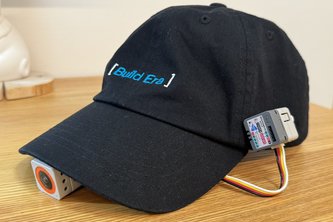
Moment Scraper is a wearable camera project that allows users to capture moments by framing them with their fingers. The device records both a photo and ambient sound when a gesture is detected, aiming to preserve not just what was seen but also the emotional context of the moment.
What changed
This is a self-reported project submitted to the OpenAI 2026 hackathon. It does not indicate any prior commercial activity or product release beyond its development stage.
Single most important open question
Is there evidence of traction, revenue, or customer adoption that would suggest this concept has moved beyond prototype?
What The Product Actually Is
The description states:
- Moment Scraper is a wearable camera.
- It captures moments by making a finger frame gesture.
- When the gesture is detected, it records a photo and ambient sound.
- The goal is to preserve both visual content and emotional context ("what it felt like").
Inference The product appears to be a hardware prototype designed for personal use, likely in a consumer or lifestyle space.
Not evidenced No details on how the gesture detection works beyond “Codex” helping build it. No information on image quality, battery life, or processing unit specs.
Positioning & Claim Evolution
The description states:
- The inspiration came from wanting to capture meaningful moments with a child without using a smartphone or continuous vlog camera.
- It aims to preserve not only what was seen but also the feeling of being there.
- The team claims to have built fast, accurate finger-frame detection on an ESP32 using GPT-5.6 and Codex — without writing code themselves.
Inference The positioning is centered around emotional memory capture and ease-of-use for personal moments, leveraging AI tools in development.
Not evidenced No indication of prior market research or user feedback. No mention of competitive positioning or differentiation from existing wearable cameras or gesture-based devices.
Target Customer & ICP
The description states:
- The inspiration was personal — capturing moments with a child.
- The goal is to make it easy to capture meaningful moments without interrupting the experience.
Inference The target customer may be parents, caregivers, or individuals who value spontaneous, emotionally rich documentation of life events.
Not evidenced No segmentation data, user personas, or market size estimates. No indication of whether this is a consumer or enterprise product.
Business Model & Pricing Evidence
The description states:
- This is a hackathon project submitted to the OpenAI 2026 hackathon.
- There is no mention of pricing, monetization strategy, or business model.
Inference No evidence of any commercial viability or revenue streams at this time.
Not evidenced No pricing information, subscription plans, or sales channels are mentioned.
Technical & Delivery Signals
The description states:
- Built with: atoms3r, atoms3rm12, builderacap, codex, echobase, esp32.
- The gesture detection was built using Codex and GPT-5.6.
- Challenges included improving recognition accuracy on ESP32 hardware while keeping latency low.
- Accomplishments include fast, accurate finger-frame detection without writing code.
Inference The project uses AI-assisted development tools and focuses on embedded systems (ESP32). It is a proof-of-concept with some technical execution.
Not evidenced No details on scalability, reliability, or performance in real-world conditions. No mention of future hardware improvements or software architecture.
Traction & Maturity Signals
The description states:
- Submitted to the OpenAI 2026 hackathon.
- Built with AI tools like Codex and GPT-5.6.
- The team is proud of building it without writing code themselves.
- They want to rethink the technology stack and bring it to people around the world.
Inference This is a prototype or early-stage product, not yet commercially available.
Not evidenced No data on user testing, adoption rates, or customer feedback. No indication of any revenue, ARR, or customer base.
Competitive Context
The description states:
- The team wanted to avoid the slowness of smartphones and the intrusiveness of continuous recording.
- They aim to capture intentional moments.
Inference It competes with traditional cameras, vloggers, and smartwatches that record audio/video.
Not evidenced No mention of existing competitors or market analysis. No indication of how this differs from current wearable camera offerings.
Open Questions & Risks
- The project is described as a hackathon submission — no commercial traction or product-market fit evidence.
- The team size is listed as 1 person, with only one member named (uezo chan).
- It relies heavily on AI tools for development and lacks any indication of human engineering oversight beyond vision-setting.
- No mention of hardware manufacturing, distribution, or user experience design.
- The claim that it was built without writing code raises questions about the depth of technical control and scalability.
Inference There is a high risk that this remains a prototype with no clear path to commercialization or product-market fit.
Questions the description leaves open
- What specific user problems are you solving, and how do you know?
- Have you tested the gesture detection in real-world conditions?
- How do you plan to scale beyond the current prototype?
- What is your roadmap for hardware manufacturing or partnerships?
- Are there any existing competitors or similar products in this space?
- Do you have a clear vision of how this will be monetized?
Overall Assessment
Not evidenced No financials, revenue, customer data, or traction metrics are available.
Inference This is an early-stage concept with no commercial evidence. It may represent a promising idea in the wearable tech or emotional memory capture space, but lacks any indication of viability or progress toward product-market fit.
Confidence level Low — based on self-reported project description only.
Customer Segments
inferred
The description does not explicitly identify customer segments. However, based on the stated purpose of capturing meaningful moments for personal use — particularly in the context of spending time with a child — it can be inferred that the target audience may include parents or caregivers who value preserving emotional and visual memories.
Value Propositions
evidenced
The description states: “Moment Scraper is a wearable camera that lets you capture a moment by making a frame with your fingers. When the gesture is detected, it records both a photo and the ambient sound around you. The goal is to preserve not only what you saw, but also what it felt like to be there.” This describes a value proposition centered on capturing not just visual content but also the emotional context of an event.
Channels
inferred
The description does not specify how the product will reach users. It can be inferred that if this were to become a commercial product, it might use digital channels such as online marketing or direct-to-consumer sales, though no evidence supports this claim directly.
Customer Relationships
inferred
There is no explicit mention of customer relationships in the description. However, given that the project is described as a personal tool for capturing moments, it can be inferred that the relationship would likely be one of personal use rather than formal support or service models.
Revenue Streams
inferred
The description does not indicate any revenue streams. It is unclear whether the creators intend to monetize this device through sales, subscriptions, or other means; thus, this remains an inference.
Key Resources
evidenced
The description states: “We prepared a camera, microphone, speaker, processing unit, and battery.” These are listed as key hardware components used in building the prototype. Additionally, “It supported us through the whole process, from writing and debugging the code to improving the interaction between the hardware and software,” referring to Codex, which is implied to be a key software resource.
Key Activities
evidenced
The description states: “We built fast, accurate finger-frame detection on an ESP32, and did it with GPT-5.6 and Codex without writing a single line of code ourselves.” This indicates that the primary activity was development using AI tools like Codex and GPT.
Key Partnerships
evidenced
The description mentions: “Then we asked Codex to help us build the rest.” This implies a partnership or reliance on an AI tool (Codex) for development purposes. No other partnerships are mentioned.
Cost Structure
inferred
There is no information in the description regarding costs associated with production, development, or operations. Therefore, this remains an inference.
Evidence & Gaps
- Customer Segments: Marked as inferred. To become evidenced, the description would need to explicitly name or describe target user groups.
- Value Propositions: Marked as evidenced. The value proposition is clearly stated in the description.
- Channels: Marked as inferred. Evidence of distribution methods or marketing channels is missing from the description.
- Customer Relationships: Marked as inferred. No explicit statement about how customers interact with the product or company exists.
- Revenue Streams: Marked as inferred. There is no mention of monetization strategies in the description.
- Key Resources: Marked as evidenced. The description lists hardware and software resources used.
- Key Activities: Marked as evidenced. The description explicitly states that development was done using AI tools.
- Key Partnerships: Marked as evidenced. The reliance on Codex is stated, but no other partnerships are mentioned.
- Cost Structure: Marked as inferred. No cost-related data or structure is provided in the description.
User Stories BotA demo video on every pull request
Get a demo video on every new feature
GitHub App that watches your pull requests and records a narrated, captioned demo.
Save time on demo prep and make informed decisions faster with a video walkthrough of every new feature.
Source
Submitted to the OpenAI 2026 hackathon on Devpost. Project home on Devpost. Back to the full gallery on Devpost.
This competitive analysis was produced by top-founders.com (opens in a new tab)
Generated by a language model from this project's public Devpost page — its tagline, the author's own write-up and any built-with tags listed there — as captured in August 2026. Short quotations are the author's words. It is an opinion on the idea as a business, not on the people behind it, and it reflects the description as published then. If the project has moved on, request a correction below. The analysis is not independent research and contains no verified traction, revenue or customer data.
An independent guide by KFG International LLC — not affiliated with, endorsed by, or connected to Devpost or OpenAI.