

Archive position — measured, not model output
0 likes on Devpost
2,263 of the 7,850 archived projects have more likes, and 5,587 share exactly 0 — so this project's #5,217 place in the like-ranked listing is a tie-break inside that group, not a ranking.
Projects (log scale)
Likes on Devpost. ▲ marks this project's group.
Show the figures
| Likes | Projects | Share of archive |
|---|---|---|
| 0 | 5,587 | 71.2% |
| 1 | 1,758 | 22.4% |
| 2 | 284 | 3.6% |
| 3–4 | 132 | 1.7% |
| 5–9 | 75 | 1.0% |
| 10+ | 14 | 0.2% |
 User Stories BotA demo video on every pull request
Get a demo video on every new feature
GitHub App that watches your pull requests and records a narrated, captioned demo.
Save time on demo prep and make informed decisions faster with a video walkthrough of every new feature.
Executive Summary
What the company appears to be
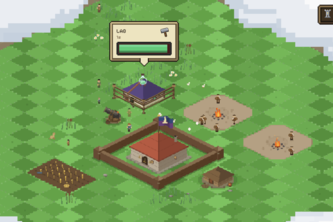
A single-person project submitted to the OpenAI 2026 hackathon, titled Medieval Battle World, described as an MMO village building tower defense game. The author states it allows players to upgrade defenses, train armies, and invade friends.
What changed
This is a hackathon submission with no evidence of prior development or commercial activity. It appears to be a prototype or proof-of-concept project.
The single most important open question
Is this project intended as a playable prototype, or does it represent the beginning of a larger product that will evolve beyond its current form?
Note
This analysis is based solely on the self-reported, unverified description provided by the author. No revenue, traction, customer data, or independent verification is available.
What The Product Actually Is
The description states: “A MMO village building tower defense game.”
- The author describes a game where players can upgrade defenses, train armies, and invade friends.
- It is built using codex, phaser.js, and react.
- It was submitted to the OpenAI 2026 hackathon on Devpost.
Inference Based on the tagline and tech stack, this likely refers to a browser-based multiplayer game with elements of strategy and social interaction. However, no gameplay details or mechanics are described.
Not evidenced No information on core gameplay loop, monetization model, or user experience.
Positioning & Claim Evolution
The author states: “A MMO village building tower defense game. Upgrade your defenses, train an army and invade your friends!”
- The positioning is self-described as a hybrid of MMO, village building, and tower defense genres.
- It includes social elements (invading friends).
- No claims about market fit, user acquisition, or competitive advantage are made.
Inference The project positions itself as a casual multiplayer strategy game with a focus on player interaction and progression systems. However, this is a self-stated positioning, not validated by any external data.
Not evidenced No evidence of prior claims, marketing, or evolution of the product’s positioning.
Target Customer & ICP
The description states: “Upgrade your defenses, train an army and invade your friends!”
- The target is implied to be players interested in MMO, strategy, and social gameplay.
- It suggests a casual-to-moderate player base who enjoy building and competing with others.
Inference The ICP likely includes fans of tower defense, village-building, or multiplayer strategy games. However, no segmentation or user persona data is provided.
Not evidenced No evidence of customer research, user interviews, or defined buyer personas.
Business Model & Pricing Evidence
The description does not include any information on:
- Monetization model
- Pricing structure
- Revenue streams
Not evidenced No indication of whether the game will be free-to-play, paid, subscription-based, or ad-supported.
Technical & Delivery Signals
The author states: “Built with (author-declared): codex, phaser.js, react”
- The project uses phaser.js for game development and react for UI.
- It was submitted to a hackathon, suggesting it is likely a prototype or early-stage product.
Inference The tech stack suggests a browser-based game with modern web development practices. However, no evidence of scalability, performance, or delivery timeline is provided.
Not evidenced No information on deployment, backend architecture, or technical roadmap.
Traction & Maturity Signals
The description states: “This project was submitted to the OpenAI 2026 hackathon.”
- It is a hackathon submission.
- The team size is listed as 1 person.
Inference This is likely an early-stage prototype or proof-of-concept, not a mature product. No evidence of user engagement, retention, or growth metrics.
Not evidenced No data on user numbers, engagement, or product usage.
Competitive Context
The description does not provide any information about:
- Competitors
- Market size
- Product differentiation
Not evidenced No competitive analysis or positioning relative to existing games in the tower defense or MMO genres.
Open Questions & Risks
- The project is a single-person hackathon submission, with no evidence of team expansion or product development.
- No evidence of traction, monetization, or user engagement.
- The author does not describe any roadmap or future plans beyond the hackathon submission.
- The tech stack and genre suggest a niche or experimental game, but no validation of market demand.
Inference There is a high risk that this project will remain a prototype without further development or commercial viability.
Not evidenced No evidence of product-market fit, funding, or strategic direction beyond the hackathon.
Questions the description leaves open
- What inspired the creation of this game?
- Is this intended to be a long-term project or just a prototype?
- Have you considered monetization or user engagement strategies?
- Are there any plans for team expansion or product development beyond this hackathon submission?
- How do you plan to differentiate this from existing tower defense or MMO games?
Overall Assessment
The description states: “This project was submitted to the OpenAI 2026 hackathon.”
Assessment This is a single-person hackathon submission with no evidence of traction, revenue, or product maturity. It is not ready for investment or partnership at this stage.
Inference If this is a prototype, it may be a starting point for further development — but there is no indication that the project has moved beyond its initial phase.
Not evidenced No evidence of commercial viability, team capability, or strategic direction.
User Stories BotA demo video on every pull request
Get a demo video on every new feature
GitHub App that watches your pull requests and records a narrated, captioned demo.
Save time on demo prep and make informed decisions faster with a video walkthrough of every new feature.
Source
Submitted to the OpenAI 2026 hackathon on Devpost. Project home on Devpost. Back to the full gallery on Devpost.
This competitive analysis was produced by top-founders.com (opens in a new tab)
Generated by a language model from this project's public Devpost page — its tagline and any built-with tags listed there, since the author published no write-up — as captured in August 2026. Short quotations are the author's words. It is an opinion on the idea as a business, not on the people behind it, and it reflects the description as published then. If the project has moved on, request a correction below. The analysis is not independent research and contains no verified traction, revenue or customer data.
An independent guide by KFG International LLC — not affiliated with, endorsed by, or connected to Devpost or OpenAI.