

Archive position — measured, not model output
0 likes on Devpost
2,263 of the 7,850 archived projects have more likes, and 5,587 share exactly 0 — so this project's #5,209 place in the like-ranked listing is a tie-break inside that group, not a ranking.
Projects (log scale)
Likes on Devpost. ▲ marks this project's group.
Show the figures
| Likes | Projects | Share of archive |
|---|---|---|
| 0 | 5,587 | 71.2% |
| 1 | 1,758 | 22.4% |
| 2 | 284 | 3.6% |
| 3–4 | 132 | 1.7% |
| 5–9 | 75 | 1.0% |
| 10+ | 14 | 0.2% |
 User Stories BotA demo video on every pull request
Get a demo video on every new feature
GitHub App that watches your pull requests and records a narrated, captioned demo.
Save time on demo prep and make informed decisions faster with a video walkthrough of every new feature.
Executive Summary
What the company appears to be
MEDI PALET LINKs is a self-reported offline-first desktop tool designed for healthcare environments, aiming to streamline treatment schedules, medication supply alerts, and order preparation workflows.
What changed
The project was submitted to the OpenAI 2026 hackathon on Devpost. No further development or public updates are evidenced.
Single most important open question
Is there any evidence of actual user testing, customer feedback, or product-market fit beyond the hackathon submission?
What The Product Actually Is
The description states that MEDI PALET LINKs is "an offline-first desktop tool that brings treatment schedules, medication supply alerts, and order preparation into one workflow." It was built for a hackathon and is described as a desktop application.
Evidence
- The author describes it as an “offline-first desktop tool”
- It integrates “treatment schedules,” “medication supply alerts,” and “order preparation”
- Built with Python, SQLite, PySide6, openpyxl, and Codex/GPT
Inference
- Based on the tech stack (Python, SQLite, PySide6), it likely runs as a local desktop application
- The use of GPT suggests some AI integration or automation may be involved
Not evidenced
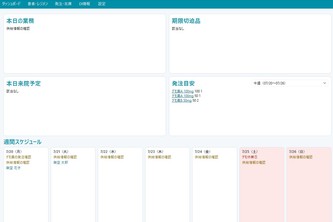
- No screenshots, UI mockups, or functional demonstrations
- No indication of whether it's a prototype, MVP, or full product
- No evidence of actual functionality beyond the hackathon submission
Positioning & Claim Evolution
The author states that MEDI PALET LINKs is an offline-first desktop tool for healthcare workflow automation. It positions itself as a solution to streamline treatment schedules, medication alerts, and order preparation.
Evidence
- Tagline: “An offline-first desktop tool that brings treatment schedules, medication supply alerts, and order preparation into one workflow.”
- Submitted to OpenAI 2026 hackathon
Inference
- The positioning implies a niche in healthcare environments where offline access is critical
- The focus on workflow integration suggests an intent to reduce manual tasks for medical staff
Not evidenced
- No evidence of prior versions or iterative development
- No indication of how the tool differentiates from existing tools (e.g., EHR systems, pharmacy management software)
- No claims about performance, scalability, or adoption
Target Customer & ICP
The description implies that MEDI PALET LINKs targets healthcare professionals or facilities where treatment schedules and medication orders are managed.
Evidence
- The tool is described as addressing “treatment schedules,” “medication supply alerts,” and “order preparation”
- It is a desktop tool, suggesting it’s for use in clinical or administrative settings
Inference
- Likely intended for nurses, pharmacists, or clinic staff who manage patient care workflows
- May be aimed at facilities that require offline access due to network constraints
Not evidenced
- No specific customer personas or segments identified
- No evidence of customer interviews, feedback, or user research
- No indication of whether it targets hospitals, clinics, or private practices
Business Model & Pricing Evidence
There is no evidence in the description of a business model or pricing strategy.
Evidence
- No mention of monetization, licensing, subscriptions, or sales channels
- No pricing information provided
Inference
- If it's a hackathon project, it may be non-commercial or experimental
- The offline-first nature suggests possible enterprise or institutional use cases that might involve B2B licensing
Not evidenced
- No indication of revenue model
- No evidence of pricing tiers or customer acquisition costs
- No mention of partnerships or distribution channels
Technical & Delivery Signals
The project is built using Python, SQLite, PySide6, openpyxl, and Codex/GPT.
Evidence
- Built with: codex, gpt-5.6, openpyxl, pyside6, python, sqlite
- Submitted to a hackathon
Inference
- The use of PySide6 suggests it’s a GUI desktop application
- SQLite implies local data storage
- GPT integration may be used for automation or content generation
- openpyxl indicates Excel file handling capabilities
Not evidenced
- No evidence of deployment, scalability, or cloud integration
- No indication of performance metrics or error handling
- No mention of security or compliance features (e.g., HIPAA)
Traction & Maturity Signals
There is no evidence of traction or maturity beyond the hackathon submission.
Evidence
- Submitted to OpenAI 2026 hackathon
- No further updates, releases, or public usage reported
Inference
- The project may be in early development or prototype stage
- Lack of follow-up suggests either no commercial interest or no further development
Not evidenced
- No user base, customer feedback, or adoption metrics
- No evidence of product iterations or improvements
- No mention of funding, team growth, or partnerships
Competitive Context
No competitive analysis is evident in the description.
Evidence
- No mention of competitors or market landscape
- No indication of how MEDI PALET LINKs compares to existing tools
Inference
- Likely competes with EHR systems, pharmacy management tools, or workflow automation platforms
- May be positioned against tools that manage medication orders or treatment schedules
Not evidenced
- No evidence of competitive advantages or market differentiation
- No mention of existing solutions in the space
Open Questions & Risks
Several risks and open questions emerge from the lack of evidence:
- No traction or user feedback: The project is only described as a hackathon submission with no follow-up.
- Unproven market fit: No evidence of customer validation or product-market fit.
- Limited technical depth: The tech stack suggests a basic prototype, not a scalable solution.
- No business model: No indication of how the tool will be monetized or deployed.
- Potential compliance issues: In healthcare, offline tools must meet strict data security and privacy standards (e.g., HIPAA) — no evidence of this is provided.
Questions the description leaves open
- What specific workflows in healthcare does MEDI PALET LINKs aim to automate or improve?
- How did you identify the need for this tool? Was there any user research or feedback from healthcare professionals?
- Is this a prototype, or are you planning to develop it further for commercial use?
- What is your plan for data security and compliance (e.g., HIPAA)?
- Are there any existing tools in the market that you’re trying to replace or complement?
- How do you intend to monetize or deploy this tool if it’s not just a hackathon project?
Overall Assessment
Not evidenced
There is insufficient evidence to assess whether MEDI PALET LINKs has investment or partnership potential. The project is described only as a hackathon submission with no traction, business model, or customer validation.
Confidence Low
Reasoning
The description provides no evidence of revenue, customers, product-market fit, or commercial viability. It is entirely self-reported and unverified.
User Stories BotA demo video on every pull request
Get a demo video on every new feature
GitHub App that watches your pull requests and records a narrated, captioned demo.
Save time on demo prep and make informed decisions faster with a video walkthrough of every new feature.
Source
Submitted to the OpenAI 2026 hackathon on Devpost. Project home on Devpost. Back to the full gallery on Devpost.
This competitive analysis was produced by top-founders.com (opens in a new tab)
Generated by a language model from this project's public Devpost page — its tagline and any built-with tags listed there, since the author published no write-up — as captured in August 2026. Short quotations are the author's words. It is an opinion on the idea as a business, not on the people behind it, and it reflects the description as published then. If the project has moved on, request a correction below. The analysis is not independent research and contains no verified traction, revenue or customer data.
An independent guide by KFG International LLC — not affiliated with, endorsed by, or connected to Devpost or OpenAI.