

Archive position — measured, not model output
1 like on Devpost
505 of the 7,850 archived projects have more likes, and 1,758 share exactly 1 — so this project's #1,409 place in the like-ranked listing is a tie-break inside that group, not a ranking.
Projects (log scale)
Likes on Devpost. ▲ marks this project's group.
Show the figures
| Likes | Projects | Share of archive |
|---|---|---|
| 0 | 5,587 | 71.2% |
| 1 | 1,758 | 22.4% |
| 2 | 284 | 3.6% |
| 3–4 | 132 | 1.7% |
| 5–9 | 75 | 1.0% |
| 10+ | 14 | 0.2% |
 User Stories BotA demo video on every pull request
Get a demo video on every new feature
GitHub App that watches your pull requests and records a narrated, captioned demo.
Save time on demo prep and make informed decisions faster with a video walkthrough of every new feature.
Executive Summary
What the company appears to be: MAMA AI is a self-reported AI-powered family meal planning platform designed to generate one intelligent meal plan for multiple family members with different dietary needs, preferences and health contexts. The project was built as a hackathon submission for the OpenAI 2026 hackathon.
What changed: The description states that this is a hackathon MVP, not a finished product. It represents an initial concept demonstration rather than a commercial offering.
Single most important open question: Is there evidence of any traction, revenue or customer adoption beyond the hackathon submission?
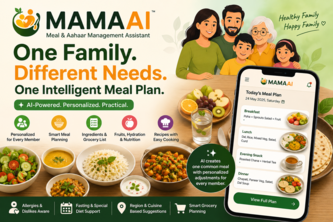
The author states MAMA AI is an AI-powered family food planning platform built around the idea of "One Family. Different Needs. One Intelligent Meal Plan." The description indicates it was built using OpenAI Codex and a modern web stack including Next.js, React, TypeScript, and AWS services. It claims to consider individual family member details such as age, weight, allergies, dietary requirements, food preferences, cuisine preference, region, season, food availability and budget.
However, there is no evidence of revenue, customers, or adoption beyond the hackathon submission. The project has no stated funding rounds, headcount, or commercial traction. The author describes it as a "starting point" with a roadmap toward production but provides no data on progress or validation.
The description makes claims about AI capabilities and family meal planning but does not substantiate any actual product performance or market validation. It is unclear whether the platform has moved beyond the MVP stage, whether it has been tested with real families, or whether there are any commercial partnerships or user feedback mechanisms in place.
What The Product Actually Is
The description states that MAMA AI is an "AI-powered family food planning platform built around one idea: One Family. Different Needs. One Intelligent Meal Plan."
It is described as a meal & Aahaar Management Assistant that plans meals for families by considering:
- Age, height, weight, activity level
- Food preferences, allergies, dislikes, dietary requirements
- Cuisine preference, region, season, food availability
- Budget considerations
- Fasting-aware meal planning
- Fruits and hydration recommendations
- Ingredient quantities based on family strength
- Recipes and cooking guidance
- Meal replacement and alternatives
- Grocery planning
The author states that MAMA AI is designed around everyday family needs such as daily, weekly and monthly meal planning, personalized portions and meal adjustments, food allergies and preferences, regional and seasonal choices, fasting-aware planning, and grocery planning.
The platform is described as not being a chatbot but rather a system where "family information needs to become structured context so the system can reason about the family as a group."
Positioning & Claim Evolution
The description states that MAMA AI was inspired by how mothers and grandmothers have traditionally managed family meals, remembering who likes what, who should avoid something, what was cooked recently, what is available in the kitchen, what suits the season, and what the family can afford.
The positioning is described as bringing "the wisdom of Maa (Mother)" into the "AI era." The tagline states: "One family, different needs, one intelligent meal plan—personalized by AI with the wisdom and care of Maa (Mother)."
The author claims that MAMA AI approaches food planning from a family perspective rather than simply becoming another calorie tracker or recipe generator. It aims to understand individuals while planning together for the whole family.
The description states that the platform is designed around the concept of "Common Family Meal + Individual Modification + Individual Portion" and that it tries to make one practical family meal work better for everyone.
Target Customer & ICP
The description states that MAMA AI is designed for families with different needs, including:
- Children
- Working adults
- Elderly parents
- Someone trying to stay fit
- A person with special dietary needs
It appears to target families where multiple people eat from the same kitchen but have different dietary requirements, health contexts, and preferences.
The author states that most diet apps focus on one individual, which led to the idea of creating a platform that can understand every family member individually but plan food for the whole family together.
The description indicates that the platform considers practical factors such as age, height, weight, activity level, food preferences, allergies, dislikes, dietary requirements and other relevant details provided for family members.
Business Model & Pricing Evidence
Not evidenced. The description does not contain any information about business model, pricing, revenue streams or monetization strategies beyond the mention of "Live subscription and payment integration" in the roadmap.
Technical & Delivery Signals
The description states that MAMA AI was built using:
- OpenAI Codex for agentic development workflow
- Next.js, React, TypeScript for frontend
- AWS services including Amazon Cognito, DynamoDB, Lambda, Data API
- Google Play Billing, Razorpay, RevenueCat for payments
- YouTube integration
- Vercel for deployment
- Zod for validation
The author states that the project uses a modern web stack and was developed through an AI-assisted, agentic development workflow using OpenAI Codex.
The description mentions that one important design decision was not to treat MAMA AI as just another chatbot but to structure family information so the system can reason about the family as a group.
It also states that the project was designed so that user interface, AI logic, backend services and data layer can evolve independently.
Traction & Maturity Signals
Not evidenced. The description indicates this is a hackathon MVP submitted to the OpenAI 2026 hackathon. There is no evidence of any traction, revenue, customers or adoption beyond the hackathon submission.
The author explicitly states that "The hackathon is the starting point for MAMA AI, not the finished product" and that they are focused on taking the MVP toward production through deeper testing, stronger nutrition validation, improved security and feedback from real families.
Competitive Context
Not evidenced. The description does not contain any information about existing competitors or market positioning relative to other meal planning or family food management platforms.
Open Questions & Risks
- Unverified claims: All statements are self-reported and unverified
- No commercial traction: The project is described as a hackathon MVP with no evidence of revenue, customers or adoption
- Limited evidence of product development: No information about progress beyond the MVP stage
- Unclear path to production: The roadmap includes many features but no indication of implementation progress
- No validation data: No evidence of testing with real families or user feedback
- Unproven business model: No information about monetization or revenue streams
- Dependency on external tools: Heavy reliance on OpenAI Codex and AWS services without indication of scalability or cost structure
Questions the description leaves open
- What specific family meal planning problems have you validated with real users?
- How do you plan to validate the nutritional adequacy of your meal recommendations?
- What is your timeline for moving beyond the MVP stage?
- Have you conducted any user testing with actual families?
- What are your plans for nutrition validation and professional dietitian involvement?
- How do you intend to scale from a hackathon project to a production-ready platform?
- What specific metrics will you use to measure success beyond the MVP?
- How do you plan to handle privacy and data security concerns with family health information?
- What is your approach to regional and cultural food diversity in meal planning?
- How do you plan to monetize this platform?
Overall Assessment
Not evidenced. The description provides no information about funding rounds, valuation, headcount, or any commercial metrics that would inform an investment or partnership decision.
The project is described as a hackathon submission with no evidence of traction, revenue, customers or adoption. It represents an initial concept demonstration rather than a commercial offering. There is insufficient evidence to assess the viability of the business model, market opportunity, or competitive positioning.
The author states that this is "the starting point for MAMA AI" and that they are focused on taking the MVP toward production through deeper testing, stronger nutrition validation, improved security and feedback from real families. However, no progress or validation data is provided beyond the hackathon submission.
The description makes claims about AI capabilities and family meal planning but does not substantiate any actual product performance or market validation. The project has no stated funding rounds, headcount, or commercial traction.
User Stories BotA demo video on every pull request
Get a demo video on every new feature
GitHub App that watches your pull requests and records a narrated, captioned demo.
Save time on demo prep and make informed decisions faster with a video walkthrough of every new feature.
Source
Submitted to the OpenAI 2026 hackathon on Devpost. Project home on Devpost. Back to the full gallery on Devpost.
This competitive analysis was produced by top-founders.com (opens in a new tab)
Generated by a language model from this project's public Devpost page — its tagline, the author's own write-up and any built-with tags listed there — as captured in August 2026. Short quotations are the author's words. It is an opinion on the idea as a business, not on the people behind it, and it reflects the description as published then. If the project has moved on, request a correction below. The analysis is not independent research and contains no verified traction, revenue or customer data.
An independent guide by KFG International LLC — not affiliated with, endorsed by, or connected to Devpost or OpenAI.