

Archive position — measured, not model output
0 likes on Devpost
2,263 of the 7,850 archived projects have more likes, and 5,587 share exactly 0 — so this project's #5,104 place in the like-ranked listing is a tie-break inside that group, not a ranking.
Projects (log scale)
Likes on Devpost. ▲ marks this project's group.
Show the figures
| Likes | Projects | Share of archive |
|---|---|---|
| 0 | 5,587 | 71.2% |
| 1 | 1,758 | 22.4% |
| 2 | 284 | 3.6% |
| 3–4 | 132 | 1.7% |
| 5–9 | 75 | 1.0% |
| 10+ | 14 | 0.2% |
 User Stories BotA demo video on every pull request
Get a demo video on every new feature
GitHub App that watches your pull requests and records a narrated, captioned demo.
Save time on demo prep and make informed decisions faster with a video walkthrough of every new feature.
Executive Summary
What the company appears to be
Ma Foi Islamique is a bilingual (French/English) mobile application for guided Islamic faith learning and reflection. The app offers daily muhasabah (self-reflection), adhkar (remembrances), bedtime invocations, and a tasbih counter. It also includes two new features added during the OpenAI Build Week hackathon: a weekly quiz and a puzzle experience.
What changed
During the OpenAI Build Week hackathon, the app was extended with:
- A weekly five-question Islamic quiz (with monthly review)
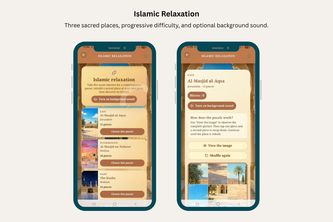
- A peaceful puzzle experience based on sacred Islamic places
These additions were implemented using AI tools like Codex and GPT-5.6 but under founder control.
The single most important open question
Is there any evidence of user adoption, engagement, or revenue generation beyond the author's own testing and development?
What The Product Actually Is
The description states that Ma Foi Islamique is a bilingual French and English Islamic companion centered on muhasabah, which involves daily self-reflection. It includes:
- Morning and evening adhkar
- Bedtime invocations
- A free tasbih counter
- Guided audio
- Gentle reminders
- Local progress tracking
It also contains two new features introduced during the OpenAI Build Week:
- Voyage du savoir: A weekly five-question quiz with corrections and a 20-question monthly review.
- Islamic Relaxation: Peaceful puzzles based on sacred Islamic places, with difficulty levels and optional sound.
The app is described as having no advertising, requiring no personal account, and keeping progress locally on the device.
Evidence
- The author describes the core application and its features.
- New features are detailed in terms of functionality and user journey.
Inference
- The app appears to be a private, non-commercial tool for personal use within an Islamic context.
Positioning & Claim Evolution
The description states that Ma Foi Islamique grew from a personal need for a calm place to pause, remember Allah, and reflect honestly without pressure or guilt. It positions itself as:
- A daily faith companion
- Focused on guided muhasabah
- Offering structured moments of reflection
- Providing peaceful activities like puzzles
- Designed with no guilt or pressure
It also claims to offer:
- Bilingual support (French/English)
- No advertising
- Local data storage
- No personal account required
Evidence
- The author’s own narrative about inspiration and intent.
Inference
- The app is positioned as a non-commercial, private, and reflective tool for individuals seeking spiritual consistency.
Target Customer & ICP
The description does not clearly define the target customer or ideal customer profile (ICP). It implies that the app is intended for:
- Individuals practicing Islam
- Those interested in daily self-reflection (muhasabah)
- Users who prefer a calm, non-pressured environment
- People seeking structured yet gentle spiritual engagement
There is no mention of specific demographics, usage patterns, or segmentation.
Evidence
- The author describes personal motivation and intended use cases.
- No explicit customer data, personas, or market research provided.
Inference
- Likely aimed at practicing Muslims looking for a quiet, consistent, and private spiritual companion.
Business Model & Pricing Evidence
There is no evidence of any business model or pricing structure in the description. The app is described as:
- Having no advertising
- Requiring no personal account
- Keeping progress locally on the device
It does not mention subscriptions, in-app purchases, monetization strategies, or paid features.
Evidence
- The author states that there are no ads and no accounts required.
- No mention of revenue streams or pricing plans.
Inference
- Likely a free, non-commercial tool with no known monetization strategy.
Technical & Delivery Signals
The app is built using:
- React
- Capacitor
- Codex
- GPT-5.6
- Android Gradle tooling
- Jest
- React Testing Library
- RevenueCat
It supports:
- Android builds
- Web builds
- Responsive layouts
- Local notifications
- Safe areas and hardware-back navigation
The author mentions:
- Real-device testing on Samsung devices
- Use of AI for implementation, verification, and documentation
- Code hardening and privacy checks
- Testing across multiple suites and tests
Evidence
- The author lists technologies used.
- Mentions testing, builds, and validation steps.
Inference
- The app is technically sound and built with modern mobile development practices, though it remains a solo effort.
Traction & Maturity Signals
There is no evidence of traction or maturity in the description. The author states:
- The app was developed by one person (sitan-blip DIANE)
- It includes features added during a hackathon
- It has passed tests and builds, but no user metrics, downloads, or engagement data are mentioned
The app is described as independent, founder-led, and not commercially launched.
Evidence
- The author describes the development process.
- No mention of users, adoption, or performance metrics.
Inference
- The product is in early stages of development and lacks measurable traction.
Competitive Context
There is no evidence of competitive analysis or market positioning in the description. The app does not reference existing competitors, nor does it describe how it differentiates from similar tools.
The author focuses on personal need rather than market dynamics.
Evidence
- No mention of competitors or market landscape.
Inference
- Unknown whether similar apps exist or what the competitive environment looks like.
Open Questions & Risks
Key risks and open questions include:
- Solo development: The app is built by a single person, raising concerns about scalability, maintenance, and long-term support.
- No monetization strategy: No indication of how the product will be sustained financially.
- Reliance on AI tools: While AI was used for implementation, the author retains full responsibility — this may raise questions about consistency or quality control if the tool is misused.
- Lack of user data: No evidence of real-world usage, feedback, or engagement.
- No public release or distribution details: The app appears to be in development and not yet available for general use.
Evidence
- Author’s solo role in building the product.
- No mention of users, sales, or public availability.
Inference
- High risk due to lack of traction, scalability, and commercial viability.
Questions the description leaves open
- What is the current status of the app? Is it available for download?
- How many people have used the app beyond personal testing?
- Are there any plans for monetization or user acquisition?
- What are the long-term goals for content updates and feature expansion?
- How does the founder plan to ensure quality and accuracy of religious content?
- Has the founder considered accessibility, localization, or internationalization beyond French/English?
- What is the timeline for iOS release and broader device compatibility?
Overall Assessment
Not evidenced.
There is no evidence of any investment interest, partnership discussions, or financial backing related to Ma Foi Islamique.
The app is described as an independent, founder-led project with no commercial traction, revenue, or funding history.
Inference
- Not suitable for investment or partnership at this stage due to lack of evidence of market fit, user adoption, or business model.
User Stories BotA demo video on every pull request
Get a demo video on every new feature
GitHub App that watches your pull requests and records a narrated, captioned demo.
Save time on demo prep and make informed decisions faster with a video walkthrough of every new feature.
Source
Submitted to the OpenAI 2026 hackathon on Devpost. Project home on Devpost. Back to the full gallery on Devpost.
This competitive analysis was produced by top-founders.com (opens in a new tab)
Generated by a language model from this project's public Devpost page — its tagline, the author's own write-up and any built-with tags listed there — as captured in August 2026. Short quotations are the author's words. It is an opinion on the idea as a business, not on the people behind it, and it reflects the description as published then. If the project has moved on, request a correction below. The analysis is not independent research and contains no verified traction, revenue or customer data.
An independent guide by KFG International LLC — not affiliated with, endorsed by, or connected to Devpost or OpenAI.