

Archive position — measured, not model output
0 likes on Devpost
2,263 of the 7,850 archived projects have more likes, and 5,587 share exactly 0 — so this project's #4,973 place in the like-ranked listing is a tie-break inside that group, not a ranking.
Projects (log scale)
Likes on Devpost. ▲ marks this project's group.
Show the figures
| Likes | Projects | Share of archive |
|---|---|---|
| 0 | 5,587 | 71.2% |
| 1 | 1,758 | 22.4% |
| 2 | 284 | 3.6% |
| 3–4 | 132 | 1.7% |
| 5–9 | 75 | 1.0% |
| 10+ | 14 | 0.2% |
 User Stories BotA demo video on every pull request
Get a demo video on every new feature
GitHub App that watches your pull requests and records a narrated, captioned demo.
Save time on demo prep and make informed decisions faster with a video walkthrough of every new feature.
Executive Summary
What the company appears to be
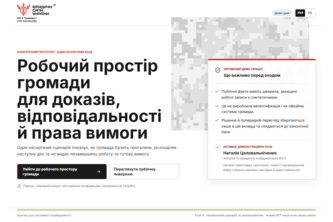
LFU Community is a self-reported project built by one individual (LFUlab Tselovalnichenko) as part of the OpenAI 2026 hackathon. The author describes it as a "bilingual, governed community-justice workspace" for transforming fragmented war-damage evidence into a transparent, human-authorized path toward justice. It is positioned to support Ukrainian territorial communities affected by Russian aggression.
What changed
The project was submitted to the OpenAI 2026 hackathon and includes a demonstration of an MVP workflow for the Dmytrivska Territorial Community in Bucha district. The author states that it demonstrates one complete workflow involving evidence preservation, AI analysis, human authorization of findings, task creation, dossier readiness calculation, and public projection.
The single most important open question
Is there any evidence of traction, revenue, or customer adoption beyond the hackathon submission? The description does not indicate whether this project has moved beyond a demonstration phase or been piloted with actual users.
Note
This analysis is based entirely on self-reported information from the author. No independent verification, funding rounds, headcount, customers, or revenue data are available.
What The Product Actually Is
The description states that LFU Community is:
- A "bilingual, governed community-justice workspace"
- Designed to transform fragmented war-damage evidence into a transparent, human-authorized path toward justice
- An MVP demonstrating one complete workflow for the Dmytrivska Territorial Community in Bucha district
The product includes features such as:
- Preservation of sources, snapshots, assertions, versions, and provenance
- Distinguishing public facts from synthetic protected demonstration records
- AI analysis that proposes structured findings
- Human authorization required for every AI finding
- Task creation and audit receipts from decisions
- Calculation of dossier readiness without concealing missing or contradictory evidence
- Public projection using a positive allowlist
The description also notes that the application uses Next.js, React, TypeScript, Zod, Vitest, Playwright, and Vercel. The AI integration uses gpt-5.6-sol through a server-only OpenAI Responses API adapter.
Claim
The product is described as a "governed community-justice workspace" that preserves evidence and requires human authorization for AI findings.
Evidence Author's own write-up
Positioning & Claim Evolution
The author positions LFU Community as:
- A tool for Ukrainian territorial communities affected by Russian aggression
- A solution to the challenge of proving what happened across changing records, incomplete evidence, different valuation periods, and conflicting official figures
- A system that preserves institutional memory with provenance, verification status, and decision-making authority
The claim evolution appears to be:
- Initial problem: Communities need trustworthy institutional memory for legal action
- Proposed solution: A governed workspace that combines AI analysis with human authorization
- Core capability: Refusing to manufacture readiness when evidence is insufficient
- Differentiation: Unlike conventional databases, it preserves why values changed and who authorized changes
Claim
The product aims to preserve institutional memory that tracks where every fact came from, what has been verified, what remains disputed, who made each decision, and whether the evidence is actually ready for legal action.
Evidence Author's own write-up
Target Customer & ICP
The description states:
- Primary users are Ukrainian territorial communities affected by Russian aggression
- Specifically mentioned: Dmytrivska Territorial Community in Bucha district
- The product is designed for "local authorities, civil-society institutions, counsel, and affected people"
- It supports "individual victims" through consultations and evidence support
The ICP appears to be:
- Ukrainian territorial communities
- Local authorities
- Civil-society institutions
- Legal counsel
- Affected individuals
Claim
The target customer is Ukrainian territorial communities affected by Russian aggression.
Evidence Author's own write-up
Business Model & Pricing Evidence
Not evidenced.
Finding
No information provided about business model, pricing, or monetization strategy.
Technical & Delivery Signals
The description states:
- Built with: chatgpt-5.6, codex, next.js, openai, playwright, react, typescript, vercel, vitest, zod
- Uses Codex as primary engineering environment
- Eight gated stages in development process
- AI boundary integrates gpt-5.6-sol through a server-only OpenAI Responses API adapter
- Strict structured output and valid evidence references required
- Supports citations, uncertainty, and abstention
- Enforces bounded timeouts and zero automatic retries
- Rejects malformed or injection-like output
- Cannot mutate governed memory, publish information, or make legal decisions
- Submitted demonstration is labeled VERIFIED_FIXTURE
- No API key stored in repository
- Demonstrates both deterministic fixture and live-AI paths that are visibly distinguished
Claim
The technical architecture includes strict separation between internal and public information, deterministic fixtures, and live-AI paths.
Evidence Author's own write-up
Traction & Maturity Signals
Not evidenced.
Finding
No evidence of traction, revenue, customers, or adoption beyond the hackathon submission.
Competitive Context
Not evidenced.
Finding
No information provided about competitive landscape or existing solutions in this space.
Open Questions & Risks
- Single-person team: The project is built by one individual (LFUlab Tselovalnichenko)
- Hackathon demo only: The description indicates this is a hackathon submission with no evidence of further development or pilot use
- No commercial traction: No evidence of revenue, customers, or adoption beyond the demonstration
- Limited scope: The MVP only covers one community (Dmytrivska Territorial Community)
- Unverified claims: All information is self-reported and unverified
- AI integration constraints: The AI cannot make decisions or mutate memory, which may limit functionality
Inference The lack of evidence for traction, customers, or revenue suggests this project has not yet moved beyond the demonstration phase.
Questions the description leaves open
- What is the current status of the project beyond the hackathon demo?
- Have you piloted this with any actual Ukrainian territorial communities?
- What are the plans for scaling beyond the MVP?
- How will you ensure data privacy and security in a production environment?
- What is your roadmap for moving from demonstration to commercial product?
- How do you plan to handle legal liability issues around AI-assisted decision-making?
- What are the technical challenges in moving from the current demo to a production system?
Inference These questions address the key gaps in evidence and the unverified claims made by the author.
Overall Assessment
Not evidenced.
Finding
No information provided about investment status, partnership opportunities, or commercial viability beyond the hackathon submission.
User Stories BotA demo video on every pull request
Get a demo video on every new feature
GitHub App that watches your pull requests and records a narrated, captioned demo.
Save time on demo prep and make informed decisions faster with a video walkthrough of every new feature.
Source
Submitted to the OpenAI 2026 hackathon on Devpost. Project home on Devpost. Back to the full gallery on Devpost.
This competitive analysis was produced by top-founders.com (opens in a new tab)
Generated by a language model from this project's public Devpost page — its tagline, the author's own write-up and any built-with tags listed there — as captured in August 2026. Short quotations are the author's words. It is an opinion on the idea as a business, not on the people behind it, and it reflects the description as published then. If the project has moved on, request a correction below. The analysis is not independent research and contains no verified traction, revenue or customer data.
An independent guide by KFG International LLC — not affiliated with, endorsed by, or connected to Devpost or OpenAI.