

Archive position — measured, not model output
0 likes on Devpost
2,263 of the 7,850 archived projects have more likes, and 5,587 share exactly 0 — so this project's #4,819 place in the like-ranked listing is a tie-break inside that group, not a ranking.
Projects (log scale)
Likes on Devpost. ▲ marks this project's group.
Show the figures
| Likes | Projects | Share of archive |
|---|---|---|
| 0 | 5,587 | 71.2% |
| 1 | 1,758 | 22.4% |
| 2 | 284 | 3.6% |
| 3–4 | 132 | 1.7% |
| 5–9 | 75 | 1.0% |
| 10+ | 14 | 0.2% |
 User Stories BotA demo video on every pull request
Get a demo video on every new feature
GitHub App that watches your pull requests and records a narrated, captioned demo.
Save time on demo prep and make informed decisions faster with a video walkthrough of every new feature.
Executive Summary
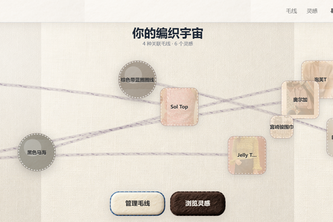
KnitKnit is a self-reported visual workspace for knitters, described as a tool to collect sweater inspiration, manage yarn stash, and connect ideas to existing yarn inventory. The product is presented as a progressive web app (PWA) built with modern web technologies including Next.js, TypeScript, and Zustand for state management. It was submitted to the OpenAI 2026 hackathon on Devpost by a single team member, 誉 唐.
The description states no revenue, customers, or traction. The author claims KnitKnit helps knitters manage their yarn stash and connect inspiration to existing inventory — but provides no evidence of adoption, usage metrics, or monetization strategy. The project is in early development, likely a prototype or proof-of-concept.
The single most important open question
What is the actual user need being addressed, and how does KnitKnit differentiate from existing tools (e.g., yarn management apps, pattern libraries) or satisfy a gap in current workflows?
What The Product Actually Is
The description states that KnitKnit is a "cozy visual workspace" for knitters. It is described as helping users:
- Collect sweater inspiration
- Manage yarn stash
- Connect ideas to the yarn they already own
It is built as a progressive web app (PWA), using technologies such as Next.js, TypeScript, Tailwind CSS, and Zustand for state management. The author also mentions scraping and visualization capabilities.
Evidence The project description states this. No independent verification or demonstration of functionality is provided.
Positioning & Claim Evolution
The author positions KnitKnit as a tool that helps knitters manage their yarn stash and connect inspiration to existing inventory — suggesting it is a personal, visual, and possibly social tool for crafters.
No evidence of prior positioning or evolution in claims is provided. The description does not indicate whether this was an initial idea or if the product has changed since submission to the hackathon.
Inference The positioning appears to be centered on personalization and visual curation — but this is inferred from the limited self-description, not confirmed.
Target Customer & ICP
The description states that KnitKnit is for knitters. It does not specify a细分 customer segment (e.g., hobbyists vs. professionals), nor does it describe how the product targets or differentiates among users.
Evidence The author states that KnitKnit is for knitters. No further segmentation or ICP details are provided.
Business Model & Pricing Evidence
No evidence of a business model or pricing strategy is provided in the description. The author does not state whether KnitKnit will be free, subscription-based, ad-supported, or otherwise monetized.
Evidence Not evidenced.
Technical & Delivery Signals
The project is built using modern web technologies including:
- Next.js
- TypeScript
- Tailwind CSS
- Zustand
- PWA capabilities
- HTML, Canvas, IndexedDB, localStorage
- Scraping and visualization components
It is described as a PWA, suggesting it may be accessible without installation.
Evidence The author lists these technologies. No evidence of delivery, scalability, or performance is provided.
Traction & Maturity Signals
The description does not provide any traction signals such as:
- User numbers
- Revenue
- Customer feedback
- Product usage metrics
- Iteration history
It was submitted to a hackathon and is described as a single-person project. No evidence of product maturity or adoption is present.
Evidence Not evidenced.
Competitive Context
The description does not mention any competitors or how KnitKnit fits into the broader market for yarn or knitting tools.
No evidence of competitive analysis, market positioning, or differentiation from existing solutions is provided.
Evidence Not evidenced.
Open Questions & Risks
- Unproven user need: The description does not confirm whether knitters actually need this tool or if it solves a real problem.
- Single-person development: With only one team member, the project may lack scalability or depth in execution.
- No traction or monetization plan: No evidence of revenue, users, or business model.
- Limited scope: The product is described as a prototype or hackathon submission — no indication of long-term vision or roadmap.
Inference These risks are inferred from the thin description and lack of evidence.
Questions the description leaves open
- What specific pain points in yarn management or inspiration collection does KnitKnit address?
- How did you identify your target user group, and what feedback have you gathered?
- Are there existing tools that solve this problem? If so, how is KnitKnit different?
- What is the plan for monetization or scaling the product beyond a prototype?
- How do you intend to build out the yarn stash and inspiration features?
Overall Assessment
Not evidenced.
The description provides no evidence of traction, revenue, customer adoption, or business model. It is unclear whether KnitKnit has moved beyond a hackathon prototype or if it addresses a real market need.
Inference The project appears to be in early development and lacks commercial viability signals. A deeper due-diligence effort would be required to assess potential value or risk.
User Stories BotA demo video on every pull request
Get a demo video on every new feature
GitHub App that watches your pull requests and records a narrated, captioned demo.
Save time on demo prep and make informed decisions faster with a video walkthrough of every new feature.
Source
Submitted to the OpenAI 2026 hackathon on Devpost. Project home on Devpost. Back to the full gallery on Devpost.
This competitive analysis was produced by top-founders.com (opens in a new tab)
Generated by a language model from this project's public Devpost page — its tagline and any built-with tags listed there, since the author published no write-up — as captured in August 2026. Short quotations are the author's words. It is an opinion on the idea as a business, not on the people behind it, and it reflects the description as published then. If the project has moved on, request a correction below. The analysis is not independent research and contains no verified traction, revenue or customer data.
An independent guide by KFG International LLC — not affiliated with, endorsed by, or connected to Devpost or OpenAI.