

Archive position — measured, not model output
0 likes on Devpost
2,263 of the 7,850 archived projects have more likes, and 5,587 share exactly 0 — so this project's #4,808 place in the like-ranked listing is a tie-break inside that group, not a ranking.
Projects (log scale)
Likes on Devpost. ▲ marks this project's group.
Show the figures
| Likes | Projects | Share of archive |
|---|---|---|
| 0 | 5,587 | 71.2% |
| 1 | 1,758 | 22.4% |
| 2 | 284 | 3.6% |
| 3–4 | 132 | 1.7% |
| 5–9 | 75 | 1.0% |
| 10+ | 14 | 0.2% |
 User Stories BotA demo video on every pull request
Get a demo video on every new feature
GitHub App that watches your pull requests and records a narrated, captioned demo.
Save time on demo prep and make informed decisions faster with a video walkthrough of every new feature.
Executive Summary
What the company appears to be
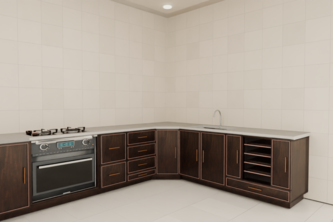
Kitchen Designer is a browser-based kitchen design tool built as a self-contained application using web technologies (JavaScript, HTML, CSS). The author describes it as an AI-powered system that supports room planning from dimensions to 2D plans and interactive 3D layouts. It includes features for cabinet placement, collision detection, material configuration, and export to professional rendering tools like Blender Cycles.
What changed
The project evolved from a visual prototype into a functional design system with synchronized views (top-plan, elevation, 3D), constraint-aware interactions, and support for external models. The author notes that it was built as part of a hackathon submission.
Single most important open question — the commercial due-diligence read
Is there any evidence of user adoption or revenue generation beyond the developer's own account? There is no indication of customers, pricing, or monetization in the description.
What The Product Actually Is
The description states that Kitchen Designer is a browser-based kitchen design tool. It allows users to:
- Create various room layouts (straight, L-shaped, U-shaped, enclosed).
- Define wall dimensions and architectural features like doors and windows.
- Place different types of cabinets (base, wall, tall, corner, appliance, decorative, custom).
- Configure cabinet fronts with drawers, doors, glass panels, open shelves, etc.
- Inspect projects in multiple views: top-plan, front-elevation, split, and interactive 3D.
- Import/export external models and save/restore projects as JSON.
- Export high-resolution images and GLB scenes for professional rendering workflows such as Blender Cycles.
It uses technologies like Konva.js, Three.js, WebGL, SVG, JSON, LocalStorage, GLTF/GLB, PHP, MySQL, and Blender Cycles. The system is designed to maintain dimensional accuracy across all views and outputs.
Evidence Self-reported by the author. No third-party validation or data on usage or performance.
Positioning & Claim Evolution
The author positions Kitchen Designer as a practical browser-based design tool that bridges the gap between lightweight visual tools and complex CAD software. It aims to provide precise planning tools while enabling clients to understand designs through an interactive 3D experience.
Key claims include:
- A complete kitchen-planning workflow from room dimensions to professional rendering.
- Synchronized views across top-plan, elevation, and 3D environments.
- Accurate cabinet placement with collision detection and preview functionality.
- Support for external appliance models and export pipelines into Blender Cycles.
- Modular architecture that can expand without replacing the entire application.
There is no evidence of prior positioning or evolution in market messaging beyond this single self-reported description.
Evidence Self-reported. No historical positioning, branding, or customer feedback data provided.
Target Customer & ICP
The author does not explicitly define a target customer or ideal customer profile (ICP). However, based on the product's features and use case, it appears aimed at:
- Interior designers.
- Kitchen planners.
- Homeowners who want to visualize kitchen layouts before construction or renovation.
- Manufacturers or installers needing precise design specifications.
The tool is described as useful for both designers and clients, suggesting a dual-user model where one user creates the plan and another reviews or modifies it.
Evidence Inferred from product features and use case. No stated target segment or persona data.
Business Model & Pricing Evidence
There is no evidence of pricing, monetization strategy, or business model in the description. The author does not mention any revenue streams, subscriptions, licensing fees, or paid tiers.
Evidence Not evidenced.
Technical & Delivery Signals
The application is built using web technologies including JavaScript, HTML5, CSS3, and frameworks like Konva.js and Three.js for rendering. It supports:
- Shared project-state architecture.
- Multiple synchronized views (top-plan, elevation, 3D).
- Custom geometry and collision logic.
- JSON and LocalStorage for persistence.
- GLTF/GLB export for integration with external tools.
- Optional PHP/MySQL backend services.
The system includes an administration workflow for managing templates, models, materials, and configurations. It also handles normalization of external 3D assets (OBJ, GLTF, GLB) to ensure consistent orientation and dimensions.
Evidence Self-reported by the author. No independent verification or delivery metrics available.
Traction & Maturity Signals
There is no evidence of traction, user adoption, or product maturity beyond the developer’s own account. The project was submitted as a hackathon entry (OpenAI 2026), and there is no mention of users, customers, downloads, or usage statistics.
Evidence Not evidenced.
Competitive Context
The author does not provide any information about competitors or competitive positioning. No comparison to existing tools in the kitchen design or CAD space is made.
Evidence Not evidenced.
Open Questions & Risks
- No traction or revenue evidence: The project is described only as a hackathon submission with no indication of real-world usage.
- Single-person team: With only one member listed, scalability and long-term development capacity are unclear.
- Unproven commercial viability: No pricing model, monetization strategy, or customer base mentioned.
- Technical complexity without external validation: While the architecture is detailed, there is no evidence of testing, performance data, or user feedback on usability or reliability.
Evidence Inferred from lack of evidence and self-reported nature of description.
Questions the description leaves open
- What specific problem are you solving for your users?
- How do you plan to monetize this tool?
- Have you conducted any user research or testing with potential customers?
- Are there any existing competitors in the market, and how does your solution differ?
- What is your roadmap beyond the current features?
- Do you have plans for team expansion or partnerships?
- How do you intend to scale this product beyond a prototype?
Overall Assessment
There is insufficient evidence to assess whether Kitchen Designer has investment or partnership potential. The description lacks any indication of traction, revenue, or commercial viability. It appears to be a technical prototype built during a hackathon with no known users or monetization strategy.
Confidence Level Very low — based entirely on self-reported information without corroboration or external validation.
Assessment Summary
- Not evidenced: No customers, revenue, pricing, or traction.
- Self-reported only: All claims are unverified.
- No commercial signals: No indication of market fit or business model.
- High risk: Limited team size and lack of product-market alignment.
This is a technical demonstration with no demonstrated commercial value or user adoption. Further due diligence would require access to actual users, data, or financials — none of which are present in the provided description.
User Stories BotA demo video on every pull request
Get a demo video on every new feature
GitHub App that watches your pull requests and records a narrated, captioned demo.
Save time on demo prep and make informed decisions faster with a video walkthrough of every new feature.
Source
Submitted to the OpenAI 2026 hackathon on Devpost. Project home on Devpost. Back to the full gallery on Devpost.
This competitive analysis was produced by top-founders.com (opens in a new tab)
Generated by a language model from this project's public Devpost page — its tagline, the author's own write-up and any built-with tags listed there — as captured in August 2026. Short quotations are the author's words. It is an opinion on the idea as a business, not on the people behind it, and it reflects the description as published then. If the project has moved on, request a correction below. The analysis is not independent research and contains no verified traction, revenue or customer data.
An independent guide by KFG International LLC — not affiliated with, endorsed by, or connected to Devpost or OpenAI.