

Archive position — measured, not model output
0 likes on Devpost
2,263 of the 7,850 archived projects have more likes, and 5,587 share exactly 0 — so this project's #4,683 place in the like-ranked listing is a tie-break inside that group, not a ranking.
Projects (log scale)
Likes on Devpost. ▲ marks this project's group.
Show the figures
| Likes | Projects | Share of archive |
|---|---|---|
| 0 | 5,587 | 71.2% |
| 1 | 1,758 | 22.4% |
| 2 | 284 | 3.6% |
| 3–4 | 132 | 1.7% |
| 5–9 | 75 | 1.0% |
| 10+ | 14 | 0.2% |
 User Stories BotA demo video on every pull request
Get a demo video on every new feature
GitHub App that watches your pull requests and records a narrated, captioned demo.
Save time on demo prep and make informed decisions faster with a video walkthrough of every new feature.
Executive Summary
The description states that "Iot based smart shopping system" is an IoT-based retail automation solution designed to streamline shopping and billing processes using RFID technology, Wi-Fi connectivity, and real-time updates. The author claims it aims to reduce manual scanning, long queues, and improve customer convenience and billing accuracy. It was submitted as a hackathon project by one individual (sabarethajs Sabaretha) for the OpenAI 2026 hackathon.
What Changed: This is a self-reported, unverified project description submitted by an individual developer for a hackathon. There is no evidence of commercial traction, revenue, or customer adoption beyond its submission context.
Single Most Important Open Question: Is this project intended to be a prototype for a commercial product, or is it purely academic/hackathon-oriented? The lack of any indication of further development, funding, or market engagement makes this unclear.
What The Product Actually Is
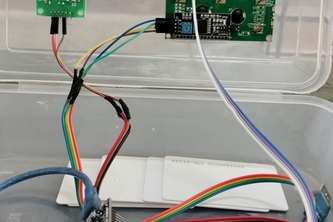
The description states that the "Iot based smart shopping system" uses IoT technology to automate shopping and billing. It identifies products placed in a cart using RFID, updates the total bill in real time, and aims to reduce manual scanning and long queues. The system is described as enabling faster checkout and improving retail management through automation.
Evidence:
- Uses RFID technology
- Incorporates Wi-Fi connectivity
- Employs LCD display for updates
- Built with Arduino Uno and NodeMCU
- Designed for real-time billing updates
Inference: The system appears to be a proof-of-concept or prototype, not a production-ready product. It is described as an "intelligent retail solution" but no details are provided about scalability, integration capabilities, or deployment architecture.
Positioning & Claim Evolution
The description states that the system aims to provide a "seamless, secure, and time-saving shopping experience for both customers and retailers." It positions itself as a solution to reduce manual scanning and long queues in retail environments.
Claims:
- Reduces manual scanning
- Eliminates long queues
- Improves billing accuracy
- Enhances customer convenience
Inference: The positioning is generic and typical of early-stage IoT retail automation concepts. No differentiation from other similar systems or specific market gaps are identified.
Target Customer & ICP
The description states that the system targets both customers and retailers, aiming to improve their shopping experience and retail management efficiency.
Evidence:
- Targets customers (for convenience)
- Targets retailers (for efficient management)
Inference: No specific customer segments or personas are defined. The target is broad and not tailored to a particular retail type or size.
Business Model & Pricing Evidence
Not evidenced.
The description does not mention any pricing model, monetization strategy, or business model. It only describes the system's functionality.
Technical & Delivery Signals
The description states that the system was built using:
- Arduino Uno
- NodeMCU
- RFID technology
- Wi-Fi connectivity
- LCD display
- IoT communication protocols
Evidence:
- Built with Arduino and NodeMCU
- Uses RFID for product identification
- Incorporates Wi-Fi for communication
- Includes LCD display for updates
Inference: The system appears to be a hardware-software prototype, likely built in a lab or hackathon environment. No information is provided about scalability, cloud integration, or production readiness.
Traction & Maturity Signals
Not evidenced.
There is no evidence of revenue, customers, partnerships, or product adoption beyond its submission as a hackathon project. The system is described as a prototype with no indication of further development or commercial use.
Competitive Context
Not evidenced.
The description does not mention any competitors or existing solutions in the smart retail or IoT shopping space. No market analysis or competitive positioning is provided.
Open Questions & Risks
- Prototype Only: The system is described as a hackathon project with no evidence of commercial viability or scalability.
- No Revenue or Traction: There is no indication of any revenue, customers, or adoption beyond its submission.
- Unverified Claims: All claims about functionality and benefits are self-reported and unverified.
- Single Developer: The system was built by one individual, suggesting limited development resources or team capacity.
Questions the description leaves open
- What is the intended next step for this project? Is it a prototype or a commercial product in development?
- Has there been any testing or feedback from potential users or retailers?
- Are there any plans to scale beyond the current prototype, and if so, what are they?
- How does this system differ from existing smart retail solutions in the market?
- What is the long-term vision for monetization or commercial deployment?
Overall Assessment
Not evidenced.
There is no evidence of a commercial product, traction, or investment-ready business model. The project is described as a hackathon submission by one individual and lacks any indication of future development or market readiness. It cannot be evaluated for investment or partnership potential without further information on its trajectory, scalability, or commercial viability.
User Stories BotA demo video on every pull request
Get a demo video on every new feature
GitHub App that watches your pull requests and records a narrated, captioned demo.
Save time on demo prep and make informed decisions faster with a video walkthrough of every new feature.
Source
Submitted to the OpenAI 2026 hackathon on Devpost. Project home on Devpost. Back to the full gallery on Devpost.
This competitive analysis was produced by top-founders.com (opens in a new tab)
Generated by a language model from this project's public Devpost page — its tagline, the author's own write-up and any built-with tags listed there — as captured in August 2026. Short quotations are the author's words. It is an opinion on the idea as a business, not on the people behind it, and it reflects the description as published then. If the project has moved on, request a correction below. The analysis is not independent research and contains no verified traction, revenue or customer data.
An independent guide by KFG International LLC — not affiliated with, endorsed by, or connected to Devpost or OpenAI.