

Archive position — measured, not model output
1 like on Devpost
505 of the 7,850 archived projects have more likes, and 1,758 share exactly 1 — so this project's #1,239 place in the like-ranked listing is a tie-break inside that group, not a ranking.
Projects (log scale)
Likes on Devpost. ▲ marks this project's group.
Show the figures
| Likes | Projects | Share of archive |
|---|---|---|
| 0 | 5,587 | 71.2% |
| 1 | 1,758 | 22.4% |
| 2 | 284 | 3.6% |
| 3–4 | 132 | 1.7% |
| 5–9 | 75 | 1.0% |
| 10+ | 14 | 0.2% |
 User Stories BotA demo video on every pull request
Get a demo video on every new feature
GitHub App that watches your pull requests and records a narrated, captioned demo.
Save time on demo prep and make informed decisions faster with a video walkthrough of every new feature.
Executive Summary
What the company appears to be
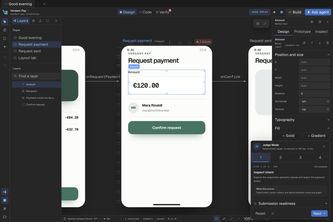
IntentForm is a self-reported tool that aims to maintain product intent consistency across multiple platforms (Web, React, Expo, SwiftUI) by using a semantic interface graph as the source of truth. It allows users to design visually, generate platform-specific code deterministically, and verify runtime behavior against that graph.
What changed
The author states they built this tool independently with Codex and GPT 5.6, focusing on preserving product intent through a structured semantic system rather than relying solely on generated code.
Single most important open question
Is there any evidence of real-world usage or adoption beyond the author's own development work?
Note: This analysis is based entirely on self-reported information from the project description and submission. No external verification, traction data, revenue figures, or customer feedback are available.
What The Product Actually Is
The description states that IntentForm:
- Uses a "Semantic Interface Graph" as the source of truth.
- Stores layout meaning, tokens, components, states, flows, accessibility intent, and device behavior in one validated graph.
- Generates deterministic output for Web, React, Expo, and SwiftUI platforms.
- Has three connected workspaces: Design, Code, and Verify.
- Allows inspection of platform-specific outputs and connection to the original graph nodes.
- Includes a Judge Mode for reviewers to inspect intent, compare outputs, and test repair workflows.
- Is open-source with hosted versions available.
Inference: The tool appears to be a developer-facing system designed to manage cross-platform UI consistency via semantic representation, not just code generation.
Claim: The product keeps product intent as the source of truth.
Evidence: Stated in the write-up.
Inference: It uses AI tools (Codex, GPT 5.6) for development and decision-making.
Evidence: Author reports using Codex from idea to release, including planning, architecture, implementation, testing, and documentation.
Positioning & Claim Evolution
The author positions IntentForm as:
- A solution to the problem of inconsistent product decisions across platforms.
- Inspired by Figma and Paper — tools that make visual work feel direct and easy to understand.
- Designed to ensure that "product intent can also compile, run and prove itself".
- Not just about generating code quickly but maintaining meaning behind it.
Inference: IntentForm is positioned as a tool for developers who want to maintain control over product decisions while leveraging automation.
Claim: One product decision should not become four platform rewrites.
Evidence: Stated in the write-up.
Claim: Generated code is not proof that a product still follows the original decision.
Evidence: Stated in the write-up.
Target Customer & ICP
The description does not clearly identify a specific customer segment or ideal customer profile (ICP). It mentions:
- Developers working with multiple platforms.
- Teams needing to ensure consistency across Web, React, Expo, and SwiftUI.
- Reviewers who can inspect intent and verify results in Judge Mode.
Inference: The primary users are likely developers or product teams managing multi-platform UIs, though no explicit targeting is made.
Claim: IntentForm targets teams that want to avoid rewriting the same product decision across platforms.
Evidence: Stated in the write-up.
Claim: It's for people who value inspectability and traceability of changes.
Evidence: Stated in the write-up.
Business Model & Pricing Evidence
There is no information provided about pricing, monetization strategy, or business model.
Finding: Not evidenced.
Technical & Delivery Signals
The author states:
- Built with Codex and GPT 5.6.
- Uses TypeScript, Next.js, React, Zod, Playwright, Electron, Expo tools, SwiftUI verification harnesses.
- Includes unit tests (551), browser scenarios (29), and a 10,000 node benchmark.
- Has a hosted Judge Mode with no account or API key required.
- Is open-source on GitHub.
Inference: The tool is built using modern web and mobile development stacks, with strong emphasis on testing and validation.
Claim: The system uses AI for interpretation and judgment but keeps deterministic systems for repeatable actions.
Evidence: Stated in the write-up.
Claim: Codex was used throughout the lifecycle of the project — from planning to release.
Evidence: Stated in the write-up.
Traction & Maturity Signals
There is no evidence of:
- Revenue
- Customers or users
- Adoption metrics
- Product usage data
- Market traction beyond the author’s own development
Finding: Not evidenced.
Competitive Context
The description does not mention any competitors. It references Figma and Paper as inspirations but does not compare IntentForm to existing tools in this space.
Finding: Not evidenced.
Open Questions & Risks
- The entire product is described as being built by one person (Francesco Giannicola).
- No evidence of real-world usage or feedback from users.
- Relies heavily on AI tools (Codex, GPT 5.6) for development — raises questions about scalability and reliability if those tools change or become unavailable.
- The author claims to have used AI extensively but does not provide any data or metrics showing how effective that was.
- No mention of security, performance, or integration capabilities beyond basic functionality.
Inference: Risk of over-reliance on a single developer and unproven market demand.
Evidence: Author states solo development; no evidence of traction or adoption.
Questions the description leaves open
- What is the actual user base or pilot group for this tool?
- How does IntentForm handle edge cases in platform-specific behavior (e.g., accessibility, safe areas)?
- Can you demonstrate how a real team would use it in practice?
- Are there any plans to integrate with existing design tools like Figma or Sketch?
- What are the technical limitations of the current semantic graph approach?
- How does IntentForm deal with version control and collaboration between developers?
- Has the tool been tested under load or in production environments?
Overall Assessment
There is no evidence of:
- Revenue
- Customers
- Traction
- Market validation
- Product-market fit
- Financials or funding history
Finding: Not evidenced.
Confidence Level: Low. The description is self-reported and lacks any verifiable data on product adoption, revenue, or market traction. The tool appears to be a prototype or proof-of-concept built by one individual using AI tools, with no indication of commercial viability or scalability.
Conclusion: Based only on the author’s own account, IntentForm is an experimental system aimed at preserving product intent across platforms. It has not demonstrated any measurable impact or traction in the market. Further due diligence would require evidence of usage, feedback, and business metrics — none of which are provided.
User Stories BotA demo video on every pull request
Get a demo video on every new feature
GitHub App that watches your pull requests and records a narrated, captioned demo.
Save time on demo prep and make informed decisions faster with a video walkthrough of every new feature.
Source
Submitted to the OpenAI 2026 hackathon on Devpost. Project home on Devpost. Back to the full gallery on Devpost.
This competitive analysis was produced by top-founders.com (opens in a new tab)
Generated by a language model from this project's public Devpost page — its tagline, the author's own write-up and any built-with tags listed there — as captured in August 2026. Short quotations are the author's words. It is an opinion on the idea as a business, not on the people behind it, and it reflects the description as published then. If the project has moved on, request a correction below. The analysis is not independent research and contains no verified traction, revenue or customer data.
An independent guide by KFG International LLC — not affiliated with, endorsed by, or connected to Devpost or OpenAI.