

Archive position — measured, not model output
1 like on Devpost
505 of the 7,850 archived projects have more likes, and 1,758 share exactly 1 — so this project's #1,214 place in the like-ranked listing is a tie-break inside that group, not a ranking.
Projects (log scale)
Likes on Devpost. ▲ marks this project's group.
Show the figures
| Likes | Projects | Share of archive |
|---|---|---|
| 0 | 5,587 | 71.2% |
| 1 | 1,758 | 22.4% |
| 2 | 284 | 3.6% |
| 3–4 | 132 | 1.7% |
| 5–9 | 75 | 1.0% |
| 10+ | 14 | 0.2% |
 User Stories BotA demo video on every pull request
Get a demo video on every new feature
GitHub App that watches your pull requests and records a narrated, captioned demo.
Save time on demo prep and make informed decisions faster with a video walkthrough of every new feature.
Executive Summary
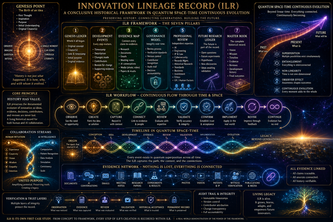
The description states that ILR 2.0 — Innovation Lineage Record is a prototype tool built during an OpenAI hackathon, intended to preserve the path of understanding from curiosity to conclusion. It claims to support structured documentation of research processes using AI-assisted classification and visualization tools like Chronos, Kairos, and Knowledge Growth Matrix. The author describes it as a single-user, single-investigation system with a seven-screen MVP, integrated with GPT-5.6 via OpenAI’s Responses API.
The product is self-reported as functional but not yet commercially deployed or tested in production environments. It does not appear to have any revenue, customers, or traction beyond its own demonstration and prototype status.
Key open question
What is the actual commercial use case for this tool, and how would it scale beyond a single-user research workflow?
What The Product Actually Is
The description states that ILR 2.0 is a system designed to preserve the path of understanding from initial curiosity through to final conclusion. It includes:
- A timestamped record of entries categorized as question, observation, evidence, hypothesis, revision, or conclusion.
- Tools such as Chronos (for sequence), Kairos (for turning points), and Knowledge Growth Matrix (for visibility of relationships).
- Integration with GPT-5.6 via OpenAI’s Responses API to suggest classifications, evidence relationships, and provisional conclusions.
- Human-authored content remains separate from AI suggestions.
- A seven-screen MVP built using Codex and GPT-5.6.
- Support for portable access through a QR code or direct entry point.
It is described as a prototype created during a Build Week hackathon, not yet in production use.
Not evidenced Whether the system supports multi-user collaboration, source verification, graph exploration, or live conference participation beyond its current MVP scope.
Positioning & Claim Evolution
The description states that ILR 2.0 aims to preserve not just what is known, but how one came to know it — emphasizing traceability and lineage of ideas. It positions itself as a tool for researchers who want to document their thought process in a structured way, with AI aiding without replacing human judgment.
It evolved from a conceptual framework into a working prototype over the course of a Build Week hackathon. The author notes that early versions were too AI-heavy and had to be adjusted to center human authorship.
Inferred The positioning reflects an emphasis on intellectual rigor and transparency in research workflows, possibly targeting academic or R&D environments where documentation is critical.
Not evidenced No claims about market fit, adoption, or competitive differentiation beyond its own internal development goals.
Target Customer & ICP
The description states that ILR 2.0 supports one person working on one investigation at a time. It was built for researchers and knowledge workers who need to trace the evolution of ideas and decisions.
It is described as a single-user tool, with no mention of multi-user collaboration or team-based use cases.
Inferred The likely ICP includes individuals in research roles (e.g., academics, R&D professionals) who value detailed documentation and traceability.
Not evidenced No evidence of target customer segments beyond individual researchers, nor any indication of whether it targets enterprise users or broader B2B markets.
Business Model & Pricing Evidence
The description states that ILR 2.0 is a prototype built during a hackathon and does not include any information about pricing models, monetization strategies, or business model assumptions.
There is no mention of subscriptions, per-user fees, enterprise licensing, or other commercial structures.
Not evidenced No evidence of any business model or pricing strategy.
Technical & Delivery Signals
The description states that the prototype was built using:
- Codex as primary engineering collaborator.
- GPT-5.6 integrated via OpenAI’s Responses API with Structured Outputs.
- Luna for frequent entry analysis and Terra for more complex conclusions.
- A seven-screen MVP with data model definition, persistence, UI design, deployment, and testing path.
It also mentions:
- Durable session storage
- Human-editable classifications and conclusions
- Export functionality
- Guided judge experience
Not evidenced No details on scalability, performance, or infrastructure beyond the MVP.
Traction & Maturity Signals
The description states that ILR 2.0 is a prototype built during a Build Week hackathon. It includes:
- A working seven-screen product
- A complete curiosity-to-conclusion lineage
- Structured data flow and persistence
- GPT-5.6 integration
- Export capability
- Guided demo and judge experience
It does not state whether it has been used in real-world settings, nor does it provide any metrics on usage, retention, or adoption.
Not evidenced No evidence of traction, user feedback, or product maturity beyond the prototype stage.
Competitive Context
The description does not mention any competitors or existing tools in this space. It focuses solely on ILR 2.0’s own features and development process.
Not evidenced No competitive landscape or comparison to other tools for idea documentation, traceability, or research workflow management.
Open Questions & Risks
- The product is described as a prototype built during a hackathon with no evidence of commercial deployment.
- There is no indication of any revenue, customers, or traction beyond its own demonstration.
- It is limited to single-user, single-investigation use cases and lacks multi-user or enterprise features.
- Its reliance on GPT-5.6 raises questions about long-term viability if that model changes or becomes unavailable.
- The lack of pricing or monetization strategy suggests no clear path to commercialization.
Inferred The risk of limited scalability and unclear market demand for such a niche tool remains high.
Questions the description leaves open
- What specific research or knowledge work problems does ILR 2.0 aim to solve, and how do you know?
- How would you envision scaling this beyond the single-user, single-investigation model?
- Are there any real-world users or pilot programs already testing ILR 2.0?
- What are your plans for integrating source verification or collaboration features?
- Do you have any thoughts on how to monetize this tool in a commercial setting?
- How do you plan to handle data privacy and ownership concerns, especially with AI-generated content?
Overall Assessment
The description states that ILR 2.0 is a prototype built during a Build Week hackathon, with no evidence of revenue, customers, or traction beyond its own demonstration.
It is not evident whether the founders intend to commercialize it or if there is an existing market demand for such a tool.
Not evidenced No indication of investment readiness, partnership opportunities, or strategic fit within any larger ecosystem.
Given the lack of verified traction, customer data, or business model, this project appears to be in early-stage development and not yet ready for commercial due diligence.
User Stories BotA demo video on every pull request
Get a demo video on every new feature
GitHub App that watches your pull requests and records a narrated, captioned demo.
Save time on demo prep and make informed decisions faster with a video walkthrough of every new feature.
Source
Submitted to the OpenAI 2026 hackathon on Devpost. Project home on Devpost. Back to the full gallery on Devpost.
This competitive analysis was produced by top-founders.com (opens in a new tab)
Generated by a language model from this project's public Devpost page — its tagline, the author's own write-up and any built-with tags listed there — as captured in August 2026. Short quotations are the author's words. It is an opinion on the idea as a business, not on the people behind it, and it reflects the description as published then. If the project has moved on, request a correction below. The analysis is not independent research and contains no verified traction, revenue or customer data.
An independent guide by KFG International LLC — not affiliated with, endorsed by, or connected to Devpost or OpenAI.