

Archive position — measured, not model output
22 likes on Devpost
1 of the 7,850 archived projects have more likes and no other project has exactly 22, so #2 in the like-ranked listing is this project's own place.
Projects (log scale)
Likes on Devpost. ▲ marks this project's group.
Show the figures
| Likes | Projects | Share of archive |
|---|---|---|
| 0 | 5,587 | 71.2% |
| 1 | 1,758 | 22.4% |
| 2 | 284 | 3.6% |
| 3–4 | 132 | 1.7% |
| 5–9 | 75 | 1.0% |
| 10+ | 14 | 0.2% |
 User Stories BotA demo video on every pull request
Get a demo video on every new feature
GitHub App that watches your pull requests and records a narrated, captioned demo.
Save time on demo prep and make informed decisions faster with a video walkthrough of every new feature.
Executive Summary
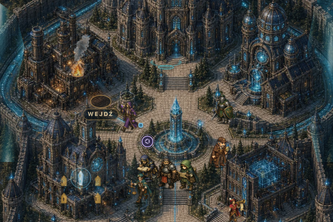
Hermes World is presented as a real-time visual observability layer for multi-agent AI systems. The project was submitted by a single founder, Filip Jaki, to the OpenAI 2026 hackathon on Devpost. It is described as a tool that enables users to observe and understand the behavior of AI agents in real time.
The description states that Hermes World is built with technologies including React, Node.js, JavaScript, HTML5, CSS3, Vite, and GPT-based tools. However, there is no evidence of revenue, customers, traction, or any commercial activity beyond its submission to a hackathon.
Key open question
What is the actual scope and utility of Hermes World as an observability tool for multi-agent AI systems? The lack of detailed product description, use cases, or technical implementation details makes it difficult to assess whether this is a viable product or just a conceptual prototype.
What The Product Actually Is
The description states that Hermes World is a "real-time visual observability layer for multi-agent AI systems."
It was built using:
- Frontend: React, HTML5, CSS3
- Backend: Node.js
- Development tools: Vite, GPT-based tools (e.g., Codex)
- Language: JavaScript
The author does not describe how the product works or what specific features it offers. The project is presented as a hackathon submission with no further elaboration.
Not evidenced: No information on functionality, architecture, or user interface design.
Positioning & Claim Evolution
The description states that Hermes World is positioned as a real-time visual observability layer for multi-agent AI systems.
There is no evidence of prior positioning or evolution of claims. The project appears to be a single submission with no history or prior versions described.
Not evidenced: No indication of how the product’s positioning has changed over time, or whether it was previously marketed differently.
Target Customer & ICP
The description does not state who the target customer is or what the ideal customer profile (ICP) might be.
It is implied that Hermes World targets users working with multi-agent AI systems, but no specific industry, role, or use case is described.
Not evidenced: No evidence of customer personas, buyer profiles, or market segmentation.
Business Model & Pricing Evidence
The description does not provide any information on the business model or pricing strategy for Hermes World.
There is no mention of monetization, licensing, subscriptions, or any commercial framework.
Not evidenced: No indication of how the product would be sold or whether it intends to generate revenue.
Technical & Delivery Signals
The project was built using:
- Frontend: React, HTML5, CSS3
- Backend: Node.js
- Development tools: Vite, GPT-based tools (e.g., Codex)
- Language: JavaScript
It is a hackathon submission and not described as a production-ready product.
Not evidenced: No evidence of scalability, deployment strategy, or technical architecture beyond the stack used.
Traction & Maturity Signals
The project was submitted to the OpenAI 2026 hackathon, indicating it is early-stage. There is no evidence of:
- Customers
- Revenue
- Product adoption
- Iteration history
- Market traction
Not evidenced: No signs of product maturity or commercial traction.
Competitive Context
The description does not mention any competitors or how Hermes World compares to existing solutions in the AI observability space.
It is unclear whether similar tools already exist, or if this is a novel idea.
Not evidenced: No competitive analysis or positioning relative to other players.
Open Questions & Risks
- Early-stage prototype: Submitted as a hackathon project with no evidence of further development.
- No commercial activity: No revenue, customers, or monetization strategy described.
- Limited technical detail: No explanation of how the product works or what it does beyond its tagline.
- Single founder: The team size is listed as one person, which may limit execution capacity.
Inference: The lack of any traction or commercial evidence suggests that Hermes World is likely a conceptual or experimental idea rather than a developed product.
Questions the description leaves open
- What specific problems does Hermes World solve for users working with multi-agent AI systems?
- How does it differ from existing observability tools in the market?
- Is there a plan to develop this beyond a hackathon prototype?
- What is the intended business model or monetization strategy?
- Are there any early adopters or pilot customers?
Overall Assessment
The description states that Hermes World is a real-time visual observability layer for multi-agent AI systems, submitted as a hackathon project.
There is no evidence of:
- Product-market fit
- Revenue or customer traction
- Commercial viability
- Team execution capability beyond one person
Assessment: Not evidenced. This appears to be an early-stage idea or prototype with no demonstrated commercial potential or traction. A follow-up investment or partnership would require significant additional evidence of product development, market validation, and business model clarity.
Customer Segments
inferred
The description states that Hermes World is a "real-time visual observability layer for multi-agent AI systems." Based on this, it can be inferred that the primary customer segments are developers or technical teams working with multi-agent AI systems who need real-time visibility into system behavior.
Value Propositions
evidenced
The description states: "Hermes World is a real-time visual observability layer for multi-agent AI systems." This indicates that the value proposition is to provide real-time visual monitoring and insight into multi-agent AI systems.
Channels
inferred
Given that this is a software tool submitted to a hackathon, it can be inferred that channels may include online platforms (e.g., Devpost), developer forums, or direct outreach to developers working with multi-agent AI systems. However, no specific channel information is provided in the description.
Customer Relationships
inferred
The project is described as a tool for developers working with multi-agent AI systems. It can be inferred that customer relationships may involve direct engagement with developers, possibly through documentation, support forums, or community interaction. No explicit relationship model is stated.
Revenue Streams
not evidenced
The description does not provide any information about how the project intends to generate revenue. There is no mention of pricing models, monetization strategies, or business models beyond the tool itself.
Key Resources
inferred
Based on the technology stack listed (codex, css3, gpt, html5, javascript, node.js, react, vite), it can be inferred that key resources include software development tools, frameworks, and possibly AI model access. However, no explicit statement about key resources is provided.
Key Activities
inferred
The project involves building a visual observability layer for multi-agent AI systems. It can be inferred that key activities include software development, integration of AI models, UI/UX design, and potentially testing or deployment of the tool. No explicit activity list is given.
Key Partnerships
not evidenced
There is no information in the description about any partnerships, whether with other companies, developers, or institutions. The project appears to be a solo effort by one individual.
Cost Structure
not evidenced
The description does not provide any details on the cost structure of the project. No information is given about development costs, operational expenses, or resource allocation.
Evidence & Gaps
- Customer Segments: inferred – Based on the tagline, but no explicit statement about customer segments.
- Question to evidence: What specific types of developers or organizations are targeted?
- Value Propositions: evidenced – The tagline directly states the value proposition.
- No additional question needed.
- Channels: inferred – Inferred from context of a hackathon submission, but no explicit channel information.
- Question to evidence: What are the intended distribution or communication channels?
- Customer Relationships: inferred – Based on the nature of the tool and target audience.
- Question to evidence: How does the project plan to engage with its users?
- Revenue Streams: not evidenced – No mention of monetization or revenue model.
- Question to evidence: What is the intended method of generating revenue?
- Key Resources: inferred – Based on technology stack, but no explicit statement.
- Question to evidence: What are the core assets required for development and operation?
- Key Activities: inferred – Inferred from project scope, but not explicitly stated.
- Question to evidence: What are the main operational activities involved in building and maintaining this tool?
- Key Partnerships: not evidenced – No information about collaborations or partnerships.
- Question to evidence: Are there any strategic partners or collaborators involved?
- Cost Structure: not evidenced – No details on expenses or cost drivers.
- Question to evidence: What are the main costs associated with developing and running this project?
User Stories BotA demo video on every pull request
Get a demo video on every new feature
GitHub App that watches your pull requests and records a narrated, captioned demo.
Save time on demo prep and make informed decisions faster with a video walkthrough of every new feature.
Source
Submitted to the OpenAI 2026 hackathon on Devpost. Project home on Devpost. Back to the full gallery on Devpost.
This competitive analysis was produced by top-founders.com (opens in a new tab)
Generated by a language model from this project's public Devpost page — its tagline and any built-with tags listed there, since the author published no write-up — as captured in August 2026. Short quotations are the author's words. It is an opinion on the idea as a business, not on the people behind it, and it reflects the description as published then. If the project has moved on, request a correction below. The analysis is not independent research and contains no verified traction, revenue or customer data.
An independent guide by KFG International LLC — not affiliated with, endorsed by, or connected to Devpost or OpenAI.