

Archive position — measured, not model output
0 likes on Devpost
2,263 of the 7,850 archived projects have more likes, and 5,587 share exactly 0 — so this project's #4,468 place in the like-ranked listing is a tie-break inside that group, not a ranking.
Projects (log scale)
Likes on Devpost. ▲ marks this project's group.
Show the figures
| Likes | Projects | Share of archive |
|---|---|---|
| 0 | 5,587 | 71.2% |
| 1 | 1,758 | 22.4% |
| 2 | 284 | 3.6% |
| 3–4 | 132 | 1.7% |
| 5–9 | 75 | 1.0% |
| 10+ | 14 | 0.2% |
 User Stories BotA demo video on every pull request
Get a demo video on every new feature
GitHub App that watches your pull requests and records a narrated, captioned demo.
Save time on demo prep and make informed decisions faster with a video walkthrough of every new feature.
Executive Summary
Company: HealthView OS
Self-reported basis: The description is entirely self-reported and unverified, based on a Devpost submission for the OpenAI 2026 hackathon. No third-party corroboration or independent verification exists.
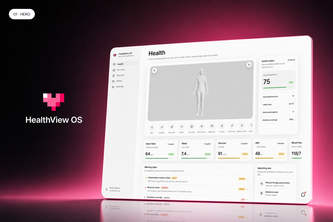
What it appears to be: A local-first desktop application that organizes personal health records into an explorable, evidence-linked workspace using AI-assisted tools and private data processing.
What changed: The author describes building a prototype for a "personal health operating system" that supports local storage, privacy controls, and AI-driven navigation of fragmented health information.
Most important open question: Is there any evidence of user testing, adoption, or market traction beyond the single-person development effort described?
What The Product Actually Is
The description states that HealthView OS is a local-first Tauri desktop application designed to organize personal health data into an explorable workspace. It supports:
- Organization of records including conditions, medications, allergies, diagnostic reports, providers, and more.
- Visualization features such as timelines, trends, body-system views, warnings, and grounded summaries.
- An assistant that helps interpret terminology, locate relevant records, compare changes over time, and prepare questions for healthcare professionals.
- A private, local vault with an authenticated OpenCode runtime and on-device models via Ollama.
- No replacement for professional diagnosis or treatment.
The product is built using technologies such as React, Rust, TypeScript, SQLite, Tauri, OpenAI API, Codex, GPT-5.6, and Ollama.
Note: The description does not state whether the application has been released to users, tested in real-world settings, or deployed beyond a prototype.
Positioning & Claim Evolution
The author positions HealthView OS as:
- A private, local health workspace.
- An explorable, evidence-linked view of health information.
- A personal health operating system, grounded in user records rather than generic chat.
- Designed for organization, understanding, and preparation, not diagnosis or treatment.
The project’s evolution appears to be from a hackathon prototype to an early-stage concept with future ambitions around broader record imports, stronger provenance displays, and integration with providers or services.
Inference: The positioning suggests a shift from a proof-of-concept to a potential personal health data management platform. However, no evidence of prior market positioning or product iteration is provided.
Target Customer & ICP
The description does not name specific customer segments or personas. It implies the target is:
- Individuals who manage their own health records.
- People seeking to understand and organize fragmented health information.
- Users who want a private, local-first approach to health data.
It is unclear whether the system targets patients, caregivers, or healthcare professionals directly.
Inference: The ICP appears to be individuals managing personal health data, but no explicit segmentation or customer validation is stated.
Business Model & Pricing Evidence
There is no evidence of a business model or pricing structure in the description. The author does not state:
- Whether the product will be sold, offered free, or monetized.
- If there are plans for subscriptions, licensing, or enterprise features.
- Any revenue streams or monetization strategies.
Note: The project is described as a hackathon submission and prototype, with no indication of commercial intent beyond the author’s personal development effort.
Technical & Delivery Signals
The application is built using:
- Tauri (desktop framework)
- React, TypeScript, Rust, SQLite
- OpenAI API, Codex, GPT-5.6, Ollama, OpenCode
It is described as a local-first application with:
- A typed health workspace
- An authenticated OpenCode runtime
- Private on-device models
- App-managed Ollama engine
- No unrestricted filesystem or shell access
Inference: The technical stack suggests a focus on privacy and local processing, but no evidence of scalability, performance metrics, or production deployment is provided.
Traction & Maturity Signals
The description states:
- The project was built by one person (Mario A Flores).
- It was submitted to the OpenAI 2026 hackathon.
- It is a prototype, not yet released or deployed.
- No mention of users, customers, or adoption.
Note: There is no evidence of traction, user feedback, or product maturity beyond the single developer’s effort and hackathon submission.
Competitive Context
The description does not reference existing competitors or market positioning. It implies a niche in:
- Personal health data management
- Local-first, privacy-focused tools
- AI-assisted health record navigation
No mention of similar products such as Notion Health, Apple Health, Epic, or other health data platforms is made.
Inference: The competitive landscape is unknown; the project may be a novel concept or overlap with existing tools not named in the description.
Open Questions & Risks
- Single-person development: No team, no external validation, and no evidence of product-market fit.
- Prototype-only status: No real-world usage or feedback.
- Unverified claims: The author’s own account is unverified; no third-party data or user testing.
- Privacy and legal complexity: Handling health data raises regulatory and compliance risks that are not addressed in the description.
- No commercialization plan: No evidence of monetization, distribution, or go-to-market strategy.
Inference: The project lacks traction, team support, and commercial viability indicators. It is a concept with no demonstrated path to market.
Questions the description leaves open
- What specific health data formats can the system import, and how does it handle interoperability?
- Has the system been tested by users or healthcare professionals?
- How does HealthView OS ensure compliance with privacy regulations like HIPAA or GDPR?
- Are there any plans to monetize the product or scale beyond a prototype?
- What is the roadmap for expanding beyond the current local-first, desktop-only model?
- How does the assistant differentiate between user intent and AI-generated interpretation?
Overall Assessment
Not evidenced.
The description provides no evidence of revenue, customers, traction, or commercial viability. It describes a single-person hackathon prototype, not a product with market demand or scalability.
Confidence: Low
Assessment: No basis for investment or partnership at this stage. The project is an idea in early development, not a product with demonstrated value or market readiness.
User Stories BotA demo video on every pull request
Get a demo video on every new feature
GitHub App that watches your pull requests and records a narrated, captioned demo.
Save time on demo prep and make informed decisions faster with a video walkthrough of every new feature.
Source
Submitted to the OpenAI 2026 hackathon on Devpost. Project home on Devpost. Back to the full gallery on Devpost.
This competitive analysis was produced by top-founders.com (opens in a new tab)
Generated by a language model from this project's public Devpost page — its tagline, the author's own write-up and any built-with tags listed there — as captured in August 2026. Short quotations are the author's words. It is an opinion on the idea as a business, not on the people behind it, and it reflects the description as published then. If the project has moved on, request a correction below. The analysis is not independent research and contains no verified traction, revenue or customer data.
An independent guide by KFG International LLC — not affiliated with, endorsed by, or connected to Devpost or OpenAI.