

Archive position — measured, not model output
0 likes on Devpost
2,263 of the 7,850 archived projects have more likes, and 5,587 share exactly 0 — so this project's #4,463 place in the like-ranked listing is a tie-break inside that group, not a ranking.
Projects (log scale)
Likes on Devpost. ▲ marks this project's group.
Show the figures
| Likes | Projects | Share of archive |
|---|---|---|
| 0 | 5,587 | 71.2% |
| 1 | 1,758 | 22.4% |
| 2 | 284 | 3.6% |
| 3–4 | 132 | 1.7% |
| 5–9 | 75 | 1.0% |
| 10+ | 14 | 0.2% |
 User Stories BotA demo video on every pull request
Get a demo video on every new feature
GitHub App that watches your pull requests and records a narrated, captioned demo.
Save time on demo prep and make informed decisions faster with a video walkthrough of every new feature.
Executive Summary
What the company appears to be
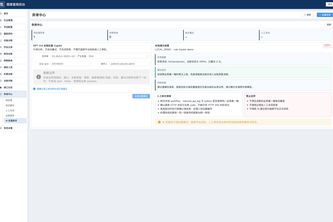
HazWaste Five-Now SaaS is a self-reported compliance-first platform for hazardous-waste operations. It includes a SaaS backend with field operations capabilities (Android client), national-platform adapters, and a read-only GPT-5.6 Copilot that provides structured guidance on exceptions without mutating data or making approvals.
What changed
During OpenAI Build Week, the team added a GPT-5.6 Copilot to an existing platform. The new feature is described as a "read-only" assistant that sanitizes incident data and calls the OpenAI API for structured output. It does not approve, retry, or mutate anything; it only presents risk levels, recommended actions, and verification checklists.
Single most important open question
Is there any evidence of real-world use, adoption, or traction beyond this hackathon project? The description states no revenue, customers, or operational data are available.
What The Product Actually Is
The description states that HazWaste Five-Now SaaS is a compliance-first platform for hazardous-waste operations. It includes:
- A backend SaaS system covering the “five immediate” workflow: record generation, packaging, weighing, QR labeling, and warehousing.
- An Android field client for field operations.
- National-platform adapters.
- Outbox retries, one-package-one-code inventory.
- RBAC (Role-Based Access Control), MFA-ready Console sessions, audit logs, and production-readiness gates.
Additionally, during the OpenAI Build Week event, a GPT-5.6 Copilot was added to the exception center. This Copilot:
- Receives sanitized incident summaries from the backend.
- Calls the OpenAI Responses API with strict JSON Schema output.
- Provides risk level, recommended action, rationale, verification checklist, and prohibited actions.
- Cannot approve, retry, mutate, or claim regulator responses.
- Is described as read-only and non-mutating.
Evidence
- The author states: “The underlying SaaS platform covers the ‘five immediate’ workflow…”
- The author states: “We added a GPT-5.6 Compliance Copilot to the exception center.”
- The author states: “The Copilot cannot retry, close, approve, or mutate anything.”
Inference This is a compliance-focused SaaS platform with an AI assistant that is intentionally limited in scope and authority.
Positioning & Claim Evolution
The description states that the company builds a compliance-first hazardous-waste platform. It positions itself as helping operators reason through failures while maintaining authoritative control over regulator responses, approvals, and business state.
It claims to have built a read-only GPT-5.6 Copilot, which is described as a tool for guidance rather than decision-making. The team emphasizes that the AI does not become a second source of truth and that high-risk work remains in the existing approval workflow.
Evidence
- The author states: “A network or business-code failure can look harmless while creating a serious ledger mismatch.”
- The author states: “We built a Copilot that helps people reason through failures while keeping the regulator response, approval chain, and business state authoritative.”
- The author states: “The AI feature is useful without becoming a second source of truth.”
Inference The positioning is to serve compliance-sensitive industries where trust in data and human control are paramount. The AI is positioned as an assistant, not a replacement.
Target Customer & ICP
The description does not explicitly name the target customer or define an Ideal Customer Profile (ICP). However, it implies that the platform is for operators of hazardous-waste operations who interact with national reporting platforms, and who require compliance and auditability in their workflows.
Evidence
- The author states: “Hazardous-waste operations connect physical weighing, QR labels, one-package-one-code inventory, enterprise approvals, and a national reporting platform.”
- The author states: “Operators need fast guidance, but the most sensitive actions cannot be delegated to an opaque model.”
Inference The ICP likely includes enterprises in regulated industries such as chemical, pharmaceutical, or industrial waste management that must comply with national reporting systems.
Business Model & Pricing Evidence
There is no evidence of a business model or pricing structure in the description. The author does not state whether this is a SaaS subscription, a one-time license, or any other commercial arrangement.
Evidence
- No mention of pricing, subscriptions, or monetization.
- No statement on whether the platform is sold to customers or used internally.
Inference The business model remains unknown. The project is described as a hackathon submission, not a commercial product.
Technical & Delivery Signals
The platform is built with:
- Frontend: Vue 3, TypeScript, Vite, Element Plus, ECharts.
- Backend: Java 21, Spring Boot 3.5, Spring Data JPA, Flyway, MySQL/H2, Redis, RabbitMQ, MinIO/S3.
- Field client: Android/Kotlin.
- AI: OpenAI Responses API with gpt-5.6, strict JSON Schema output.
- Safety features: Allowlisted context, hashed case fingerprint, length limits, explicit consent, read-only endpoint, RBAC permission, audit event, and production startup guards.
Evidence
- The author states: “Frontend: Vue 3, TypeScript, Vite, Element Plus, and ECharts.”
- The author states: “Backend: Java 21, Spring Boot 3.5, Spring Data JPA, Flyway, MySQL/H2, Redis, RabbitMQ, and MinIO/S3.”
- The author states: “AI: OpenAI Responses API with gpt-5.6, medium reasoning effort, store: false, and strict JSON Schema output.”
Inference The platform is built using modern, enterprise-grade technologies. It includes strong safety and compliance features, especially for AI integration.
Traction & Maturity Signals
There is no evidence of traction or maturity beyond the hackathon project. The description states that this is a self-reported, unverified submission to the OpenAI 2026 hackathon. No revenue, customers, or adoption data are provided.
Evidence
- The author states: “Everything above is the authors' own account. It is not independently verified.”
- The author states: “No revenue, customer or traction data is available beyond what they state.”
Inference This is a prototype or proof-of-concept, not a product in production.
Competitive Context
The description does not mention any competitors or competitive landscape. No information is provided about existing platforms in the hazardous-waste compliance space or AI-assisted regulatory tools.
Evidence
- No mention of competitors.
- No statement on how this compares to other solutions in the market.
Inference No competitive context is evident from the description.
Open Questions & Risks
Key risks and open questions include:
- No real-world use or traction: The platform appears to be a hackathon submission with no evidence of operational deployment.
- Unverified claims: All descriptions are self-reported, unverified, and lack independent corroboration.
- AI integration is limited: The AI is explicitly read-only and non-mutating, which may limit its perceived value in a commercial setting.
- No pricing or monetization model: No indication of how the platform would be sold or monetized.
Evidence
- The author states: “It is not independently verified.”
- The author states: “No revenue, customer or traction data is available beyond what they state.”
Questions the description leaves open
- What is the actual use case for this platform in a real-world hazardous-waste operation?
- Has the platform been tested with real users or operators?
- Is there any plan to commercialize this beyond the hackathon?
- How does the platform handle edge cases or failures not covered by the current AI logic?
- What is the expected timeline for moving from prototype to production?
Overall Assessment
Not evidenced.
The description provides no evidence of revenue, customers, traction, or a clear business model. The project is described as a hackathon submission with no operational history or commercialization plan.
Confidence Low. This is a self-reported, unverified prototype with no demonstrated market fit or commercial viability. Any investment or partnership decision would require further due diligence beyond this description.
User Stories BotA demo video on every pull request
Get a demo video on every new feature
GitHub App that watches your pull requests and records a narrated, captioned demo.
Save time on demo prep and make informed decisions faster with a video walkthrough of every new feature.
Source
Submitted to the OpenAI 2026 hackathon on Devpost. Project home on Devpost. Back to the full gallery on Devpost.
This competitive analysis was produced by top-founders.com (opens in a new tab)
Generated by a language model from this project's public Devpost page — its tagline, the author's own write-up and any built-with tags listed there — as captured in August 2026. Short quotations are the author's words. It is an opinion on the idea as a business, not on the people behind it, and it reflects the description as published then. If the project has moved on, request a correction below. The analysis is not independent research and contains no verified traction, revenue or customer data.
An independent guide by KFG International LLC — not affiliated with, endorsed by, or connected to Devpost or OpenAI.