

Archive position — measured, not model output
0 likes on Devpost
2,263 of the 7,850 archived projects have more likes, and 5,587 share exactly 0 — so this project's #4,424 place in the like-ranked listing is a tie-break inside that group, not a ranking.
Projects (log scale)
Likes on Devpost. ▲ marks this project's group.
Show the figures
| Likes | Projects | Share of archive |
|---|---|---|
| 0 | 5,587 | 71.2% |
| 1 | 1,758 | 22.4% |
| 2 | 284 | 3.6% |
| 3–4 | 132 | 1.7% |
| 5–9 | 75 | 1.0% |
| 10+ | 14 | 0.2% |
 User Stories BotA demo video on every pull request
Get a demo video on every new feature
GitHub App that watches your pull requests and records a narrated, captioned demo.
Save time on demo prep and make informed decisions faster with a video walkthrough of every new feature.
Executive Summary
What the company appears to be
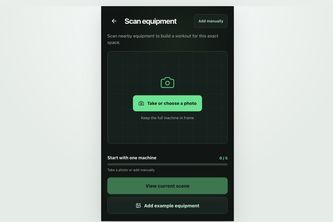
GymPilot is a self-reported mobile-first web app that enables users to scan gym equipment and generate personalized workout plans based on the actual machines available in their current space. It claims to offer exercise order, safety guidance, and step-by-step training for any gym environment — from hotel gyms to apartment fitness rooms.
What changed
The project description shows a clear evolution from an idea rooted in solving real-world fitness access problems (e.g., lack of guidance in small or self-service gyms) into a product that uses equipment scanning as the core interaction model. The author emphasizes an “equipment-first” workflow and local-first functionality.
Single most important open question
Is there evidence of user adoption, traction, or revenue generation beyond the demo? The description states no such data exists — only self-reported claims about how it works and what it aims to do.
What The Product Actually Is
The description states that GymPilot is a mobile-first web app designed for users who want to train in gyms with limited guidance. It allows users to scan or select gym equipment, recognize each machine, and build a workout plan using only the confirmed machines.
Key features include:
- Equipment scanning and recognition
- Display of target muscles, typical exercises, and safety notes per machine
- Workout plan generation based on user goals, experience level, time, and discomfort constraints
- Step-by-step guidance during training
- Local progress saving for returning users
The app is built with JavaScript, Nuxt.js, and ONNX (used for AI inference), and the demo uses local equipment images instead of live camera scanning.
Inference The product appears to be a prototype or early-stage MVP focused on solving a specific problem: helping people train effectively in under-resourced gym environments.
Positioning & Claim Evolution
The author positions GymPilot as a solution for people who have access to gym equipment but lack training guidance — especially in small, self-service fitness spaces like hotel gyms, apartment gyms, and company gyms.
Claim
GymPilot helps users turn any gym space into a personalized workout plan by scanning available equipment.
Evolution of claims
- Initial inspiration focused on the problem: lack of guidance in real-world gyms.
- The product evolved to emphasize an “equipment-first” workflow that starts with what’s physically present.
- The app is described as not replacing professional coaches but offering beginner-friendly, safe, and contextual exercise advice.
Inference The positioning reflects a shift from generic fitness advice to context-aware, localized training guidance — a niche within the broader fitness tech space.
Target Customer & ICP
The description states that GymPilot targets users in:
- Hotel gyms
- Apartment gyms
- Company gyms
- Small self-service fitness rooms
These are environments where equipment is present but not well understood or guided for use.
ICP (Ideal Customer Profile)
- Users who train in limited or unfamiliar gym spaces
- Beginners or those new to working out
- People seeking safe, personalized workouts without professional coaching
- Individuals who value convenience and immediate usability over complex onboarding
Inference The ICP is likely a subset of the general fitness market — specifically those with access to equipment but not structured guidance.
Business Model & Pricing Evidence
Not evidenced.
The description does not mention any pricing model, monetization strategy, or business model. It only describes how the app works and what it aims to achieve.
Technical & Delivery Signals
- Built using JavaScript, Nuxt.js, and ONNX
- Mobile-first web app architecture
- Demo mode uses local equipment images instead of live camera scanning
- Includes a deterministic fallback workout generator for reliability
- Supports local progress saving
- Designed with a focus on making the product feel useful immediately (no long onboarding)
Inference The technical stack suggests a lightweight, accessible platform built around AI-based recognition and local-first UX. The emphasis on local functionality implies an attempt to reduce dependency on cloud services.
Traction & Maturity Signals
Not evidenced.
There is no mention of:
- Revenue
- Customers or users
- Adoption metrics
- Product usage data
- Market traction beyond the hackathon submission
The project is described as a demo submitted to a hackathon, with no indication of commercial deployment or user base.
Competitive Context
Not evidenced.
The description does not reference competitors, market size, or competitive positioning. It does not state whether similar products exist in the market or how GymPilot differentiates itself from them.
Open Questions & Risks
- No traction evidence: The product is described as a hackathon demo with no data on adoption, revenue, or user engagement.
- Unproven AI capabilities: While ONNX is mentioned, the demo uses local images rather than live camera scanning — raising questions about scalability and real-world performance.
- Limited scope of functionality: The app focuses on equipment recognition and workout generation but lacks integration with video guidance or long-term progression tracking (as noted in “What’s next”).
- No business model: No indication of how the product will be monetized or sustained beyond its current prototype stage.
Questions the description leaves open
- What is the actual user feedback from early testers or pilots?
- How does GymPilot plan to scale beyond a hackathon demo?
- Are there any partnerships or pilot programs with gyms or fitness spaces?
- What are the technical limitations of the current equipment recognition system?
- Is there a roadmap for monetization, and how do you intend to charge users?
- How does GymPilot handle edge cases (e.g., ambiguous or missing equipment)?
- What is the long-term vision for integrating video guidance and progression tracking?
Overall Assessment
Not evidenced.
There is no evidence of:
- Revenue
- Customers
- Traction
- Valuation
- Funding history
- Market validation
The project is described as a hackathon submission with no commercial activity beyond the demo. It is unclear whether it has moved past prototype or if there are plans for product-market fit or growth.
Confidence level Low — based entirely on self-reported claims and no external verification.
User Stories BotA demo video on every pull request
Get a demo video on every new feature
GitHub App that watches your pull requests and records a narrated, captioned demo.
Save time on demo prep and make informed decisions faster with a video walkthrough of every new feature.
Source
Submitted to the OpenAI 2026 hackathon on Devpost. Project home on Devpost. Back to the full gallery on Devpost.
This competitive analysis was produced by top-founders.com (opens in a new tab)
Generated by a language model from this project's public Devpost page — its tagline, the author's own write-up and any built-with tags listed there — as captured in August 2026. Short quotations are the author's words. It is an opinion on the idea as a business, not on the people behind it, and it reflects the description as published then. If the project has moved on, request a correction below. The analysis is not independent research and contains no verified traction, revenue or customer data.
An independent guide by KFG International LLC — not affiliated with, endorsed by, or connected to Devpost or OpenAI.