

Archive position — measured, not model output
0 likes on Devpost
2,263 of the 7,850 archived projects have more likes, and 5,587 share exactly 0 — so this project's #4,400 place in the like-ranked listing is a tie-break inside that group, not a ranking.
Projects (log scale)
Likes on Devpost. ▲ marks this project's group.
Show the figures
| Likes | Projects | Share of archive |
|---|---|---|
| 0 | 5,587 | 71.2% |
| 1 | 1,758 | 22.4% |
| 2 | 284 | 3.6% |
| 3–4 | 132 | 1.7% |
| 5–9 | 75 | 1.0% |
| 10+ | 14 | 0.2% |
 User Stories BotA demo video on every pull request
Get a demo video on every new feature
GitHub App that watches your pull requests and records a narrated, captioned demo.
Save time on demo prep and make informed decisions faster with a video walkthrough of every new feature.
Executive Summary
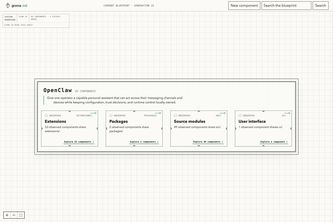
What the company appears to be: Groma.md is a self-reported open-source CLI tool that generates real-time architecture diagrams from codebases. The author describes it as a way to "keep humans in the loop" when AI agents are writing code, by helping users understand unfamiliar codebases and plan future changes.
What changed: The project was submitted to the OpenAI 2026 hackathon, suggesting an early-stage development or launch effort. It is described as a CLI tool with a web interface, built using technologies like bun, Fable-5, GPT-5.6, and React.
Single most important open question: Is there any evidence of traction, adoption, revenue, or customer feedback beyond the author's own description? The self-reported nature of the information makes it difficult to assess whether Groma.md has moved beyond concept or prototype stage.
What The Product Actually Is
The description states that Groma.md is an open-source CLI tool that creates real-time architecture diagrams from codebases. It includes three commands:
groma initgroma scangroma web
It also mentions a plugin system for scanners, with built-in support for TypeScript and future support for other languages.
The author says Groma uses deterministic scanners to analyze codebase structure, finding evidence about boundaries, connections, and structure. These scans are described as fast, offline, and repeatable.
Inference: The tool seems designed to help developers navigate large or unfamiliar codebases visually and annotate them with intent or planning information.
Positioning & Claim Evolution
The author claims that software is "going dark" — meaning agents can write more code faster but humans cannot review every line. Groma.md is positioned as a solution to this problem by helping humans retain understanding and stay in the loop.
It is described as:
- A way to understand unfamiliar codebases
- A tool for describing where architecture should go next
- A living map of system architecture stored inside repositories
- Meant for both humans and AI agents, with shared interfaces
The author also states that Groma was complex to build but simple to use, drawing a comparison to cognitive complexity analyzers.
Inference: The positioning is evolving from a tool for code understanding toward an ecosystem for collaborative architecture planning, potentially including plugins and community contributions.
Target Customer & ICP
The description does not clearly define target customers or ideal customer profiles (ICP). It says Groma is meant for both humans and AI agents, but does not specify:
- Which types of developers or teams use it
- What size organizations or projects benefit most
- Whether it targets enterprise, startups, or individual developers
Inference: The tool likely appeals to developers working with large or unfamiliar codebases who want better visibility into system structure.
Business Model & Pricing Evidence
There is no evidence in the description of a business model or pricing strategy. The project is described as open-source, and there is no mention of monetization, subscriptions, licensing fees, or paid features.
Inference: If Groma.md is open-source, its business model may rely on community contributions, donations, or future premium offerings (not yet evidenced).
Technical & Delivery Signals
The author reports that Groma was built using:
- bun
- fable-5
- gpt-5.6
- react
It supports a plugin system for scanners and is described as having deterministic scanning capabilities.
Inference: The tool appears to be technically sophisticated, with an emphasis on offline, repeatable analysis of code structure. It integrates with AI tools (e.g., GPT) but does not appear to require them directly.
Traction & Maturity Signals
There is no evidence of traction or maturity beyond the author's own description:
- No customer names
- No revenue data
- No usage metrics
- No adoption stories
- No product roadmap or versioning details
The project was submitted to a hackathon, suggesting an early stage.
Inference: The tool has not yet demonstrated measurable traction or user engagement beyond the author's own claims.
Competitive Context
No competitive landscape is described. The author does not name competitors or reference existing tools in this space.
Inference: It is unclear whether Groma.md competes with other code visualization, architecture mapping, or AI-assisted development tools — no such context is provided.
Open Questions & Risks
- No traction evidence: No customers, revenue, or usage data.
- Self-reported only: All information comes from the author’s own account; no external validation.
- Open-source ambiguity: While open-source can be a strength, it raises questions about monetization and long-term sustainability.
- Limited scope: The tool is described as focused on CLI and web interfaces, with no mention of integrations or APIs.
- Unproven ecosystem: The vision of an "open blueprint ecosystem" is stated but not demonstrated.
Questions the description leaves open
- What specific problems are users facing that Groma.md solves?
- How many developers have tried the tool? Have they provided feedback?
- Is there a plan to monetize or sustain the open-source project?
- Are there any early adopters or partners using it in production?
- What is the current development roadmap, and how does it align with user needs?
- How do you envision integrating Groma.md into existing workflows (e.g., CI/CD, IDEs)?
- What are the technical limitations of the current scanner system?
Overall Assessment
Not evidenced: There is no evidence of revenue, customers, or traction to support an investment or partnership decision.
The project is described as a self-contained open-source tool built for developers working with codebases. It has not demonstrated adoption or commercial viability beyond the author’s own claims.
Confidence level: Low — based entirely on self-reported information and no independent verification.
User Stories BotA demo video on every pull request
Get a demo video on every new feature
GitHub App that watches your pull requests and records a narrated, captioned demo.
Save time on demo prep and make informed decisions faster with a video walkthrough of every new feature.
Source
Submitted to the OpenAI 2026 hackathon on Devpost. Project home on Devpost. Back to the full gallery on Devpost.
This competitive analysis was produced by top-founders.com (opens in a new tab)
Generated by a language model from this project's public Devpost page — its tagline, the author's own write-up and any built-with tags listed there — as captured in August 2026. Short quotations are the author's words. It is an opinion on the idea as a business, not on the people behind it, and it reflects the description as published then. If the project has moved on, request a correction below. The analysis is not independent research and contains no verified traction, revenue or customer data.
An independent guide by KFG International LLC — not affiliated with, endorsed by, or connected to Devpost or OpenAI.