

Archive position — measured, not model output
1 like on Devpost
505 of the 7,850 archived projects have more likes, and 1,758 share exactly 1 — so this project's #1,136 place in the like-ranked listing is a tie-break inside that group, not a ranking.
Projects (log scale)
Likes on Devpost. ▲ marks this project's group.
Show the figures
| Likes | Projects | Share of archive |
|---|---|---|
| 0 | 5,587 | 71.2% |
| 1 | 1,758 | 22.4% |
| 2 | 284 | 3.6% |
| 3–4 | 132 | 1.7% |
| 5–9 | 75 | 1.0% |
| 10+ | 14 | 0.2% |
 User Stories BotA demo video on every pull request
Get a demo video on every new feature
GitHub App that watches your pull requests and records a narrated, captioned demo.
Save time on demo prep and make informed decisions faster with a video walkthrough of every new feature.
Executive Summary
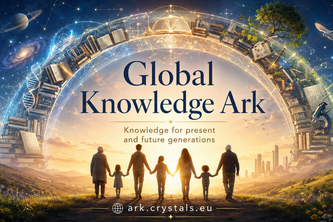
The description states that Global Knowledge Ark is an AI-powered, multilingual knowledge platform aiming to turn complex science, health, technology and philosophy into connected learning paths for people today—and generations to come. It began as a personal passion project rooted in the author’s work on Crystals.eu and evolved into a structured, interactive website with bilingual (English and Lithuanian) content organized under five broad knowledge directions.
The platform is described as an evolving system designed to preserve and connect knowledge across disciplines, using AI tools like GPT-5.6 and Codex for planning, design and implementation, while maintaining human review throughout the process.
Key commercial due-diligence questions include:
- How does the author intend to monetize or scale this platform?
- What is the actual scope of the content being offered?
- Is there any evidence of user engagement or feedback from early adopters?
The single most important open question
What is the business model, and how will the project sustain itself beyond the author’s personal effort?
What The Product Actually Is
The description states that Global Knowledge Ark is:
- A multilingual learning platform (currently bilingual)
- An evolving, interactive knowledge map
- Organized into five broad knowledge directions: Consciousness & Dreams, Health & Vitality, Science & Technology, Earth & Crystals, Cosmos & Civilisations
- Designed to help users explore interconnected subjects through learning paths, topic collections, and introductory pages
- Built using AI tools such as GPT-5.6 and Codex for planning, content creation, and implementation, with human review and approval at every step
It is described as a living map of knowledge that allows exploration in a non-linear way, connecting different fields like astronomy, physics, biology, psychology, and philosophy.
Inferred: The platform appears to be a static or semi-static web-based educational resource, not a SaaS product or marketplace. It does not appear to include paid subscriptions or direct monetization features at this stage.
Positioning & Claim Evolution
The description states that the Global Knowledge Ark:
- Began as a personal passion rooted in crystal-related content but expanded into broader scientific, philosophical and societal topics
- Seeks to create a “living map of knowledge” that helps people learn today while preserving understanding for future generations
- Is not intended to be completed once and left unchanged; it is designed to grow and evolve over time
It positions itself as:
- A resource for students, families, educators, researchers, and curious individuals
- A platform for exploring connections between disciplines, rather than a collection of isolated articles
- A tool that makes knowledge feel less like an isolated library and more like a connected landscape
Inferred: The positioning has evolved from a personal blog or hobby project into a structured public knowledge platform, though it remains unclear whether this is a long-term vision or a short-term prototype.
Target Customer & ICP
The description states that the Global Knowledge Ark aims to serve:
- Students
- Families
- Educators
- Researchers
- Curious individuals
- Generations yet to come
It also mentions:
- People who want to explore how different areas of knowledge connect
- Lifelong learners
- Those interested in science, health, technology, philosophy, and consciousness
Inferred: The target audience is broadly educational, including both formal learners (students) and informal explorers (curious individuals). There is no clear indication of a specific segment or persona beyond general categories.
Not evidenced: No evidence of segmentation, pricing strategy, or customer acquisition methods.
Business Model & Pricing Evidence
The description states:
- The project is self-funded by the author
- It is built using AI tools and human effort without any mention of paid services or monetization
- There are no explicit mentions of revenue models, pricing tiers, or commercial partnerships
Inferred: No business model or pricing structure is evident. The platform appears to be a non-commercial, open-access educational resource.
Not evidenced: No evidence of monetization, subscriptions, advertising, or any form of paid access.
Technical & Delivery Signals
The description states:
- Built with AI tools including GPT-5.6 and Codex
- Uses modern web technologies (HTML, CSS, JavaScript)
- Includes responsive layouts for desktop, tablet, and mobile
- Supports keyboard navigation and assistive technologies
- Features orbital animations that respect reduced-motion preferences
- Implements automated validation for routes, curriculum, and builds
- Has a review-first development workflow: Inspect → propose → implement → test → preview → approve → commit → deploy
Inferred:
- The platform is technically sound, with attention to accessibility and usability
- AI was used as a collaborative tool, not a replacement for human judgment
- The author has strong technical discipline in development practices
Not evidenced: No evidence of scalability, infrastructure, or backend systems beyond the current website.
Traction & Maturity Signals
The description states:
- The platform is now live at ark.crystals.eu
- Includes English and Lithuanian experiences
- Contains a structured catalogue with 384 planned lesson subjects in Physics
- Features an interactive learning map with search functionality across all parts
- Has responsive layouts, accessible navigation, and automated validation
Inferred:
- The project has reached a functional prototype stage
- It shows signs of long-term planning and user-centric design
Not evidenced:
- No evidence of user engagement metrics, retention, or adoption
- No evidence of customer feedback or community involvement
- No evidence of traffic data or usage statistics
Competitive Context
The description does not mention any competitors. The author states that the project grew from personal interest and is not based on existing platforms.
Inferred:
- There is no clear competitive landscape described
- The platform may be unique in its approach to organizing knowledge across disciplines
- It could potentially compete with general-purpose educational resources, but no such comparison is made
Not evidenced: No evidence of direct or indirect competitors, market size, or positioning relative to other platforms.
Open Questions & Risks
The description states:
- The project is developed independently by a single person (the author)
- It has limited time, funding, and technical resources
- The author notes that greater resources would allow faster development
Key risks identified:
- Single-point-of-failure: The entire platform depends on one individual
- Sustainability concerns: No clear path to scaling or monetization
- Content quality control: Reliance on AI tools raises questions about accuracy and consistency
- Lack of traction: No evidence of users, engagement, or feedback
Open questions:
- No indication of how the platform will be maintained or updated long-term
- No mention of community contributions or expert review beyond the author’s own efforts
- The vision is ambitious but lacks a clear roadmap for execution
Questions the description leaves open
- What is your plan for sustaining and growing the platform beyond your personal effort?
- How do you intend to ensure content accuracy and consistency, especially with AI-assisted writing?
- Are there any plans for monetization or revenue generation in the future?
- How will you manage content updates and expansion over time?
- What are the key challenges in making this platform accessible to a wider audience?
- Do you have any experience in education, curriculum design, or knowledge management?
- How do you plan to gather feedback from users and improve based on it?
Overall Assessment
The description states that the Global Knowledge Ark is:
- A self-funded, personal project with no external funding
- Built using AI tools in a review-first workflow
- Designed as a long-term educational resource, not a commercial product
Inferred:
- This is likely a pre-product or prototype stage with strong conceptual and technical foundations
- It may be suitable for early-stage investment or partnership if the author can articulate a clear path to growth, scalability, and monetization
- The project shows promise in terms of vision and execution but lacks evidence of traction or commercial viability
Not evidenced:
- No evidence of revenue, customers, or market validation
- No indication of how the platform will transition from a personal passion into a scalable business
Assessment:
This is an idea with potential, but it currently exists in a pre-commercial prototype phase. It requires further exploration to assess whether it can evolve into a viable product or service. The author’s technical and conceptual clarity are strong, but the lack of traction, monetization strategy, and team structure limits its immediate investment appeal.
User Stories BotA demo video on every pull request
Get a demo video on every new feature
GitHub App that watches your pull requests and records a narrated, captioned demo.
Save time on demo prep and make informed decisions faster with a video walkthrough of every new feature.
Source
Submitted to the OpenAI 2026 hackathon on Devpost. Project home on Devpost. Back to the full gallery on Devpost.
This competitive analysis was produced by top-founders.com (opens in a new tab)
Generated by a language model from this project's public Devpost page — its tagline, the author's own write-up and any built-with tags listed there — as captured in August 2026. Short quotations are the author's words. It is an opinion on the idea as a business, not on the people behind it, and it reflects the description as published then. If the project has moved on, request a correction below. The analysis is not independent research and contains no verified traction, revenue or customer data.
An independent guide by KFG International LLC — not affiliated with, endorsed by, or connected to Devpost or OpenAI.