

Archive position — measured, not model output
2 likes on Devpost
221 of the 7,850 archived projects have more likes, and 284 share exactly 2 — so this project's #333 place in the like-ranked listing is a tie-break inside that group, not a ranking.
Projects (log scale)
Likes on Devpost. ▲ marks this project's group.
Show the figures
| Likes | Projects | Share of archive |
|---|---|---|
| 0 | 5,587 | 71.2% |
| 1 | 1,758 | 22.4% |
| 2 | 284 | 3.6% |
| 3–4 | 132 | 1.7% |
| 5–9 | 75 | 1.0% |
| 10+ | 14 | 0.2% |
 User Stories BotA demo video on every pull request
Get a demo video on every new feature
GitHub App that watches your pull requests and records a narrated, captioned demo.
Save time on demo prep and make informed decisions faster with a video walkthrough of every new feature.
Executive Summary
What the company appears to be
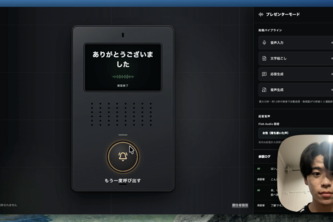
GenkanAI is a self-reported project that claims to turn existing intercom systems into AI agents using an ESP32-based hardware platform and cloud APIs (e.g., Gemini API). The system reportedly allows families to have automated conversations with visitors without replacing or wiring their current intercoms.
What changed
No evidence of prior version or evolution is provided. This appears to be a new project submitted for the OpenAI 2026 hackathon, with no indication of prior development or traction.
Single most important open question
Is there any evidence that GenkanAI has been tested in real-world intercom environments, and what is the actual technical architecture and integration approach?
Commercial due-diligence read
The description is extremely thin — it contains only a tagline, team size, technology stack, and submission context. There is no evidence of revenue, customers, traction, or even a working prototype beyond the hackathon submission. The project appears to be in early conceptual or prototyping stage.
What The Product Actually Is
The description states that GenkanAI "turns your existing intercom into an AI agent that talks with visitors and handles conversations for you." It claims no replacement or wiring is required — just "peace of mind for every family."
Inference Based on the technology stack (ESP32, Swift, Tailscale, Codex, Gemini API), it seems to be a hardware-software hybrid system designed to integrate with existing intercom infrastructure using AI-powered voice interaction.
Not evidenced No details on how exactly the AI agent communicates with visitors, what kind of conversation handling is performed, or whether this is a physical device or software-only solution.
Positioning & Claim Evolution
The tagline states: “GenkanAI turns your existing intercom into an AI agent that talks with visitors and handles conversations for you. No replacement or wiring required—just peace of mind for every family.”
Claim
The product positions itself as a plug-and-play, non-invasive solution to automate intercom interactions for residential use.
Not evidenced There is no indication of prior positioning, evolution of claims, or how this differs from other smart intercom systems or AI assistants. No evidence of user feedback or iterative development.
Target Customer & ICP
The description states: “No replacement or wiring required—just peace of mind for every family.”
Claim
The target customer is families who own existing intercom systems and want to automate visitor interactions without modifying their current setup.
Inference The ICP appears to be residential homeowners, possibly in urban or multi-unit housing environments where intercoms are common.
Not evidenced No evidence of customer segmentation, user personas, or market research. No indication of whether the team has tested with actual users or conducted any form of customer discovery.
Business Model & Pricing Evidence
The description does not contain any information about pricing, monetization, or business model.
Not evidenced No mention of how the product will be sold, whether it’s a one-time purchase, subscription, or freemium model. No evidence of revenue streams or pricing tiers.
Technical & Delivery Signals
The author-declared tech stack includes:
- codex
- esp32
- fishaudio
- geminiapi
- swift
- tailscale
- typeless
Claim
The system uses an ESP32 microcontroller, AI APIs (Gemini), voice processing (fishaudio), and mobile app development (Swift) to enable intercom automation.
Inference It likely involves a hardware component (ESP32) communicating with cloud services via API, possibly using Tailscale for secure networking or local device discovery.
Not evidenced No details on how the system integrates with existing intercoms, whether it supports different intercom types, or if there is a mobile app or web interface. No evidence of delivery timeline or prototype status.
Traction & Maturity Signals
The project was submitted to the OpenAI 2026 hackathon on Devpost.
Claim
It is a hackathon submission, suggesting early-stage development.
Not evidenced No evidence of prior traction, user adoption, revenue, or product-market fit. No indication of whether this is a prototype or a working product.
Competitive Context
No information is provided about competitors or market context.
Not evidenced No mention of existing intercom automation solutions, smart home platforms, or AI voice assistant products that may compete with GenkanAI.
Open Questions & Risks
- Thin evidence base: The entire description is self-reported and lacks any verifiable details.
- No traction or validation: No evidence of customers, revenue, or real-world testing.
- Unproven integration approach: No clarity on how the system interfaces with existing intercoms.
- Unclear business model: No indication of monetization strategy or pricing.
- Limited team size: Only two members listed, which may limit execution capability.
Questions the description leaves open
- What is the exact technical architecture and integration approach for connecting to existing intercom systems?
- Have you tested this with real intercom hardware? If so, what were the results?
- How does the AI agent handle different types of visitor interactions (e.g., delivery, maintenance, unknown visitors)?
- Is there a mobile app or web interface involved in the system?
- What is your plan for scaling beyond the hackathon prototype?
- Are you planning to monetize this product? If so, how?
Overall Assessment
Not evidenced: No evidence of revenue, customers, traction, or validated market need.
Inference At this stage, GenkanAI appears to be a conceptual or early-stage hackathon project with no demonstrated commercial viability. It lacks the evidence required for due-diligence evaluation in terms of product-market fit, technical feasibility, or business model clarity.
Confidence level: Very low — based on extremely thin self-reported evidence only.
User Stories BotA demo video on every pull request
Get a demo video on every new feature
GitHub App that watches your pull requests and records a narrated, captioned demo.
Save time on demo prep and make informed decisions faster with a video walkthrough of every new feature.
Source
Submitted to the OpenAI 2026 hackathon on Devpost. Project home on Devpost. Back to the full gallery on Devpost.
This competitive analysis was produced by top-founders.com (opens in a new tab)
Generated by a language model from this project's public Devpost page — its tagline and any built-with tags listed there, since the author published no write-up — as captured in August 2026. Short quotations are the author's words. It is an opinion on the idea as a business, not on the people behind it, and it reflects the description as published then. If the project has moved on, request a correction below. The analysis is not independent research and contains no verified traction, revenue or customer data.
An independent guide by KFG International LLC — not affiliated with, endorsed by, or connected to Devpost or OpenAI.