

Archive position — measured, not model output
1 like on Devpost
505 of the 7,850 archived projects have more likes, and 1,758 share exactly 1 — so this project's #1,115 place in the like-ranked listing is a tie-break inside that group, not a ranking.
Projects (log scale)
Likes on Devpost. ▲ marks this project's group.
Show the figures
| Likes | Projects | Share of archive |
|---|---|---|
| 0 | 5,587 | 71.2% |
| 1 | 1,758 | 22.4% |
| 2 | 284 | 3.6% |
| 3–4 | 132 | 1.7% |
| 5–9 | 75 | 1.0% |
| 10+ | 14 | 0.2% |
 User Stories BotA demo video on every pull request
Get a demo video on every new feature
GitHub App that watches your pull requests and records a narrated, captioned demo.
Save time on demo prep and make informed decisions faster with a video walkthrough of every new feature.
Executive Summary
What the company appears to be
Gainz is a self-reported private, offline desktop application for reconciling incomplete cryptocurrency tax records. The author states it helps users work through discrepancies in their crypto transactions one decision at a time, with guided workflows and defensible tax calculations.
What changed
The project was initially built in Python pre-ChatGPT but stagnated. During OpenAI Build Week, the author returned to develop it using Codex and GPT-5.6, shifting from a spreadsheet helper to a "guided reconciliation product" that emphasizes transparency around incomplete records and professional audit readiness.
Single most important open question
Is there evidence of real-world usage or feedback from tax professionals (CPAs/enrolled agents) beyond the author's own development experience?
This analysis is based entirely on the self-reported, unverified project description supplied by the caller. No archived data, revenue figures, customer names, or traction metrics are available.
What The Product Actually Is
The description states that Gainz is:
- A private, offline desktop application
- For reconciling incomplete cryptocurrency tax records
- That runs on the user's computer
- Uses local web interface
- Stores all working data, revisions, uploaded source files, exports, and audit packets locally
- Built with Python, local-first architecture, and uses tools like Codex, GPT-5.6, pandas, sqlite, pytest, etc.
It is described as a tool that:
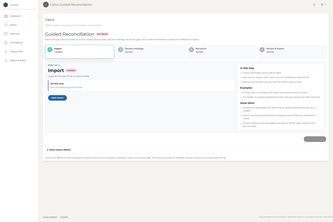
- Imports transaction files from exchanges and payment platforms
- Helps users declare current holdings
- Guides them through discrepancies in a step-by-step manner
- Distinguishes between documented facts, calculated values, user decisions, unresolved questions, and tax-professional direction
- Generates tax workbooks and audit packets containing reconciliation details, assumptions, evidence references, decision history, and CPA-facing workpapers
The product is described as a desktop application with local-first architecture, not a SaaS or cloud-hosted solution.
Positioning & Claim Evolution
The author states:
- Initially built to solve their own problem with crypto tax reporting
- Started as a Python tool before ChatGPT era
- Later redeveloped using Codex and GPT-5.6 during Build Week
- Evolved from a "spreadsheet helper" into a guided reconciliation product
- Goal: Help users move from “I do not know what happened here” to “I understand this, it is documented, and I can discuss it with my tax professional”
The positioning has shifted from:
- A personal utility (pre-ChatGPT)
- To a more structured, guided tool for tax professionals
- With emphasis on transparency, audit readiness, and user decision documentation
The evolution reflects an intent to improve usability and clarity around incomplete records, not necessarily a shift in target market or commercial model.
Target Customer & ICP
The description states:
- The primary user is someone who has incomplete crypto tax records
- Someone who needs help understanding how to report their cryptocurrency activity
- Likely a taxpayer with complex or messy transaction history
- Possibly a person who wants to prepare for a conversation with a CPA or enrolled agent
It does not specify:
- Whether the tool targets individuals, small businesses, or institutional users
- If there are specific tax situations (e.g., hobbyist vs. trader)
- Any segmentation beyond "users with incomplete records"
No explicit ICP defined; the target is inferred as crypto users needing help with tax reconciliation.
Business Model & Pricing Evidence
The description states:
- Gainz is a private, offline desktop application
- All processing and storage remain on the user’s computer
- No mention of pricing or monetization strategy
- No indication of whether it will be sold, offered free, or funded through grants or partnerships
There is no evidence of a business model or pricing structure. The product is described as personal-use only.
Technical & Delivery Signals
The description states:
- Built with Python, local-first architecture
- Uses local web interface
- Stores data locally using SQLite
- Utilizes tools like Codex, GPT-5.6, pandas, pytest, openpyxl, bootstrap, etc.
- Designed for Windows and macOS
- Includes features such as:
- Guided workflows
- Regression and end-to-end tests
- Accessibility improvements
- Interface hierarchy and instructional language
- Packaging and release verification
Technical signals suggest a developer-focused product with iterative development using AI-assisted tools, but no evidence of production deployment or scaling.
Traction & Maturity Signals
The description states:
- The project was originally built in Python pre-ChatGPT and later revived during Build Week
- It is described as an extension of a prior version
- The author mentions using Codex sessions to test the product, identify confusion, and improve implementation iteratively
- There is no mention of:
- Users or customers
- Revenue or funding
- Adoption metrics
- Product usage data
No traction or maturity signals are evident beyond the author’s own development experience.
Competitive Context
The description does not provide:
- Any information about competitors
- Market size or competitive landscape
- Comparison to existing tax software for crypto (e.g., CoinTracking, CryptoTaxCalculator, etc.)
The competitive context is entirely absent from the self-reported description.
Open Questions & Risks
Key risks and open questions based on the description:
- No commercial traction or user feedback: The product exists only as a personal project with no evidence of real-world usage.
- Unverified claims about tax accuracy: The author states Gainz helps users prepare for CPAs, but there is no validation from actual tax professionals.
- Limited scalability: As a desktop application, it lacks the ability to scale beyond individual use cases.
- No pricing or monetization strategy: Unclear how the product will be commercialized.
- AI dependency risk: Heavy reliance on Codex and GPT-5.6 may not translate into sustainable product development if those tools change or become unavailable.
These are all inferred from the lack of evidence, not stated facts.
Questions the description leaves open
- Have you validated Gainz with real-world file formats from multiple exchanges?
- Have you received feedback from CPAs or enrolled agents on the accuracy of the tax calculations and audit packet generation?
- What are your plans for monetization or commercialization beyond personal use?
- How do you plan to handle edge cases in transaction data that may not be covered by current workflows?
- Are there any legal or regulatory considerations around providing tax guidance through software?
- What is the expected time investment for a typical user to complete reconciliation using Gainz?
- Can you demonstrate how the tool handles complex scenarios like staking rewards, forks, or multi-currency transfers?
These questions aim to uncover gaps in the self-reported narrative and validate assumptions about product utility and market fit.
Overall Assessment
The description states:
- This is a personal project built by one person (Stephen Twait)
- It was submitted as part of an OpenAI hackathon
- The author intends to validate with more file formats and get feedback from tax professionals
- Long-term goal: Make difficult pre-professional-conversation work easier
There is no evidence of:
- Revenue or financial performance
- Customer base or adoption
- Funding rounds or investor interest
- Product-market fit beyond the author’s own experience
Assessment: Not evidenced. This appears to be a prototype or proof-of-concept project with no demonstrated commercial viability, traction, or market validation. It is not ready for investment or partnership consideration without further evidence of real-world usage and professional validation.
User Stories BotA demo video on every pull request
Get a demo video on every new feature
GitHub App that watches your pull requests and records a narrated, captioned demo.
Save time on demo prep and make informed decisions faster with a video walkthrough of every new feature.
Source
Submitted to the OpenAI 2026 hackathon on Devpost. Project home on Devpost. Back to the full gallery on Devpost.
This competitive analysis was produced by top-founders.com (opens in a new tab)
Generated by a language model from this project's public Devpost page — its tagline, the author's own write-up and any built-with tags listed there — as captured in August 2026. Short quotations are the author's words. It is an opinion on the idea as a business, not on the people behind it, and it reflects the description as published then. If the project has moved on, request a correction below. The analysis is not independent research and contains no verified traction, revenue or customer data.
An independent guide by KFG International LLC — not affiliated with, endorsed by, or connected to Devpost or OpenAI.