

Archive position — measured, not model output
0 likes on Devpost
2,263 of the 7,850 archived projects have more likes, and 5,587 share exactly 0 — so this project's #4,226 place in the like-ranked listing is a tie-break inside that group, not a ranking.
Projects (log scale)
Likes on Devpost. ▲ marks this project's group.
Show the figures
| Likes | Projects | Share of archive |
|---|---|---|
| 0 | 5,587 | 71.2% |
| 1 | 1,758 | 22.4% |
| 2 | 284 | 3.6% |
| 3–4 | 132 | 1.7% |
| 5–9 | 75 | 1.0% |
| 10+ | 14 | 0.2% |
 User Stories BotA demo video on every pull request
Get a demo video on every new feature
GitHub App that watches your pull requests and records a narrated, captioned demo.
Save time on demo prep and make informed decisions faster with a video walkthrough of every new feature.
Executive Summary
What the company appears to be
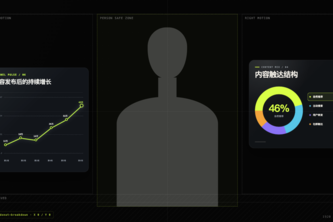
FrameLoom is a local-first motion overlay editor for talking-head videos, built as a browser-based tool with macOS-specific export capabilities. It allows users to create structured, reusable video overlays using JSON timelines or manual editing, and exports them as transparent ProRes 4444 MOV files.
What changed
The project was submitted to the OpenAI 2026 hackathon by one developer (Zachary Zachary). It is described as a functional prototype with a defined architecture and export pipeline, but no evidence of commercial traction or revenue.
Single most important open question
Is there any evidence that FrameLoom has been used beyond the hackathon context, or whether it will be developed into a product with users or customers?
What The Product Actually Is
The description states that FrameLoom is a local-first motion overlay editor for talking-head videos. It supports:
- Importing structured Overlay JSON timelines
- Manual creation of motion cards (five customizable effects: quote highlights, narrative steps, bar charts, donut charts, trend lines)
- Timeline editing with snapping, duplication, deletion, overlap detection
- Live preview against a local reference video
- Export of transparent 1920 × 1080, 60 FPS ProRes 4444 Alpha MOV files for use in professional video software (Final Cut Pro, Adobe Premiere Pro, DaVinci Resolve)
- Reference videos remain on the user’s device and are never uploaded
The tool is built with React, TypeScript, Vite, and uses Swift + AVFoundation for macOS export. It does not call GPT-5.6 at runtime and does not require an AI API or cloud service.
Inference The product is a specialized tool for content creators who need to add motion graphics to talking-head videos, with emphasis on reusability and integration into existing workflows.
Positioning & Claim Evolution
The author states that FrameLoom was built to address the inefficiency of rebuilding motion graphics manually in traditional video editors. It aims to allow users to describe motion graphics as structured data, synchronize them on a timeline, adjust visually, and export reusable assets.
It positions itself as a tool for creating the motion layer, not replacing full video editing software.
Inference The positioning reflects an intent to serve niche creators or teams who want to streamline post-production workflows by automating parts of motion graphics creation while maintaining control over final output.
Target Customer & ICP
The description does not name specific customer segments or personas. However, it implies a target audience of:
- Content creators working with talking-head videos
- Video editors using Final Cut Pro, Adobe Premiere Pro, or DaVinci Resolve
- Teams needing reusable motion graphics assets in production workflows
Inference The ICP likely includes independent creators, small studios, or professionals who work with video content and want to reduce manual effort in adding visual elements.
Business Model & Pricing Evidence
There is no evidence of pricing, monetization strategy, or business model. The project is described as a hackathon submission by one developer.
Inference No commercial model has been established; the tool appears to be experimental or prototype-level.
Technical & Delivery Signals
The product is built with:
- Frontend: React, TypeScript, Vite
- Backend/Export Pipeline: Swift + AVFoundation on macOS
- AI Integration: GPT-5.6 used during development (not at runtime)
- Export Format: Transparent 1920 × 1080, 60 FPS ProRes 4444 Alpha MOV
- Data Handling: JSON-based timeline input/output; strict validation of inputs
- Privacy: Reference videos stay local; no upload to cloud services
Inference The architecture shows a focus on performance, correctness, and integration with professional tools. It uses deterministic rendering and local processing.
Traction & Maturity Signals
The project is described as a hackathon submission, built by one person (Zachary Zachary), and submitted to the OpenAI 2026 hackathon on Devpost.
There is no evidence of:
- Revenue
- Customers
- Users
- Adoption metrics
- Product usage beyond the development phase
Inference The project has not demonstrated any traction or maturity beyond a prototype or proof-of-concept stage.
Competitive Context
The description does not mention competitors. However, based on its function (motion graphics overlay editor for talking-head videos), it may compete with:
- Tools like Adobe After Effects, Premiere Pro, or DaVinci Resolve’s motion graphics features
- Specialized tools such as Canva Video, Lumen5, or Pictory that offer automated video creation workflows
Inference The competitive landscape is not clearly defined in the description. FrameLoom appears to be a niche tool focused on local-first, structured editing and export.
Open Questions & Risks
- Single Developer: Only one team member (Zachary Zachary) is mentioned.
- No Commercial Traction: No evidence of revenue, customers, or user base.
- Limited Platform Support: Export pipeline only works on macOS; no cross-platform support currently.
- Prototype Status: Described as a hackathon submission with no indication of further development plans.
- AI Dependency During Build Only: GPT-5.6 was used for development but not in runtime or product delivery.
Inference The lack of commercial traction, platform limitations, and single-person development raise concerns about scalability and viability as a long-term product.
Questions the description leaves open
- What is the current status of FrameLoom beyond the hackathon? Is it being actively developed or used?
- Are there any plans to expand support beyond macOS?
- Has there been any feedback from potential users or early adopters?
- How do you plan to monetize this tool if at all?
- What are the technical and operational challenges in scaling this for broader use?
Overall Assessment
There is no evidence of commercial traction, revenue, customers, or a clear business model.
FrameLoom appears to be a prototype or hackathon project, built by one developer with no indication of ongoing development or market adoption.
Confidence Level: Low. The description provides only self-reported claims and lacks any verifiable data on usage, users, or commercial viability.
Assessment: Not ready for investment or partnership consideration at this time. Further evidence of traction, product-market fit, or a clear path to monetization is required before evaluating its potential.
User Stories BotA demo video on every pull request
Get a demo video on every new feature
GitHub App that watches your pull requests and records a narrated, captioned demo.
Save time on demo prep and make informed decisions faster with a video walkthrough of every new feature.
Source
Submitted to the OpenAI 2026 hackathon on Devpost. Project home on Devpost. Back to the full gallery on Devpost.
This competitive analysis was produced by top-founders.com (opens in a new tab)
Generated by a language model from this project's public Devpost page — its tagline, the author's own write-up and any built-with tags listed there — as captured in August 2026. Short quotations are the author's words. It is an opinion on the idea as a business, not on the people behind it, and it reflects the description as published then. If the project has moved on, request a correction below. The analysis is not independent research and contains no verified traction, revenue or customer data.
An independent guide by KFG International LLC — not affiliated with, endorsed by, or connected to Devpost or OpenAI.