

Archive position — measured, not model output
0 likes on Devpost
2,263 of the 7,850 archived projects have more likes, and 5,587 share exactly 0 — so this project's #4,185 place in the like-ranked listing is a tie-break inside that group, not a ranking.
Projects (log scale)
Likes on Devpost. ▲ marks this project's group.
Show the figures
| Likes | Projects | Share of archive |
|---|---|---|
| 0 | 5,587 | 71.2% |
| 1 | 1,758 | 22.4% |
| 2 | 284 | 3.6% |
| 3–4 | 132 | 1.7% |
| 5–9 | 75 | 1.0% |
| 10+ | 14 | 0.2% |
 User Stories BotA demo video on every pull request
Get a demo video on every new feature
GitHub App that watches your pull requests and records a narrated, captioned demo.
Save time on demo prep and make informed decisions faster with a video walkthrough of every new feature.
Executive Summary
What the company appears to be
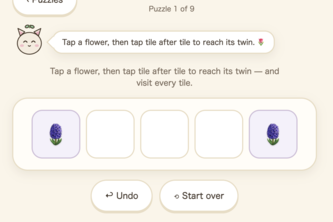
The project described by the author is a simple web-based brain game platform designed for older adults, specifically targeting users like the founder's mother. It is built using JavaScript and includes localization support in Chinese, with an emphasis on ease-of-use and accessibility.
What changed
This is a self-reported personal project submitted to a hackathon, not a commercial product or business. The author states they built it quickly as a personal effort to help their mother stay mentally active and prevent cognitive decline.
Single most important open question
Is there any evidence of traction, revenue, or customer adoption beyond the founder's own use and feedback from friends and family?
What The Product Actually Is
The description states that this is a simple web-based brain game platform, built with JavaScript. It is described as mobile-friendly and includes localization for Chinese language users. The author notes that it supports adjustable font size to accommodate visual impairments.
- The product is presented as a puzzle-based game inspired by titles like Staff of the Sword.
- It features cute visuals, including a mascot (a bunny) offering encouragement.
- Games are designed to be forgiving and non-time-sensitive, with options to reset moves or restart levels.
There is no evidence of monetization, paid features, or advanced game mechanics beyond what is described in the author's own account.
Positioning & Claim Evolution
The author states their primary motivation was personal — helping their mother stay mentally active due to concerns about dementia. The positioning appears to be:
- A personal care tool, not a commercial product.
- Focused on elderly users, particularly those who may benefit from low-stress cognitive activities.
- Positioned as an accessible, intuitive, and emotionally supportive platform.
There is no indication of market positioning beyond the founder’s own intent. No claims about scalability, mass adoption, or broader use cases are made.
Target Customer & ICP
The description states that the target user is:
- The founder's mother.
- An older adult, possibly at risk for cognitive decline.
- Someone who speaks Chinese as their primary language.
- A person who may have difficulty seeing small text and needs adjustable font sizes.
There is no evidence of segmentation beyond this individual case. No data on demographics, user personas, or broader market targeting exists in the provided description.
Business Model & Pricing Evidence
The author does not describe any business model or pricing structure. The project is described as a personal effort, and there is no mention of:
- Revenue streams
- Subscription plans
- Paid features
- Monetization strategies
It is implied that the platform is free to access, but this is not explicitly stated.
Technical & Delivery Signals
The author reports:
- The product was built using JavaScript.
- It uses AI prompts for development assistance.
- It includes localization support in Chinese.
- It is mobile-friendly and responsive.
- There are puzzle builders and level verifiers, suggesting a framework for future content creation.
Challenges mentioned include:
- AI prompt inefficiencies
- Page caching issues during development
No evidence of technical architecture, scalability, or infrastructure beyond the author’s own account.
Traction & Maturity Signals
The description states:
- The project was built quickly.
- It received positive feedback from friends and family ("it's so cute", "it's fun but pretty easy").
- The founder’s mother gave a “like” emoji reply.
- No formal testing, user metrics, or performance data are provided.
There is no evidence of:
- Customer acquisition
- Retention rates
- User engagement
- Product usage analytics
Competitive Context
The author references a similar game titled Staff of the Sword, which inspired the design. However, there is no mention of:
- Direct competitors
- Market analysis
- Competitive advantages or differentiators
- Industry benchmarks or trends
No evidence suggests this project operates within an existing competitive landscape.
Open Questions & Risks
- The project is described as a personal hackathon submission, not a commercial venture.
- No evidence of revenue, customers, or traction beyond the founder’s own experience.
- The lack of formal product development or business planning raises questions about long-term viability.
- The use of AI for development suggests potential instability in output quality and consistency.
- There is no indication of how the project might scale or be monetized.
Questions the description leaves open
- What is the actual scope of your intended market beyond your mother?
- Have you tested with more than just family members? If so, what were the results?
- How do you plan to expand beyond this initial version and make it sustainable?
- Are there any plans for monetization or user engagement features beyond simple gameplay?
- What is your strategy for reaching older adults who may not be tech-savvy?
Overall Assessment
This project is a self-reported personal initiative, submitted to a hackathon, with no evidence of commercial traction, revenue, or customer adoption. The description does not indicate any formal business model or scalable product.
Assessment Not evidenced as a viable investment or partnership opportunity based on the information provided. It remains a personal prototype without signs of commercial viability or market readiness.
User Stories BotA demo video on every pull request
Get a demo video on every new feature
GitHub App that watches your pull requests and records a narrated, captioned demo.
Save time on demo prep and make informed decisions faster with a video walkthrough of every new feature.
Source
Submitted to the OpenAI 2026 hackathon on Devpost. Project home on Devpost. Back to the full gallery on Devpost.
This competitive analysis was produced by top-founders.com (opens in a new tab)
Generated by a language model from this project's public Devpost page — its tagline, the author's own write-up and any built-with tags listed there — as captured in August 2026. Short quotations are the author's words. It is an opinion on the idea as a business, not on the people behind it, and it reflects the description as published then. If the project has moved on, request a correction below. The analysis is not independent research and contains no verified traction, revenue or customer data.
An independent guide by KFG International LLC — not affiliated with, endorsed by, or connected to Devpost or OpenAI.