

Archive position — measured, not model output
0 likes on Devpost
2,263 of the 7,850 archived projects have more likes, and 5,587 share exactly 0 — so this project's #5,434 place in the like-ranked listing is a tie-break inside that group, not a ranking.
Projects (log scale)
Likes on Devpost. ▲ marks this project's group.
Show the figures
| Likes | Projects | Share of archive |
|---|---|---|
| 0 | 5,587 | 71.2% |
| 1 | 1,758 | 22.4% |
| 2 | 284 | 3.6% |
| 3–4 | 132 | 1.7% |
| 5–9 | 75 | 1.0% |
| 10+ | 14 | 0.2% |
 User Stories BotA demo video on every pull request
Get a demo video on every new feature
GitHub App that watches your pull requests and records a narrated, captioned demo.
Save time on demo prep and make informed decisions faster with a video walkthrough of every new feature.
Executive Summary
What the company appears to be
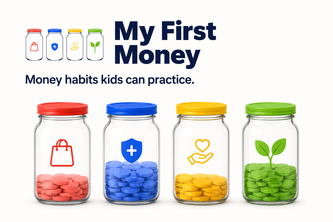
My First Money is a self-reported family financial literacy tool designed for parents and children aged 7–13. It supports a weekly parent-child routine that involves earning money transparently, then choosing how to spend, save, give, or grow it. The product is described as a supervised practice environment where families repeat a structured cycle of agreement, activity, review, allocation, and reflection.
What changed
The project was built during the OpenAI 2026 hackathon using AI tools like Codex and GPT-5.6. It represents an early-stage prototype with no evidence of revenue, customers, or traction beyond its own author’s claims.
Single most important open question — the commercial due-diligence read
Is there a viable path to scaling this product into a sustainable business model that supports real-world family adoption and long-term engagement?
What The Product Actually Is
The description states that My First Money is a supervised weekly money-practice routine for families with children aged 7–13. It includes:
- A minimal nickname-only parent profile.
- Weekly focus selection.
- Family agreement review.
- Base pocket-money amount agreed before the week begins.
- Optional job completion adding to the base.
- Allocation of funds into four jars: Spend, Save, Give, and Grow.
- Append-only history tracking.
- A mobile-first interface built with Next.js, TypeScript, and React.
The product is described as a modular monolith using Zod validation, integer minor-unit money calculations, and same-origin server boundaries. It uses synthetic data only in its deployed form and has unit/component testing and end-to-end verification across mobile and desktop viewports.
Inference It appears to be an early-stage prototype built for demonstration purposes, not production-ready software with real-world use cases or persistent storage.
Positioning & Claim Evolution
The author positions My First Money as a financial habit-building tool, not a financial education curriculum. It emphasizes repeated practice over one-time lessons and aims to create safe opportunities for children to experience trade-offs.
Key claims:
- Financial literacy is not one lesson but becomes a habit through repeated choices.
- The goal is to give families many small, safe chances to practice spending, patience, generosity, planning, and learning.
- Parents can learn from this too by examining their own habits when explaining choices clearly to children.
Inference This positioning reflects an intent to build a behavioral change product, not a traditional SaaS or marketplace offering. It is framed as a tool for family engagement rather than a scalable commercial solution.
Target Customer & ICP
The description states that My First Money is designed first for families with children aged 7–13. The target user is the parent, who creates a profile and guides their child through the process.
There is no mention of:
- Specific demographics beyond age range.
- Geographic targeting.
- Parental income levels or educational backgrounds.
- Any segmentation strategy beyond family unit size.
Inference The ICP is likely a parent or guardian within a specific age group (7–13) who values financial education and is willing to engage in structured, weekly routines with their child. No evidence suggests targeting schools, institutions, or broader consumer markets.
Business Model & Pricing Evidence
There is no evidence of:
- Revenue streams.
- Pricing models.
- Monetization strategies.
- Customer acquisition costs.
- Subscription plans or one-time purchases.
The author describes the product as a prototype and mentions future steps including “parent authentication, persistent PostgreSQL storage, parental consent and deletion flows, backup and restore evidence, authorization testing, privacy review, and appropriate legal review.”
Inference No business model has been defined. The project appears to be in an exploratory phase with no indication of how it would generate revenue or sustain itself beyond the hackathon.
Technical & Delivery Signals
The product is built using:
- Next.js, TypeScript, React, Tailwind CSS
- Codex + GPT-5.6 for implementation assistance
- Docker, Playwright, Vitest, Zod, Drizzle ORM, OpenAI SDK
- PWA support
- Modular monolith architecture with append-only history
The author claims:
- The application supports full lifecycle: setup, weekly focus, family agreement, active week, completion review, payday, jar allocation, history, and next week.
- Unit and component tests exist.
- End-to-end testing across mobile and desktop viewports.
Inference It is a technical prototype, not a production-ready system. The use of synthetic data and lack of persistent storage suggest it’s not yet suitable for real-world deployment or user feedback loops.
Traction & Maturity Signals
There is no evidence of:
- Revenue.
- Customers.
- Users.
- Adoption metrics.
- Product-market fit indicators.
- Any usage data beyond the author's own account.
The project was submitted to a hackathon, and the author notes that it was built from scratch during the event. The deployed version uses synthetic data only.
Inference There is no traction or maturity signal. This is an early-stage idea, not a product with real-world usage or market validation.
Competitive Context
The description does not mention any competitors or direct substitutes. However, it implies that My First Money is part of a broader category of financial literacy tools for children, which may include:
- Educational apps.
- Parental control platforms.
- Savings and budgeting tools designed for kids.
No evidence exists to assess how this product compares in terms of features, pricing, or positioning within the market.
Inference The competitive landscape is unknown. The author does not reference existing solutions or clearly articulate differentiation from them.
Open Questions & Risks
- Unproven commercial viability: No revenue, customers, or monetization strategy.
- Prototype nature: Built for a hackathon; lacks production-grade features like persistent storage and user authentication.
- Unclear path to scale: The product is described as a weekly routine, which may not be scalable or sustainable long-term without significant investment in engagement or community building.
- Lack of external validation: No third-party reviews, testimonials, or usage data.
- AI dependency risk: Heavy reliance on AI tools like Codex and GPT-5.6 raises questions about reproducibility and control over development.
Inference This is a concept with potential but lacks any evidence of traction, scalability, or commercial readiness.
Questions the description leaves open
- What are the key assumptions behind the weekly routine model? How do you plan to validate these?
- Are there any plans for parental consent flows, data privacy compliance (e.g., GDPR, COPPA), and legal review?
- How will you ensure long-term engagement beyond the initial novelty of the product?
- What is your vision for moving from a prototype to a real-world family beta?
- Have you considered how this might be integrated into existing parenting or educational frameworks?
Overall Assessment
There is no evidence of revenue, customers, traction, or a defined business model. The product is described as a hackathon prototype, built with AI tools and synthetic data.
The author’s claims are self-reported and unverified. No indication exists that the project has moved beyond ideation or early experimentation.
Assessment This is an idea in its earliest stages, not a viable investment or partnership opportunity at this time. It requires further development, testing, and validation before any commercial due-diligence evaluation can be made.
User Stories BotA demo video on every pull request
Get a demo video on every new feature
GitHub App that watches your pull requests and records a narrated, captioned demo.
Save time on demo prep and make informed decisions faster with a video walkthrough of every new feature.
Source
Submitted to the OpenAI 2026 hackathon on Devpost. Project home on Devpost. Back to the full gallery on Devpost.
This competitive analysis was produced by top-founders.com (opens in a new tab)
Generated by a language model from this project's public Devpost page — its tagline, the author's own write-up and any built-with tags listed there — as captured in August 2026. Short quotations are the author's words. It is an opinion on the idea as a business, not on the people behind it, and it reflects the description as published then. If the project has moved on, request a correction below. The analysis is not independent research and contains no verified traction, revenue or customer data.
An independent guide by KFG International LLC — not affiliated with, endorsed by, or connected to Devpost or OpenAI.