

Archive position — measured, not model output
0 likes on Devpost
2,263 of the 7,850 archived projects have more likes, and 5,587 share exactly 0 — so this project's #4,086 place in the like-ranked listing is a tie-break inside that group, not a ranking.
Projects (log scale)
Likes on Devpost. ▲ marks this project's group.
Show the figures
| Likes | Projects | Share of archive |
|---|---|---|
| 0 | 5,587 | 71.2% |
| 1 | 1,758 | 22.4% |
| 2 | 284 | 3.6% |
| 3–4 | 132 | 1.7% |
| 5–9 | 75 | 1.0% |
| 10+ | 14 | 0.2% |
 User Stories BotA demo video on every pull request
Get a demo video on every new feature
GitHub App that watches your pull requests and records a narrated, captioned demo.
Save time on demo prep and make informed decisions faster with a video walkthrough of every new feature.
Executive Summary
What the company appears to be
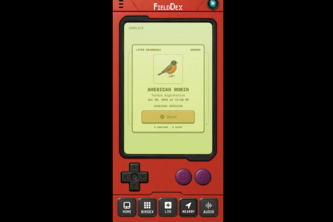
FieldDex is a self-reported project by one individual (Kevin Chaves) submitted to the OpenAI 2026 hackathon. The description states it aims to help birders turn their life-lists into field collections they can unlock, using AI and APIs from eBird, iNaturalist, and Xeno-Canto.
What changed
There is no evidence of prior versions or evolution — this is a single submission with no history.
Single most important open question
Is there any evidence of actual user adoption, revenue, or product-market fit beyond the hackathon submission?
Analysis basis
This report is based entirely on the self-reported project description provided by the caller. No external verification, archived data, or third-party sources were used. All claims are stated by the author and not independently confirmed.
What The Product Actually Is
The description states that FieldDex is a tool that allows birders to turn their life-lists into field collections they can unlock. It was built using Codex, eBird API, GPT-5.6, iNaturalist API, Swift, SwiftUI, Xcode, and Xeno-Canto API.
Evidence The author’s own write-up and technology stack declaration.
Confidence Low — no functional demonstration or product details provided beyond the tech stack and tagline.
Positioning & Claim Evolution
The tagline “Turn a birding life-list into a field collection you can unlock” is the only positioning statement. It suggests an app that helps birders organize, track, and potentially unlock achievements or collections based on their birding data.
Evidence Tagline only.
Confidence Very low — no indication of prior claims, evolution, or market positioning beyond this single statement.
Target Customer & ICP
The description implies the target customer is birders who maintain life-lists and want to organize them into collections. No further segmentation or ICP details are provided.
Evidence Inferred from tagline and use of eBird and iNaturalist APIs.
Confidence Low — no explicit identification of buyer personas, user types, or customer segments.
Business Model & Pricing Evidence
There is no evidence of a business model or pricing structure. The description does not mention monetization, subscriptions, or any commercial offering.
Evidence None provided.
Confidence Not evidenced — no indication of how the product would generate revenue.
Technical & Delivery Signals
The project was built with Swift, SwiftUI, Xcode, and integrates APIs from eBird, iNaturalist, and Xeno-Canto. It uses Codex and GPT-5.6, suggesting AI integration.
Evidence Technology stack and API integrations declared by the author.
Confidence Low — no demonstration, performance data, or delivery details provided.
Traction & Maturity Signals
There is no evidence of traction, user adoption, or product maturity beyond a hackathon submission. No metrics, customers, or usage data are mentioned.
Evidence None provided.
Confidence Not evidenced — the project is described as a hackathon submission with no follow-up.
Competitive Context
The description does not mention competitors or market context. It is unclear whether FieldDex competes with existing birding apps, tools, or platforms.
Evidence None provided.
Confidence Not evidenced — no competitive analysis or positioning against other tools.
Open Questions & Risks
- The project is a single-person hackathon submission with no evidence of traction or product-market fit.
- No business model or monetization strategy is evident.
- No user feedback, adoption, or real-world testing is reported.
- The use of GPT-5.6 and Codex implies reliance on AI tools that may not be scalable or commercially viable in the long term.
Evidence Self-reported nature of the project, lack of data, and absence of any commercial or user signals.
Confidence Low — risks are inferred from the lack of evidence rather than stated facts.
Questions the description leaves open
- What is the actual user experience of FieldDex? Is it a working prototype or a concept?
- How does the product differentiate from existing birding tools or apps?
- Are there any users or beta testers currently using the tool?
- What is the plan for monetization or scaling beyond the hackathon?
- How do you intend to validate the utility of turning life-lists into unlockable collections?
Note
These questions are based on the thin evidence provided and are not grounded in actual data.
Overall Assessment
There is no evidence of a viable business, product-market fit, or traction. The project is described as a hackathon submission with no indication of commercial viability, user adoption, or scalability.
Evidence Self-reported, unverified, and lacking any commercial or user signals.
Confidence Not evidenced — no basis for investment or partnership consideration at this stage.
User Stories BotA demo video on every pull request
Get a demo video on every new feature
GitHub App that watches your pull requests and records a narrated, captioned demo.
Save time on demo prep and make informed decisions faster with a video walkthrough of every new feature.
Source
Submitted to the OpenAI 2026 hackathon on Devpost. Project home on Devpost. Back to the full gallery on Devpost.
This competitive analysis was produced by top-founders.com (opens in a new tab)
Generated by a language model from this project's public Devpost page — its tagline and any built-with tags listed there, since the author published no write-up — as captured in August 2026. Short quotations are the author's words. It is an opinion on the idea as a business, not on the people behind it, and it reflects the description as published then. If the project has moved on, request a correction below. The analysis is not independent research and contains no verified traction, revenue or customer data.
An independent guide by KFG International LLC — not affiliated with, endorsed by, or connected to Devpost or OpenAI.