

Archive position — measured, not model output
0 likes on Devpost
2,263 of the 7,850 archived projects have more likes, and 5,587 share exactly 0 — so this project's #3,968 place in the like-ranked listing is a tie-break inside that group, not a ranking.
Projects (log scale)
Likes on Devpost. ▲ marks this project's group.
Show the figures
| Likes | Projects | Share of archive |
|---|---|---|
| 0 | 5,587 | 71.2% |
| 1 | 1,758 | 22.4% |
| 2 | 284 | 3.6% |
| 3–4 | 132 | 1.7% |
| 5–9 | 75 | 1.0% |
| 10+ | 14 | 0.2% |
 User Stories BotA demo video on every pull request
Get a demo video on every new feature
GitHub App that watches your pull requests and records a narrated, captioned demo.
Save time on demo prep and make informed decisions faster with a video walkthrough of every new feature.
Executive Summary
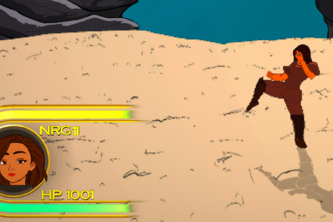
**The company appears to be a solo-developed ARPG project named Esperanza Game, submitted as part of the OpenAI 2026 hackathon.** The description states it is an action RPG with infinite leveling, set in a demon-swarm environment. It was built using Unity and C#, with development history spanning from iPad-based Lua prototyping to current Unity 6.5. There is no evidence of revenue, customers, or traction beyond the author’s own account.
What changed
The project evolved from a prototype on iPad (Lua) to a full Unity implementation, with improvements in content delivery and animation workflows.
The single most important open question
Is there any indication that Esperanza Game has moved beyond the prototype stage into a playable or distributable product, or whether it remains an experimental or educational effort?
What The Product Actually Is
The description states:
- Esperanza Game is an ARPG (Action Role Playing Game).
- It involves fighting monsters and leveling up.
- It is solo-developed by Semyon Karaman.
- Built with Unity 6.5, C#, and Visual Studio Code.
Inference The product is a video game in development, likely for PC or mobile platforms, based on the tools and genre described.
Positioning & Claim Evolution
The description states:
- Tagline: “Esperanza is a solo developed ARPG. Grow and level infinitely as the demon swarm grows around you. Fight your way through the story to reach the ultimate end.”
- Inspiration sources: Diablo, Dragonball Z, Tekken.
Inference The positioning appears to be a fan-made or indie-style action RPG with a focus on progression, combat, and narrative. It is not described as a commercial product but rather an experimental or educational effort.
Target Customer & ICP
The description states:
- No explicit customer base or target audience is defined.
- The game is solo-developed by one person (Semyon Karaman).
- It was submitted to a hackathon, suggesting it may be intended for demonstration or learning purposes.
Not evidenced No information on who the end-user or customer would be, nor whether there’s an identified ICP beyond the developer's own use.
Business Model & Pricing Evidence
The description states:
- No business model is described.
- No pricing strategy or monetization plan is mentioned.
- The project was submitted to a hackathon and not described as a commercial product.
Inference There is no evidence of any revenue-generating mechanism, pricing, or monetization strategy.
Technical & Delivery Signals
The description states:
- Built with Unity 6.5, C#, Visual Studio Code.
- Started with Lua on iPad, then migrated to Unity 5 and now 6.5.
- Used Addressables and content packing strategies.
- Character outfits and animations were implemented.
Inference The project shows technical evolution and some familiarity with game development tools and workflows. However, no evidence of delivery or distribution is provided.
Traction & Maturity Signals
The description states:
- The game was built as a hackathon submission.
- Accomplishments include getting the game working in build mode.
- No mention of user feedback, sales, or public release.
Not evidenced No traction, adoption, or maturity beyond prototype stage is described.
Competitive Context
The description states:
- Inspired by Diablo, Dragonball Z, Tekken — all established franchises in action RPGs and fighting games.
- No mention of competitors or market positioning beyond genre similarity.
Inference The project appears to be in the same genre as existing commercial products but is not described as competing with them or having a unique differentiator.
Open Questions & Risks
The description states:
- Solo development by one person.
- Submitted to a hackathon — suggesting experimental or educational nature.
- No evidence of revenue, customers, or distribution.
- No mention of monetization or long-term viability.
Inference The project is likely in early development and not yet a commercial product. Risks include lack of resources for full development, unclear market fit, and no evidence of traction or scalability.
Questions the description leaves open
- Is Esperanza Game intended to be a commercial product or an experimental project?
- What is the current state of gameplay, and has it been tested by others?
- Are there any plans for monetization or distribution beyond the hackathon submission?
- How does the solo development model affect long-term sustainability and feature delivery?
- Has the game been released publicly or made available to players outside of the hackathon?
Overall Assessment
The description states:
- No evidence of revenue, customers, or traction.
- The project is described as a solo-developed hackathon submission.
- It is not presented as a commercial product or venture.
Not evidenced No basis for investment or partnership consideration exists in the self-reported description. The project appears to be an experimental or educational effort with no demonstrated commercial viability or market readiness.
User Stories BotA demo video on every pull request
Get a demo video on every new feature
GitHub App that watches your pull requests and records a narrated, captioned demo.
Save time on demo prep and make informed decisions faster with a video walkthrough of every new feature.
Source
Submitted to the OpenAI 2026 hackathon on Devpost. Project home on Devpost. Back to the full gallery on Devpost.
This competitive analysis was produced by top-founders.com (opens in a new tab)
Generated by a language model from this project's public Devpost page — its tagline, the author's own write-up and any built-with tags listed there — as captured in August 2026. Short quotations are the author's words. It is an opinion on the idea as a business, not on the people behind it, and it reflects the description as published then. If the project has moved on, request a correction below. The analysis is not independent research and contains no verified traction, revenue or customer data.
An independent guide by KFG International LLC — not affiliated with, endorsed by, or connected to Devpost or OpenAI.