

Archive position — measured, not model output
0 likes on Devpost
2,263 of the 7,850 archived projects have more likes, and 5,587 share exactly 0 — so this project's #3,851 place in the like-ranked listing is a tie-break inside that group, not a ranking.
Projects (log scale)
Likes on Devpost. ▲ marks this project's group.
Show the figures
| Likes | Projects | Share of archive |
|---|---|---|
| 0 | 5,587 | 71.2% |
| 1 | 1,758 | 22.4% |
| 2 | 284 | 3.6% |
| 3–4 | 132 | 1.7% |
| 5–9 | 75 | 1.0% |
| 10+ | 14 | 0.2% |
 User Stories BotA demo video on every pull request
Get a demo video on every new feature
GitHub App that watches your pull requests and records a narrated, captioned demo.
Save time on demo prep and make informed decisions faster with a video walkthrough of every new feature.
Executive Summary
The company appears to be a single-person project called EatLocal Lens, a self-described travel-food companion that helps visitors understand unfamiliar dishes by uploading a photo and receiving guidance on how to eat them, utensils, pairings, allergies, and local customs. The product is described as a responsive web app built with HTML, CSS, JavaScript, and AI tools like Codex and GPT-5.6.
What changed: This is a hackathon demo submitted to the OpenAI 2026 hackathon. It is not evidenced to have launched or gained traction beyond the author's own account.
The single most important open question: Is there any evidence of product-market fit, user adoption, revenue, or customer feedback beyond the author’s self-reported description?
What The Product Actually Is
- The description states that EatLocal Lens is a travel-food companion.
- It is described as a responsive web app built with HTML, CSS, JavaScript, and AI tools like Codex and GPT-5.6.
- Users can upload a food photo, select a dish from a guide, and receive information on:
- How to eat the dish
- Which utensils to use
- Common pairings
- Allergy reminders
- Local food customs
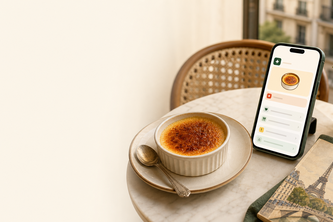
- The demo focuses on French dishes such as croissants, brie, escargots, oysters, crème brûlée, and quiche Lorraine.
- It is described as a prototype, not a production product.
Note: No evidence of actual product functionality beyond the author’s claim that it was built and demoed. No live version or user data are provided.
Positioning & Claim Evolution
- The description states that EatLocal Lens aims to make food feel like a welcoming cultural experience, not something confusing.
- It is positioned as a tool to help travelers feel confident when encountering unfamiliar dishes.
- The project is described as an idea prototype, intended to start a conversation about making travel food experiences more welcoming.
- The author claims that the product addresses both identification and enjoyment of food, not just naming it.
Inference: The positioning appears to be evolving from a simple food identification tool into a cultural immersion aid. However, this is inferred from the narrative and not evidenced in any data or user feedback.
Target Customer & ICP
- The description states that the target audience is travelers who encounter unfamiliar food.
- It is implied that these travelers are visiting France, as the demo focuses on French dishes.
- The product is described as helping users understand how to eat unfamiliar dishes, suggesting a tourist or expat audience seeking cultural guidance.
Note: No evidence of customer segmentation, personas, or market research beyond the author’s own account. No indication of whether the target audience has been validated or tested.
Business Model & Pricing Evidence
- The tagline states: “A free travel-food guide”, suggesting a freemium or free model.
- There is no evidence of pricing, monetization strategy, or revenue streams in the description.
- No mention of subscriptions, ads, partnerships, or paid features.
Note: The business model is not evidenced. It is inferred to be free based on the tagline and project scope.
Technical & Delivery Signals
- The product is described as a responsive web app built with HTML, CSS, JavaScript.
- AI tools such as Codex and GPT-5.6 were used for UX design, interface refinement, and content creation.
- It is described as a working demo, with a public code repository and a short product video.
- The app uses a warm, travel-friendly visual style.
Note: No evidence of scalability, infrastructure, or technical architecture beyond the author’s own description. No mention of hosting, backend systems, or data pipelines.
Traction & Maturity Signals
- The project is described as a hackathon demo submitted to the OpenAI 2026 hackathon.
- It is described as a prototype, not a launched product.
- The author states that it includes:
- A working demo
- A public code repository
- A short product video
- No evidence of user adoption, customer feedback, or usage metrics.
Note: No traction or maturity signals are evidenced. The project is described as an idea prototype with no live version or user base.
Competitive Context
- The description does not mention any competitors.
- It is implied that the product addresses a gap in travel food guides or cultural food education tools.
- No evidence of existing solutions, market size, or competitive positioning.
Note: No competitive landscape is evidenced. The author makes no claims about how EatLocal Lens compares to other tools or platforms.
Open Questions & Risks
- The project is described as a single-person hackathon demo, with no evidence of team expansion or product development beyond the initial prototype.
- There is no evidence of revenue, customers, or traction.
- The use of AI tools like Codex and GPT-5.6 raises questions about whether the product has been validated by real users or if it’s a conceptual or demo-only effort.
- The focus on French dishes implies a limited scope, which may not scale without significant expansion.
Inference: The lack of traction, revenue, and user feedback suggests that EatLocal Lens is in an early idea stage. No evidence of product-market fit or long-term viability.
Questions the description leaves open
- What specific problem are you solving for travelers, and how did you validate this?
- Have you tested the app with real users? If so, what feedback did you get?
- Are there any plans to expand beyond French dishes or into other markets?
- Is there a monetization strategy in place or being considered?
- What are your plans for scaling the product beyond a prototype?
- How do you plan to source and verify the cultural and culinary information provided?
Overall Assessment
- The project is described as a single-person hackathon demo, not a commercial venture.
- No evidence of revenue, customers, or traction exists.
- It is positioned as an idea prototype with no clear path to product-market fit or scalability.
- The author’s own description indicates that the goal is to start a conversation and share a concept, not to launch a business.
Assessment: Not evidenced as a viable investment or partnership opportunity at this stage. It is a conceptual prototype with no commercial traction, revenue, or validated user base.
User Stories BotA demo video on every pull request
Get a demo video on every new feature
GitHub App that watches your pull requests and records a narrated, captioned demo.
Save time on demo prep and make informed decisions faster with a video walkthrough of every new feature.
Source
Submitted to the OpenAI 2026 hackathon on Devpost. Project home on Devpost. Back to the full gallery on Devpost.
This competitive analysis was produced by top-founders.com (opens in a new tab)
Generated by a language model from this project's public Devpost page — its tagline, the author's own write-up and any built-with tags listed there — as captured in August 2026. Short quotations are the author's words. It is an opinion on the idea as a business, not on the people behind it, and it reflects the description as published then. If the project has moved on, request a correction below. The analysis is not independent research and contains no verified traction, revenue or customer data.
An independent guide by KFG International LLC — not affiliated with, endorsed by, or connected to Devpost or OpenAI.