

Archive position — measured, not model output
6 likes on Devpost
35 of the 7,850 archived projects have more likes, and 19 share exactly 6 — so this project's #43 place in the like-ranked listing is a tie-break inside that group, not a ranking.
Projects (log scale)
Likes on Devpost. ▲ marks this project's group.
Show the figures
| Likes | Projects | Share of archive |
|---|---|---|
| 0 | 5,587 | 71.2% |
| 1 | 1,758 | 22.4% |
| 2 | 284 | 3.6% |
| 3–4 | 132 | 1.7% |
| 5–9 | 75 | 1.0% |
| 10+ | 14 | 0.2% |
 User Stories BotA demo video on every pull request
Get a demo video on every new feature
GitHub App that watches your pull requests and records a narrated, captioned demo.
Save time on demo prep and make informed decisions faster with a video walkthrough of every new feature.
Executive Summary
The company appears to be a single-person project, DungeonTopper, a 2D RPG game that combines learning with gameplay via interactive lessons and dungeon fights. The author states it was built in one Codex session using Phaser.js and AI-generated assets. No revenue, customers, or traction are evidenced. The single most important open question is whether the concept can scale beyond a hackathon prototype into a sustainable product or business model.
This analysis is based entirely on self-reported information from the project description provided by the caller — no external verification or historical data. All claims are treated as stated by the author, not proven.
What The Product Actually Is
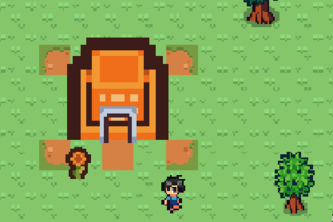
The description states that DungeonTopper is a 2D RPG game where players explore and learn new things through interactive lessons, then test their knowledge in dungeon fights. Players start with a broken townhall and must go to study halls to learn via a "wisdom wizard", before entering dungeons to fight monsters by solving math or logic problems.
The game uses:
- Phaser.js for development
- Codex for code generation and asset creation
- AI tools like ChatGPT for some visual assets
Damage in combat is calculated based on problem-solving ability, with a formula: Damage = base weapon damage / (1/t). Defeating bosses rewards items that can be used in future lessons or to improve the townhall.
The game includes:
- A merchant selling food
- Exploration of wild areas to find rare items
- Crafting mechanics
- Turn-based combat
Inference: The product is a prototype built during a hackathon, not a commercial offering. It is described as an experimental concept for gamified learning, not a finished product.
Positioning & Claim Evolution
The author claims the game is part of a larger vision to make "gaming explorations into learning lessons". This positioning suggests an educational or edtech angle, where gaming elements are used to reinforce learning outcomes.
It also implies that the project is experimental and exploratory in nature — not yet a commercial product. The author emphasizes:
- Using AI tools (Codex, ChatGPT) for rapid prototyping
- Learning through building
- A focus on concept over execution
Inference: The positioning is aspirational and conceptual, rooted in the author’s personal learning journey rather than market demand or traction.
Target Customer & ICP
Not evidenced. The description does not identify a specific customer segment or ideal customer profile (ICP). It only describes gameplay mechanics and educational goals without specifying who would use this game or why.
Business Model & Pricing Evidence
Not evidenced. There is no mention of monetization, pricing models, subscriptions, sales channels, or any commercial framework in the description.
Technical & Delivery Signals
The project was built using:
- Phaser.js (a 2D game engine)
- Codex (for code and asset generation)
- ChatGPT (for visual assets)
It was developed in a single session, according to the author. The author notes that they had to learn game development basics before starting, including best practices and frameworks.
Challenges included:
- Credit drain due to long development sessions
- Initial attempts at “oneshot” development resulted in low-quality output
- Lack of experience in game development
Inference: The technical delivery was experimental and exploratory. It reflects a learning-by-doing approach rather than a scalable or production-ready system.
Traction & Maturity Signals
Not evidenced. There is no data on:
- Users or players
- Revenue or monetization
- Customer adoption
- Product usage metrics
- Iteration history or product maturity
The project is described as a hackathon submission, not a live product or service.
Competitive Context
Not evidenced. No information about competitors, market size, or competitive positioning is provided in the description.
Open Questions & Risks
- No commercial traction or revenue: The project is presented as a hackathon prototype with no evidence of real-world adoption.
- Single-person operation: Only one team member is listed (Fardozzoha Fardin), which raises concerns about scalability and long-term viability.
- Unproven business model: No indication of how the product would generate value or revenue.
- Prototype nature: Built in a single session, with no mention of testing, iteration, or user feedback loops.
- Dependency on AI tools: Heavy reliance on Codex and ChatGPT may not be sustainable or replicable outside of hackathon environments.
Questions the description leaves open
- What is the intended target audience for this game?
- How do you plan to monetize it, if at all?
- Have you tested the gameplay with any users beyond yourself?
- What are your plans for expanding beyond the current prototype?
- Are there any technical or design limitations that prevent scaling?
- Do you have a roadmap for product development and feature additions?
Overall Assessment
Not evidenced. No data exists to support an investment or partnership decision. The project is described as a hackathon experiment with no commercial traction, revenue, or clear path to monetization.
The author states that the project was built in one session using AI tools and that they are still learning game development. It is not yet a product or business model but rather an idea or proof-of-concept.
Assessment: This is a conceptual prototype with no demonstrated commercial viability or traction. It does not meet criteria for investment or partnership at this stage.
User Stories BotA demo video on every pull request
Get a demo video on every new feature
GitHub App that watches your pull requests and records a narrated, captioned demo.
Save time on demo prep and make informed decisions faster with a video walkthrough of every new feature.
Source
Submitted to the OpenAI 2026 hackathon on Devpost. Project home on Devpost. Back to the full gallery on Devpost.
This competitive analysis was produced by top-founders.com (opens in a new tab)
Generated by a language model from this project's public Devpost page — its tagline, the author's own write-up and any built-with tags listed there — as captured in August 2026. Short quotations are the author's words. It is an opinion on the idea as a business, not on the people behind it, and it reflects the description as published then. If the project has moved on, request a correction below. The analysis is not independent research and contains no verified traction, revenue or customer data.
An independent guide by KFG International LLC — not affiliated with, endorsed by, or connected to Devpost or OpenAI.