

Archive position — measured, not model output
0 likes on Devpost
2,263 of the 7,850 archived projects have more likes, and 5,587 share exactly 0 — so this project's #3,759 place in the like-ranked listing is a tie-break inside that group, not a ranking.
Projects (log scale)
Likes on Devpost. ▲ marks this project's group.
Show the figures
| Likes | Projects | Share of archive |
|---|---|---|
| 0 | 5,587 | 71.2% |
| 1 | 1,758 | 22.4% |
| 2 | 284 | 3.6% |
| 3–4 | 132 | 1.7% |
| 5–9 | 75 | 1.0% |
| 10+ | 14 | 0.2% |
 User Stories BotA demo video on every pull request
Get a demo video on every new feature
GitHub App that watches your pull requests and records a narrated, captioned demo.
Save time on demo prep and make informed decisions faster with a video walkthrough of every new feature.
Executive Summary
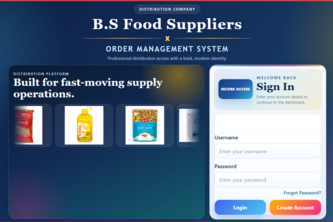
What the company appears to be: A self-reported SaaS project named "Distribution Management System" (described as a web-based platform for food distribution), built by one developer (Basant Jnawali) using PHP, JavaScript, MySQL, and AI-assisted development tools like OpenAI Codex. The author states it is fully deployed and available online.
What changed: This is a self-reported project submitted to the OpenAI 2026 hackathon on Devpost. No evidence of prior versions or changes in product scope is provided beyond the single submission.
Single most important open question: Is there any evidence of actual customer usage, revenue, or traction beyond the author's own development and deployment?
What The Product Actually Is
The description states:
- A web-based SaaS platform for food distribution
- Manages products, inventory, suppliers, customers, and orders in one place
- Built with HTML5, CSS3, JavaScript, PHP, MySQL
- Includes secure login, responsive UI, dashboard, database relationships, search/filter functionality
- Deployed online (live demo available at https://menukachhetri.com.np)
- Developed using OpenAI Codex as an AI coding assistant
Inference: The product is a full-stack web application built for small-scale food distribution businesses. It includes core ERP-like features such as inventory, order, supplier, and customer management.
Not evidenced: No information about actual business workflows, integration capabilities, or specific use cases beyond the author's own description.
Positioning & Claim Evolution
The author states:
- The platform simplifies food distribution by managing multiple aspects in one place
- It is described as a "SaaS project" but no pricing or subscription model is mentioned
- The author claims to have learned full-stack development, database design, and inventory/order management workflows through this project
Inference: The positioning appears to be a basic ERP-style tool for small food suppliers in Nepal, with an emphasis on ease-of-use and integration of core business functions.
Not evidenced: No evidence of market positioning, competitive differentiation, or strategic evolution beyond the single submission. No claims about scalability, enterprise features, or target segment expansion are made.
Target Customer & ICP
The description states:
- The platform is for food distribution businesses
- It includes supplier and customer management
- Built specifically for small-scale operations ("small", "wholesale")
- The author mentions working on projects in Nepal (real estate, maintenance services)
Inference: The target customer appears to be small-to-medium-sized food distributors or wholesalers in Nepal.
Not evidenced: No evidence of actual customers, user personas, or segmentation strategies. No data about buyer behavior or decision-making processes is provided.
Business Model & Pricing Evidence
The description states:
- It's a SaaS platform
- The author mentions "full deployment" and "live demo"
- No pricing information, subscription tiers, or monetization strategy are mentioned
- The project was submitted to a hackathon, suggesting it may be in early development or prototype stage
Inference: There is no evidence of a defined business model or pricing structure. The platform appears to be a personal project with no commercial traction.
Not evidenced: No revenue streams, customer acquisition costs, or monetization methods are described.
Technical & Delivery Signals
The description states:
- Built using PHP, JavaScript, MySQL
- Uses OpenAI Codex for AI-assisted development
- Includes secure login and authentication
- Responsive UI design
- Database relationships, search/filter functionality
- Full-stack development including backend architecture, testing, deployment
- Live demo available at https://menukachhetri.com.np
Inference: The technical stack is standard for a small-scale web application. The use of AI tools suggests modern development practices but does not indicate enterprise-grade infrastructure.
Not evidenced: No information about scalability, security audits, cloud architecture, or performance metrics.
Traction & Maturity Signals
The description states:
- The project is fully deployed and live
- The author claims to have learned full-stack development through this project
- Multiple other projects are listed (real estate, maintenance service platforms)
- Future improvements include payment gateways, mobile apps, analytics, etc.
Inference: The platform has reached a basic deployment stage but lacks evidence of user adoption or business traction.
Not evidenced: No data on active users, retention rates, revenue, or customer feedback. No evidence of growth or iteration beyond the initial version.
Competitive Context
The description states:
- The author mentions working on multiple real-world projects
- No direct competitors are named or described
- The platform is positioned for food distribution in Nepal
Inference: There may be limited competition within the Nepali market, but no evidence of existing solutions or competitive landscape.
Not evidenced: No information about similar tools, market size, or competitive positioning. No mention of industry benchmarks or market gaps addressed.
Open Questions & Risks
The description states:
- The project is a single-person effort
- Submitted to a hackathon (suggesting prototype or early-stage)
- No revenue, customers, or traction data provided
- Uses AI tools but still requires full software engineering decisions
Inference: Risk factors include lack of business validation, limited team capacity, and no commercial proof of concept.
Open questions:
- No evidence of customer base or revenue
- No mention of scalability or enterprise features
- Single developer with no team structure
- Prototype-level development in a hackathon context
Questions the description leaves open
- What specific business problem does this platform solve for food distributors?
- How many actual users or customers are currently using the system?
- Is there any revenue generated from the platform?
- What is the current user retention rate and feedback?
- Are there plans to expand beyond Nepal or into other verticals?
- What are the key technical challenges that remain unresolved?
- How does this platform compare with existing solutions in the market?
- What is the long-term vision for scaling the business?
Overall Assessment
Assessment: Not evidenced.
The author states that the project is a "SaaS project" and has been deployed, but there is no evidence of commercial traction, revenue, or customer adoption. The platform appears to be a personal development effort submitted to a hackathon with no indication of market validation or business model maturity.
Confidence level: Low — based entirely on self-reported information without any external verification or data points.
Next steps: If pursuing further due diligence, seek evidence of:
- Customer usage or testimonials
- Revenue or monetization metrics
- Market research or competitive analysis
- Team expansion or investment interest
User Stories BotA demo video on every pull request
Get a demo video on every new feature
GitHub App that watches your pull requests and records a narrated, captioned demo.
Save time on demo prep and make informed decisions faster with a video walkthrough of every new feature.
Source
Submitted to the OpenAI 2026 hackathon on Devpost. Project home on Devpost. Back to the full gallery on Devpost.
This competitive analysis was produced by top-founders.com (opens in a new tab)
Generated by a language model from this project's public Devpost page — its tagline, the author's own write-up and any built-with tags listed there — as captured in August 2026. Short quotations are the author's words. It is an opinion on the idea as a business, not on the people behind it, and it reflects the description as published then. If the project has moved on, request a correction below. The analysis is not independent research and contains no verified traction, revenue or customer data.
An independent guide by KFG International LLC — not affiliated with, endorsed by, or connected to Devpost or OpenAI.