

Archive position — measured, not model output
2 likes on Devpost
221 of the 7,850 archived projects have more likes, and 284 share exactly 2 — so this project's #395 place in the like-ranked listing is a tie-break inside that group, not a ranking.
Projects (log scale)
Likes on Devpost. ▲ marks this project's group.
Show the figures
| Likes | Projects | Share of archive |
|---|---|---|
| 0 | 5,587 | 71.2% |
| 1 | 1,758 | 22.4% |
| 2 | 284 | 3.6% |
| 3–4 | 132 | 1.7% |
| 5–9 | 75 | 1.0% |
| 10+ | 14 | 0.2% |
 User Stories BotA demo video on every pull request
Get a demo video on every new feature
GitHub App that watches your pull requests and records a narrated, captioned demo.
Save time on demo prep and make informed decisions faster with a video walkthrough of every new feature.
Executive Summary
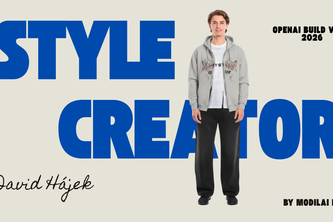
What the company appears to be: Modilai Style Creator is a self-reported B2B SaaS product that enables fashion brands to transform their product catalogs into interactive outfit-building experiences. The platform allows shoppers to mix, match, visualize looks, and try outfits virtually — with an emphasis on cross-platform compatibility.
What changed: The project started as a student-led demo built by a 15-year-old developer and two peers, initially using Cursor and later Codex AI tools. Over time, it evolved from an unreliable prototype into a more polished platform, though the description does not indicate any commercial traction or revenue generation.
The single most important open question: Is there evidence of actual customer adoption or feedback from fashion brands beyond the authors’ own claims? The self-reported account lacks verifiable data on product usage, customer engagement, or sales outcomes.
Note: This analysis is based entirely on the author’s own description. No third-party verification, archived data, or independent sources are available. All statements reflect the self-reported perspective of the project creators and should be treated as claims, not facts.
What The Product Actually Is
The description states that Modilai Style Creator helps fashion brands turn product catalogs into interactive outfit experiences. Shoppers can mix, match, visualize looks, and try outfits virtually. It is designed to work across different e-commerce platforms rather than being limited to one provider.
- Claimed functionality: Interactive outfit creation, virtual try-on capabilities.
- Target use case: Fashion brand websites integrating the tool into their product catalog experience.
- Not evidenced: Specific features (e.g., AR integration), UI/UX details, or technical architecture beyond the tools used in development.
The description does not provide sufficient detail to determine whether this is a frontend plugin, an API-based service, or a hosted SaaS offering. It also does not clarify how the virtual try-on feature works or what level of customization it supports.
Positioning & Claim Evolution
The authors describe Modilai Style Creator as a tool that allows fashion brands to offer shoppers a way to build complete looks before purchasing — inspired by DOPE SNOW’s website.
- Original inspiration: A single brand's Style Creator feature.
- Evolution of idea: From a student demo to a more polished version, with improvements driven by feedback and AI-assisted development.
- Positioning evolution: Started as an experimental idea among students; now positioned as a platform for fashion brands to enhance customer engagement.
The claim that the tool was inspired by DOPE SNOW is a stated influence, not verified. There is no indication of how many other similar tools exist or whether this is a unique offering in the market.
Target Customer & ICP
The description states that Modilai Style Creator is intended for fashion brands, allowing them to offer interactive outfit-building experiences to their customers.
- Primary customer: Fashion brands (e.g., premium suit sellers).
- Not evidenced: Specific segments within fashion (e.g., luxury, fast fashion), size of target accounts, or buyer personas.
- Not evidenced: Whether the tool targets small businesses, mid-sized retailers, or large enterprises.
The authors mention presenting to a “relatively large Czech company,” but no confirmation that this led to a customer relationship or contract.
Business Model & Pricing Evidence
The description does not contain any information about pricing models, licensing structures, or revenue streams.
- Not evidenced: Subscription tiers, per-user costs, usage-based billing, or enterprise contracts.
- Not evidenced: Whether the tool is sold as SaaS, a white-label solution, or integrated into existing platforms.
The authors do not describe how they plan to monetize the product or whether they have begun selling it commercially.
Technical & Delivery Signals
The project was built using:
- Development environment: Cursor → Codex (AI coding tools)
- Technologies: React, Supabase, TypeScript, Vercel, Vite
- AI tools used: Cursor, Codex IDE extension, ChatGPT Plus, standalone Codex app
- Inferred: The team leveraged AI-assisted development to accelerate implementation.
- Not evidenced: Code quality reviews, testing frameworks, scalability assumptions, or deployment pipeline details.
The use of AI tools is noted as a key part of the development process, but there is no evidence of how these were integrated into a formal engineering workflow or how they impacted product reliability.
Traction & Maturity Signals
The authors describe:
- A first version created at age 15 with significant technical issues.
- Repeated rebuilding and testing over time.
- Presentations to fashion brands, including one with a large Czech company.
- Improvement in performance and usability over time.
- Not evidenced: Customer adoption metrics, number of active users, or brand partnerships.
- Not evidenced: Product usage data, retention rates, or feedback from actual clients.
- Not evidenced: Commercial revenue or funding rounds.
The narrative emphasizes persistence and iterative improvement but does not provide evidence of traction or commercial viability.
Competitive Context
The description mentions that the idea was inspired by DOPE SNOW’s Style Creator. There is no mention of other competitors in this space, nor any indication of market size or competitive dynamics.
- Not evidenced: Competitor analysis, pricing comparisons, or differentiation from existing tools.
- Not evidenced: Market demand for such a tool or barriers to entry.
The authors do not reference any direct competitors or explain how Modilai Style Creator stands out in the marketplace.
Open Questions & Risks
Several key risks and open questions emerge from the self-reported account:
- Lack of verified traction: No evidence of customers, revenue, or user engagement.
- Young team with limited experience: The authors are described as students who started building at age 15.
- Unproven business model: No indication of how the product will generate income.
- Reliance on AI tools: While AI was used to speed development, there is no evidence of quality control or long-term sustainability.
- No commercial validation: The only “success” mentioned is a presentation that went poorly — suggesting early-stage challenges.
These factors suggest high uncertainty around product-market fit and scalability.
Questions the description leaves open
- What specific feedback have you received from fashion brands during demos or meetings?
- Have any of those companies expressed interest in purchasing or testing the tool?
- How do you plan to monetize this platform, and what pricing model are you considering?
- Can you provide examples of how the virtual try-on feature works technically?
- What is your roadmap for product development beyond the current version?
- Have you validated demand for this type of tool among fashion retailers?
- How do you ensure code quality and maintainability when using AI-assisted development?
These questions aim to uncover whether the project has moved beyond concept stage and into real-world application.
Overall Assessment
Confidence level: Low — based on self-reported evidence only, with no third-party validation or traction data.
- Not evidenced: Revenue, customers, or commercial success.
- Not evidenced: Product-market fit or scalability.
- Inferred: The team has shown persistence and technical growth, but lacks clear commercial outcomes.
- Risk: High — due to lack of verified traction, unclear monetization strategy, and youth of the founding team.
This is a self-described early-stage project with potential, but no evidence supports its readiness for investment or partnership. Further diligence would require access to actual users, contracts, or financials.
User Stories BotA demo video on every pull request
Get a demo video on every new feature
GitHub App that watches your pull requests and records a narrated, captioned demo.
Save time on demo prep and make informed decisions faster with a video walkthrough of every new feature.
Source
Submitted to the OpenAI 2026 hackathon on Devpost. Project home on Devpost. Back to the full gallery on Devpost.
This competitive analysis was produced by top-founders.com (opens in a new tab)
Generated by a language model from this project's public Devpost page — its tagline, the author's own write-up and any built-with tags listed there — as captured in August 2026. Short quotations are the author's words. It is an opinion on the idea as a business, not on the people behind it, and it reflects the description as published then. If the project has moved on, request a correction below. The analysis is not independent research and contains no verified traction, revenue or customer data.
An independent guide by KFG International LLC — not affiliated with, endorsed by, or connected to Devpost or OpenAI.