

Archive position — measured, not model output
0 likes on Devpost
2,263 of the 7,850 archived projects have more likes, and 5,587 share exactly 0 — so this project's #3,639 place in the like-ranked listing is a tie-break inside that group, not a ranking.
Projects (log scale)
Likes on Devpost. ▲ marks this project's group.
Show the figures
| Likes | Projects | Share of archive |
|---|---|---|
| 0 | 5,587 | 71.2% |
| 1 | 1,758 | 22.4% |
| 2 | 284 | 3.6% |
| 3–4 | 132 | 1.7% |
| 5–9 | 75 | 1.0% |
| 10+ | 14 | 0.2% |
 User Stories BotA demo video on every pull request
Get a demo video on every new feature
GitHub App that watches your pull requests and records a narrated, captioned demo.
Save time on demo prep and make informed decisions faster with a video walkthrough of every new feature.
Executive Summary
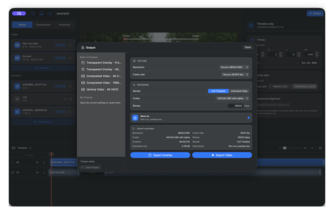
What the company appears to be: DataLayer Studio is a native macOS, iPadOS, and iOS app that combines video footage with FIT/GPX telemetry data (e.g., speed, heart rate, cadence, power, altitude, GPS) into editor-ready data stories. The author states it allows users to import videos and FIT files, synchronize telemetry with video, create customizable data overlays, preview changes in real time, and export finished videos or transparent overlays.
What changed: This is a self-reported project submitted for the OpenAI 2026 hackathon. It does not appear to have launched as a commercial product or gained traction beyond its submission context.
Single most important open question: Is there any evidence of revenue, customers, or usage beyond this hackathon submission?
Analysis basis: The entire analysis is based on the self-reported project description provided by the author. No external verification, archived data, or third-party sources are available. All statements reflect claims made by the author and should be treated as such.
What The Product Actually Is
- The description states that DataLayer Studio is a native app for macOS, iPadOS, and iOS.
- It allows users to:
- Import videos and FIT files
- Synchronize telemetry with video
- Create customizable data overlays
- Preview changes in real time
- Export finished videos or transparent overlays
- Preserve alpha transparency for professional editing workflows
- The app is built using Swift, with SwiftUI for the interface and AVFoundation for video processing.
- It supports cross-platform functionality through a shared architecture across macOS, iPadOS, and iOS.
Note: No evidence of actual product delivery, user adoption, or commercial release beyond this hackathon submission.
Positioning & Claim Evolution
- The author positions DataLayer Studio as a tool that “turns running footage into clear, editor-ready data stories.”
- It is described as bridging the gap between action-camera videos and the underlying telemetry data (e.g., speed, heart rate, GPS).
- The app aims to make complex data accessible and visually engaging for athletes and creators.
- The author notes that GPT-5.6 was used during development to help with technical challenges and product ideation.
Inference: The positioning suggests a niche market of fitness enthusiasts or content creators who want to combine video with performance metrics. However, no evidence indicates whether this is a new category or an evolution of existing tools.
Target Customer & ICP
- The description implies the app targets:
- Athletes
- Creators (e.g., those producing workout or activity videos)
- Users who want to enhance their action footage with data overlays
- It is designed for professional editing workflows, as it supports transparent exports and preserves alpha transparency.
- The app supports multiple Apple platforms, suggesting a focus on users within the Apple ecosystem.
Note: No evidence of customer segmentation, personas, or specific buyer profiles beyond general user types inferred from the use case.
Business Model & Pricing Evidence
- Not evidenced. The description does not mention any pricing model, monetization strategy, or business model.
Absence of evidence: There is no indication whether this will be sold as a one-time purchase, subscription, freemium, or other model.
Technical & Delivery Signals
- Built with Swift, using SwiftUI for UI and AVFoundation for video processing.
- The architecture separates core logic (FIT parsing, telemetry interpolation, timeline sync, rendering, export) from platform-specific interfaces.
- Supports cross-platform deployment across macOS, iPadOS, and iOS.
- GPT-5.6 reportedly helped during development in debugging, API understanding, and product iteration.
- Challenges included:
- Accurate synchronization of telemetry with video from different devices
- Handling missing data and interpolating values smoothly
- Managing memory usage during frame-by-frame processing
- Preserving transparency during export
Inference: The technical approach suggests a native, performance-oriented solution. However, no evidence of production deployment or scalability beyond the hackathon prototype.
Traction & Maturity Signals
- Not evidenced.
- No mention of:
- Revenue
- Customers
- Usage metrics
- Product launches
- User feedback
- Market traction
Absence of evidence: The project is described as a hackathon submission and has no demonstrated traction or maturity beyond its initial development phase.
Competitive Context
- Not evidenced.
- No mention of:
- Competitors
- Market size
- Competitive advantages
- Existing solutions in the space
Absence of evidence: The description does not provide any context about the competitive landscape or how this product compares to others.
Open Questions & Risks
- Unproven market demand: No evidence of customer interest, revenue, or adoption beyond a hackathon submission.
- Limited scope: The app is built for Apple platforms only; no indication of cross-platform expansion plans.
- Unclear monetization path: No business model or pricing strategy described.
- High technical complexity without validation: The app handles complex video and telemetry synchronization — but there’s no evidence of successful deployment or user testing.
- Founder dependency: The team size is listed as one (Albert Lee), raising questions about scalability and execution capacity.
Inference: Without traction, revenue, or customer data, the risk of failure is high. The product may be a proof-of-concept rather than a viable commercial offering.
Questions the description leaves open
- What is your plan for monetization?
- Have you validated demand from potential users beyond this prototype?
- Are there any existing competitors in the space, and how does DataLayer Studio differentiate?
- How do you intend to scale beyond a single developer?
- What are the key technical challenges that remain unresolved or untested in production?
- Is there any interest from athletes, creators, or media professionals in using this tool?
Overall Assessment
- Not evidenced.
- No information on:
- Valuation
- Funding stage
- Strategic partners
- Investment interest
- Partnership opportunities
Conclusion: Based solely on the self-reported description, DataLayer Studio appears to be a hackathon prototype with no demonstrated commercial viability or traction. It lacks evidence of revenue, customers, or product-market fit. The single-founder team and lack of business model or competitive positioning raise significant concerns about its readiness for investment or partnership.
User Stories BotA demo video on every pull request
Get a demo video on every new feature
GitHub App that watches your pull requests and records a narrated, captioned demo.
Save time on demo prep and make informed decisions faster with a video walkthrough of every new feature.
Source
Submitted to the OpenAI 2026 hackathon on Devpost. Project home on Devpost. Back to the full gallery on Devpost.
This competitive analysis was produced by top-founders.com (opens in a new tab)
Generated by a language model from this project's public Devpost page — its tagline, the author's own write-up and any built-with tags listed there — as captured in August 2026. Short quotations are the author's words. It is an opinion on the idea as a business, not on the people behind it, and it reflects the description as published then. If the project has moved on, request a correction below. The analysis is not independent research and contains no verified traction, revenue or customer data.
An independent guide by KFG International LLC — not affiliated with, endorsed by, or connected to Devpost or OpenAI.