

Archive position — measured, not model output
0 likes on Devpost
2,263 of the 7,850 archived projects have more likes, and 5,587 share exactly 0 — so this project's #3,627 place in the like-ranked listing is a tie-break inside that group, not a ranking.
Projects (log scale)
Likes on Devpost. ▲ marks this project's group.
Show the figures
| Likes | Projects | Share of archive |
|---|---|---|
| 0 | 5,587 | 71.2% |
| 1 | 1,758 | 22.4% |
| 2 | 284 | 3.6% |
| 3–4 | 132 | 1.7% |
| 5–9 | 75 | 1.0% |
| 10+ | 14 | 0.2% |
 User Stories BotA demo video on every pull request
Get a demo video on every new feature
GitHub App that watches your pull requests and records a narrated, captioned demo.
Save time on demo prep and make informed decisions faster with a video walkthrough of every new feature.
Executive Summary
What the company appears to be
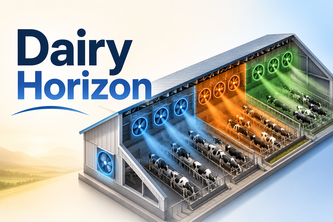
Dairy Horizon is a prototype decision-support tool for dairy farmers in Japan, designed to help evaluate investment pathways in heat-abatement equipment (e.g., fans) based on current and future climate conditions, herd size, and farm layout. It integrates natural-language input, AI-assisted data extraction, climate modeling, and industry benchmarks to present options and next steps.
What changed
The project is a self-reported prototype built for the OpenAI 2026 hackathon. It uses FastAPI, Python, and OpenAI APIs to process user inputs, visualize farm conditions, compare investment strategies, and show future climate impacts. The system distinguishes between AI-assisted input processing and deterministic calculations.
Single most important open question
Is there evidence of traction or commercial interest from dairy farmers in Japan that would justify further development beyond a hackathon prototype?
Note
This analysis is based solely on the self-reported project description provided by the author. No independent verification, revenue data, customer feedback, or market validation has been included.
What The Product Actually Is
The description states that Dairy Horizon is a decision-support tool for dairy farmers in Japan. It allows users to enter farm conditions via natural language or numbers and uses AI (OpenAI API) to extract structured inputs such as cow count, row count, existing fans, and future herd size.
It then visualizes the current estimated gap using a 2.5D barn view and compares three investment pathways:
- Adding fans in Phase 1
- Maintaining current setup
- Full build-out
The system also incorporates climate data from Japan Meteorological Agency and CMIP6 models to show how future conditions may affect heat stress, but does not predict actual fan requirements or installation timing.
It calculates the annual burden of investments using ZENRAKUREN’s COW BELL No.178 framework, showing sensitivity analysis and identifying one key missing input for each scenario.
Claim
The system integrates AI for input processing and explanation, while deterministic Python handles calculations and classifications.
Evidence The write-up explicitly states this separation of roles between AI and code.
Positioning & Claim Evolution
The project positions itself as a tool to help dairy farmers make informed decisions about heat-abatement investments under uncertainty. It emphasizes:
- Using natural language for input
- Visualizing current gaps in airflow coverage
- Comparing investment options with economic impact
- Incorporating climate projections without overrelying on them
It does not claim to be an automated decision engine or a full farm management system.
Claim
The tool supports farmers by showing what can be done now, what doesn’t need to be decided yet, and what should be measured next.
Evidence The description explicitly says this is the value proposition.
Target Customer & ICP
The target customer is dairy farmers in Japan, particularly those managing herds that may change size over time. The tool appears tailored to users who are considering investments in heat-abatement equipment like fans and want to evaluate different scenarios based on:
- Current herd size
- Farm layout (rows, coverage)
- Climate projections
- Economic viability
Claim
The system is for farmers evaluating investment decisions under uncertainty.
Evidence The write-up describes the tool’s use case in terms of planning for future herd sizes and climate impacts.
Business Model & Pricing Evidence
There is no evidence of a business model or pricing structure. The project is described as a prototype built for a hackathon, with no mention of monetization, subscriptions, licensing, or sales channels.
Claim
No commercial model or pricing data are provided.
Evidence The description does not reference any revenue streams or pricing plans.
Technical & Delivery Signals
The system is built using:
- FastAPI
- Python (with pytest for testing)
- OpenAI APIs (for structured outputs and explanations)
- Jinja2, JavaScript, SVG for UI components
- Climate data from Japan Meteorological Agency and Open-Meteo API
- Industry benchmarking via ZENRAKUREN COW BELL No.178
The architecture separates climate processing, investment calculations, AI integration, and presentation into independent modules. It includes automated tests (159 total) and fallbacks for API unavailability or AI contradictions.
Claim
The system uses deterministic code for core logic and AI only for input handling and explanation.
Evidence The write-up details this design choice explicitly.
Traction & Maturity Signals
There is no evidence of traction, customers, or adoption beyond the hackathon submission. The project is described as a prototype with no revenue, user base, or market validation.
Claim
No traction or maturity data are reported.
Evidence The description explicitly states that no revenue, customer, or traction data exist beyond the author’s account.
Competitive Context
No competitive landscape is described. The project does not reference existing tools or platforms for dairy farm management or heat-abatement planning in Japan or globally.
Claim
No information on competitors or market positioning.
Evidence The description contains no mention of similar products or services.
Open Questions & Risks
- Unvalidated assumptions: The system relies heavily on industry benchmarks and model outputs, but does not validate airflow coverage or production loss estimates against real-world data.
- Limited scope: It focuses only on Chiba City and does not yet support other regions or equipment types.
- AI dependency risks: While AI is used for input processing and explanation, the core logic remains in deterministic code. However, if AI were to be expanded beyond its current role, it could introduce errors or misinterpretations.
- No commercial viability: The tool is a prototype with no evidence of market demand or monetization strategy.
Inference (not fact) Given the lack of traction and unclear path to monetization, there is risk that this remains a proof-of-concept rather than a scalable product.
Questions the description leaves open
- What specific feedback have you received from dairy farmers or agricultural extension advisors?
- How do you plan to validate the model on real farms before commercializing it?
- Are there any partnerships with Japanese dairy co-ops or agricultural organizations?
- What are your plans for expanding beyond Chiba City and including other heat-abatement methods (e.g., sprinklers)?
- Do you have a roadmap for transitioning from prototype to product, including potential monetization strategies?
Overall Assessment
Not evidenced.
Claim
No investment or partnership readiness is indicated.
Evidence The project is described as a hackathon submission with no traction, revenue, or clear commercial path. There is no indication of interest from investors or partners.
User Stories BotA demo video on every pull request
Get a demo video on every new feature
GitHub App that watches your pull requests and records a narrated, captioned demo.
Save time on demo prep and make informed decisions faster with a video walkthrough of every new feature.
Source
Submitted to the OpenAI 2026 hackathon on Devpost. Project home on Devpost. Back to the full gallery on Devpost.
This competitive analysis was produced by top-founders.com (opens in a new tab)
Generated by a language model from this project's public Devpost page — its tagline, the author's own write-up and any built-with tags listed there — as captured in August 2026. Short quotations are the author's words. It is an opinion on the idea as a business, not on the people behind it, and it reflects the description as published then. If the project has moved on, request a correction below. The analysis is not independent research and contains no verified traction, revenue or customer data.
An independent guide by KFG International LLC — not affiliated with, endorsed by, or connected to Devpost or OpenAI.