

Archive position — measured, not model output
0 likes on Devpost
2,263 of the 7,850 archived projects have more likes, and 5,587 share exactly 0 — so this project's #3,625 place in the like-ranked listing is a tie-break inside that group, not a ranking.
Projects (log scale)
Likes on Devpost. ▲ marks this project's group.
Show the figures
| Likes | Projects | Share of archive |
|---|---|---|
| 0 | 5,587 | 71.2% |
| 1 | 1,758 | 22.4% |
| 2 | 284 | 3.6% |
| 3–4 | 132 | 1.7% |
| 5–9 | 75 | 1.0% |
| 10+ | 14 | 0.2% |
 User Stories BotA demo video on every pull request
Get a demo video on every new feature
GitHub App that watches your pull requests and records a narrated, captioned demo.
Save time on demo prep and make informed decisions faster with a video walkthrough of every new feature.
Executive Summary
What the company appears to be:
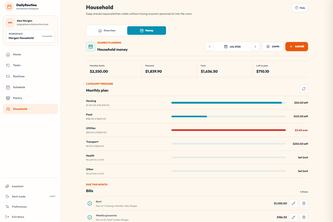
DailyRoutine is a self-reported AI-powered daily planning and coordination tool built during an OpenAI hackathon. The app integrates task management, scheduling, routines (e.g., speaking, skincare), pantry tracking, and household sharing using GPT-5.6. It is described as a single-developer project with no verified revenue or customer base.
What changed:
The project was submitted to the OpenAI 2026 Build Week hackathon. The author states it was developed over a short timeframe using Next.js, React, and OpenAI APIs, with a focus on privacy, structured AI outputs, and user control.
Single most important open question:
Is there any evidence of traction, revenue, or customer adoption beyond the demo environment?
What The Product Actually Is
The description states that DailyRoutine is an app that:
- Converts tasks, schedules, routines, and grocery images into organized daily records.
- Enables both private and shared household coordination.
- Uses GPT-5.6 for AI suggestions and planning.
- Includes features like:
- A "Today" page showing next task, routine step, and schedule.
- Adaptive Day reviews with AI-generated suggestions.
- Pantry management via receipt or image upload.
- Meal suggestions based on pantry inventory.
- Routine helpers (speaking, skincare, meals).
- Household sharing with personal vs. shared data boundaries.
It is built using Next.js, React, TypeScript, PostgreSQL, and OpenAI APIs.
Evidence:
- The author describes the app’s functionality in detail.
- It uses GPT-5.6 for AI processing.
- Features are described as being integrated into a single workflow.
- The app supports both personal and shared household coordination.
Inference:
The app is designed to be an AI companion for daily life, combining planning, routine management, and household coordination.
Positioning & Claim Evolution
The author states:
- DailyRoutine aims to balance manual entry and over-reliance on AI.
- It offers helpful suggestions but allows users to accept or remove them.
- The app is described as a "reviewed AI daily companion" — implying user control over AI decisions.
Evidence:
- The tagline: “DailyRoutine converts tasks, schedules, routines, and grocery images into organized daily records. It enables both private and shared household coordination, powered by GPT-5.6.”
- The author’s inspiration is to create a balanced solution between manual planning and AI over-dependence.
- The app allows users to review and accept or reject AI suggestions.
Inference:
The positioning is that of a user-controlled, AI-assisted daily planner with household coordination features — not an automated planner.
Target Customer & ICP
The description states:
- The app supports both personal and shared household coordination.
- It includes demo profiles for two users in a shared space.
- Features like speaking, skincare, and meal routines are aimed at individuals managing their own or shared daily lives.
Evidence:
- The app supports private and shared household data.
- Demo profiles show how two people can coordinate tasks, schedules, groceries, and bills.
- Routine helpers (speaking, skincare, meals) suggest a personal use case.
Inference:
The ICP likely includes individuals or households managing daily routines and coordinating shared responsibilities, with a focus on personal control over AI suggestions.
Business Model & Pricing Evidence
The description does not state:
- Any pricing model.
- Revenue streams.
- Monetization strategy.
- Subscription plans or in-app purchases.
Evidence:
- The app is described as a demo at openaibuildweek.vercel.app.
- No mention of paid features, subscriptions, or monetization.
Inference:
No evidence of a business model or pricing structure is provided. The app appears to be a prototype or proof-of-concept.
Technical & Delivery Signals
The description states:
- Built with Next.js 16, React 19, TypeScript.
- Uses PostgreSQL via Neon, Prisma ORM.
- GPT-5.6 via OpenAI API.
- Structured outputs validated by Zod.
- Codex supported development.
- Automated testing (237 tests passed).
- Playwright for desktop and mobile journey testing.
Evidence:
- Technology stack is listed in detail.
- The app uses structured AI outputs with server-side validation.
- Data is not stored, and API keys remain on the server.
- Live calls have quotas, cooldowns, and a kill switch.
Inference:
The technical architecture suggests a modern, secure, and scalable MVP. The use of Zod for validation and Codex for development implies attention to code quality and AI integration.
Traction & Maturity Signals
The description states:
- The app is deployed as a demo.
- It uses synthetic data.
- No revenue or customer adoption is mentioned.
- It was built during a hackathon.
Evidence:
- Demo at openaibuildweek.vercel.app.
- No mention of users, customers, or usage metrics.
- No revenue or monetization data.
- Built in a short timeframe (hackathon).
Inference:
There is no evidence of traction, adoption, or user engagement beyond the demo. The app is likely an early-stage prototype.
Competitive Context
The description does not state:
- Any competitors.
- Market positioning relative to existing apps.
- Competitive advantages or differentiators.
Evidence:
- No mention of competing products.
- No discussion of market gaps or competitive landscape.
Inference:
No evidence is provided about the competitive environment. The app’s positioning is unclear in relation to other tools in this space.
Open Questions & Risks
- No traction or revenue: The app is a demo with no verified users or monetization.
- Unverified AI model: GPT-5.6 is not a real model; the author may have misstated it.
- Single developer: A single-person team raises concerns about scalability and long-term maintenance.
- No customer feedback or data: No evidence of user testing, feedback loops, or product-market fit.
- Unrealistic claims: The app is described as “powered by GPT-5.6,” which is not a real model.
Inference:
The project lacks commercial viability indicators and may be an early-stage prototype with no clear path to monetization or user adoption.
Questions the description leaves open
- What is the actual AI model used? Is GPT-5.6 real?
- How does the app handle data privacy and compliance (e.g., GDPR)?
- Are there any plans for monetization or revenue models?
- What are the key user feedback loops, if any?
- How will the app scale beyond a single developer?
- What is the roadmap for mobile deployment?
- Is there any internal testing or user research beyond the demo?
Overall Assessment
Not evidenced.
The project is described as a hackathon prototype with no verified traction, revenue, or customer base. It is built by one person and deployed as a demo. There is no evidence of a business model, monetization strategy, or user engagement beyond the self-reported write-up.
Confidence: Low.
This is a self-reported, unverified project with no external validation or commercial data. Any further diligence would require access to actual user data, financials, or product usage metrics — none of which are provided.
User Stories BotA demo video on every pull request
Get a demo video on every new feature
GitHub App that watches your pull requests and records a narrated, captioned demo.
Save time on demo prep and make informed decisions faster with a video walkthrough of every new feature.
Source
Submitted to the OpenAI 2026 hackathon on Devpost. Project home on Devpost. Back to the full gallery on Devpost.
This competitive analysis was produced by top-founders.com (opens in a new tab)
Generated by a language model from this project's public Devpost page — its tagline, the author's own write-up and any built-with tags listed there — as captured in August 2026. Short quotations are the author's words. It is an opinion on the idea as a business, not on the people behind it, and it reflects the description as published then. If the project has moved on, request a correction below. The analysis is not independent research and contains no verified traction, revenue or customer data.
An independent guide by KFG International LLC — not affiliated with, endorsed by, or connected to Devpost or OpenAI.