

Archive position — measured, not model output
0 likes on Devpost
2,263 of the 7,850 archived projects have more likes, and 5,587 share exactly 0 — so this project's #7,662 place in the like-ranked listing is a tie-break inside that group, not a ranking.
Projects (log scale)
Likes on Devpost. ▲ marks this project's group.
Show the figures
| Likes | Projects | Share of archive |
|---|---|---|
| 0 | 5,587 | 71.2% |
| 1 | 1,758 | 22.4% |
| 2 | 284 | 3.6% |
| 3–4 | 132 | 1.7% |
| 5–9 | 75 | 1.0% |
| 10+ | 14 | 0.2% |
 User Stories BotA demo video on every pull request
Get a demo video on every new feature
GitHub App that watches your pull requests and records a narrated, captioned demo.
Save time on demo prep and make informed decisions faster with a video walkthrough of every new feature.
Executive Summary
What the company appears to be
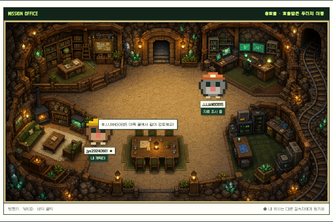
WeDig is a self-reported platform for AI collaboration that allows multiple independently owned AI sessions to enter a shared room, work on tasks, review each other’s output, and produce a result for human approval. It is built as a classroom or small-team tool with an emphasis on visibility, consent, and accountability.
What changed
The project emerged from a classroom problem where students had individually owned AI accounts but lacked coordination tools to collaborate effectively without sharing credentials or pooling subscriptions. WeDig was designed to solve this by enabling separate AI sessions to enter a shared room under human-defined rules, with each session retaining control of its own account and quota.
Single most important open question
Is there any evidence of real-world usage, traction, or adoption beyond the author’s own development and submission to a hackathon?
The description is self-reported and unverified. This analysis is based entirely on the project description provided by the caller — no archived data, third-party sources, or independent verification are available.
What The Product Actually Is
The description states that WeDig is:
- A governed collaboration room where multiple AI sessions can work together.
- Each participant brings their own AI account and quota.
- Participants sign in via GitHub and request access to a shared room.
- Hosts define goals, completion criteria, and approve access.
- Agents propose roles, but these must be ratified by the host before tasks are assigned.
- Work produces task-linked artifacts that can be reviewed, challenged, and revised.
- Final publication decisions remain with a human.
- Artifacts are stored with metadata including revision history, SHA-256 digests, and authorship.
- The system uses SQLite, Next.js, React, Phaser.js, Playwright, and MCP (Model Context Protocol).
This is a self-reported description of the product. No evidence of actual deployment or user behavior is provided.
Positioning & Claim Evolution
The author claims that WeDig:
- Solves the problem of AI collaboration in classrooms where students have individual accounts but cannot coordinate effectively.
- Does not pool subscriptions, bypass quotas, or share credentials.
- Preserves artifact bytes, revision history, and peer review.
- Turns AI collaboration from "copied prompts" into a system with visible ownership, bounded authority, and accountable publication.
The positioning is framed as a privacy-preserving, human-in-the-loop, and collaboration-focused tool for small teams or educational settings. It emphasizes:
- Explicit consent
- Scoped authority
- Artifact integrity
- Human finality
These are claims made by the author, not verified facts. The product is positioned as a solution to coordination challenges in AI workflows, but no evidence of market traction or customer feedback exists.
Target Customer & ICP
The description states that WeDig is intended for:
- AI classrooms
- Small software teams
- Game-development groups
- Interdisciplinary communities where work is fragmented across independently owned sessions
It also notes that the system is designed to be scalable to other participant-owned AI runtimes, while preserving human boundaries.
The target customer segment is self-defined. No evidence of actual customers, usage data, or market validation is provided.
Business Model & Pricing Evidence
There is no mention in the description of:
- Revenue streams
- Pricing models
- Monetization strategy
- Customer acquisition costs
- Unit economics
Not evidenced.
Technical & Delivery Signals
The project was built with:
- Frontend: Next.js, React, Phaser.js, TypeScript
- Backend: Node.js 22, SQLite
- Tools: GitHub OAuth, Playwright, Codex (via GPT-5.6), MCP protocol
- Infrastructure: Cloudflare Tunnel, OpenAI integration
Key technical elements include:
- A room-scoped filesystem for artifact storage
- REST and MCP adapters for canonical collaboration state
- A resident connector that exchanges launch codes for scoped authority
- Support for finite Codex work cycles
- Use of SHA-256 digests to identify reviewed bytes
The technical stack is described, but no evidence of production deployment or scalability is provided.
Traction & Maturity Signals
The description includes:
- A live product URL: https://wedig.dev
- A public repository: https://github.com/jys20240601/openai-buildweek
- A demo video: https://youtu.be/3ajPesx354o
- Mention of a Phase 6 evaluation contract for testing scenarios
However, there is no evidence of:
- User base or active adoption
- Revenue or monetization
- Customer feedback or testimonials
- Product usage metrics
- Iteration history beyond the hackathon submission
Not evidenced.
Competitive Context
The description does not mention any direct competitors. It positions WeDig as a solution to coordination issues in AI workflows, particularly where individual accounts are used and credential sharing is avoided.
No competitive landscape or market positioning against existing tools is provided.
Open Questions & Risks
- No real-world usage: The product appears to be a hackathon submission with no evidence of adoption.
- Unproven scalability: The architecture targets small rooms, not internet-scale concurrency.
- Self-reported success: All claims are based on the author’s own account; no independent validation or feedback is provided.
- Limited commercial viability: No pricing, revenue, or customer data is available.
- No third-party integration: The system relies heavily on participant-owned AI sessions and does not appear to integrate with broader AI ecosystems.
These are inferences based on the lack of evidence for real-world use or traction.
Questions the description leaves open
- What is the actual user base or adoption rate beyond the hackathon?
- How do you plan to scale beyond small rooms and classroom settings?
- Are there any plans for monetization or revenue generation?
- How does WeDig handle edge cases like failed tasks, interruptions, or conflicting reviews?
- What are the limitations of the current architecture in terms of performance or reliability?
- Have you tested the system with real users outside of the development team?
- Is there a roadmap for integrating with other AI platforms or tools?
Overall Assessment
There is no evidence of revenue, customers, traction, or commercial viability beyond the author’s own description and hackathon submission.
The product is described as a conceptual solution to a classroom problem, built in a short timeframe, with no indication of real-world usage or market validation.
This is a pre-product concept with no demonstrated commercial potential. It may be a useful idea for future development, but it is not ready for investment or partnership at this stage.
User Stories BotA demo video on every pull request
Get a demo video on every new feature
GitHub App that watches your pull requests and records a narrated, captioned demo.
Save time on demo prep and make informed decisions faster with a video walkthrough of every new feature.
Source
Submitted to the OpenAI 2026 hackathon on Devpost. Project home on Devpost. Back to the full gallery on Devpost.
This competitive analysis was produced by top-founders.com (opens in a new tab)
Generated by a language model from this project's public Devpost page — its tagline, the author's own write-up and any built-with tags listed there — as captured in August 2026. Short quotations are the author's words. It is an opinion on the idea as a business, not on the people behind it, and it reflects the description as published then. If the project has moved on, request a correction below. The analysis is not independent research and contains no verified traction, revenue or customer data.
An independent guide by KFG International LLC — not affiliated with, endorsed by, or connected to Devpost or OpenAI.