

Archive position — measured, not model output
0 likes on Devpost
2,263 of the 7,850 archived projects have more likes, and 5,587 share exactly 0 — so this project's #3,546 place in the like-ranked listing is a tie-break inside that group, not a ranking.
Projects (log scale)
Likes on Devpost. ▲ marks this project's group.
Show the figures
| Likes | Projects | Share of archive |
|---|---|---|
| 0 | 5,587 | 71.2% |
| 1 | 1,758 | 22.4% |
| 2 | 284 | 3.6% |
| 3–4 | 132 | 1.7% |
| 5–9 | 75 | 1.0% |
| 10+ | 14 | 0.2% |
 User Stories BotA demo video on every pull request
Get a demo video on every new feature
GitHub App that watches your pull requests and records a narrated, captioned demo.
Save time on demo prep and make informed decisions faster with a video walkthrough of every new feature.
Executive Summary
What the company appears to be
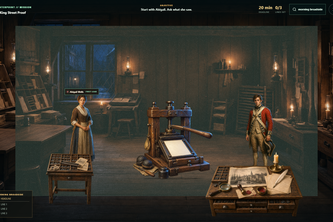
Counterpoint is a self-reported educational tool that uses AI agents to compile lesson passages into playable point-and-click missions for students. The system is built around a blueprint generation agent (using GPT-5.6 and Codex), which outputs game structures in JSON format. These are validated by a series of checks before being approved by the teacher, who can also revise them in plain English. Students play the final mission without any AI interaction.
What changed
The author describes an evolution from initial prototype challenges (e.g., sprite placement issues) to a refined process including validators, self-repair loops, and real-browser testing gates. The flagship mission, The King Street Proof, is presented as a deep example of this approach.
Single most important open question — the commercial due-diligence read
Is there evidence that teachers are interested in using or adopting this tool? The description states no revenue, customers, or adoption data; it only describes an idea and its technical implementation.
What The Product Actually Is
- The description states Counterpoint compiles lesson passages into playable point-and-click missions.
- It uses AI agents (GPT-5.6 and Codex) to generate game blueprints in JSON format.
- These blueprints are validated by a set of checks before being approved for student use.
- Teachers can revise the mission using plain English, which triggers regeneration and re-validation.
- Students play the final version with no AI interaction — the AI's role ends before class starts.
- The system includes tools like React + Three.js for rendering, Express.js for backend logic, Playwright for testing, and gpt-5.6-sol for scene art generation.
Inference The product is described as a tool that transforms text-based learning into interactive simulations, but it does not appear to be a general-purpose AI content generator or chatbot.
Positioning & Claim Evolution
- The author positions Counterpoint as an alternative to traditional AI tools in education (e.g., summarizers, flashcards, tutors).
- It claims to enable "drama-based learning" where students engage with historical events through decision-making and consequences.
- The core value proposition is that the teacher controls everything — from blueprint creation to student experience — while AI handles only the mechanical aspects of mission design.
- The author emphasizes that this approach addresses a key concern in education AI: lack of control by teachers.
- The flagship mission, The King Street Proof, exemplifies how the system works in practice.
Inference This is a niche educational tool focused on transforming reading into interactive simulations. It is not positioned as a general-purpose AI assistant or content creator.
Target Customer & ICP
- The primary user is identified as a teacher.
- Teachers are described as needing control over generated content and wanting to use AI to enhance their instruction.
- The system targets educators who teach subjects with reading-heavy materials (e.g., history, science, civics).
- There is no mention of students as direct users beyond playing the missions.
Inference The ICP appears to be K–12 teachers working in humanities or social sciences, particularly those interested in drama-based or inquiry-driven pedagogy.
Business Model & Pricing Evidence
- The description does not state a business model.
- No pricing information is provided.
- The demo is deployed and accessible without an account or API key.
- There is no indication of monetization strategy or customer acquisition plans.
Inference No evidence exists to suggest how the company intends to make money or whether it has begun selling to customers.
Technical & Delivery Signals
- Built with React, Three.js, Express.js, Node.js, Playwright, OpenAI APIs, and Codex CLI.
- Uses GPT-5.6 for blueprint generation and gpt-5.6-sol for image generation.
- The system includes validators that check JSON output for correctness, reachability, readability, etc.
- A self-repair loop allows the model to correct its own outputs based on validation failures.
- Scene art is generated once per background and reused across missions via manifests.
- Real-browser playthroughs are now part of the gate process after early issues with simulator-only testing.
Inference The technical stack suggests a prototype built by one developer, likely in a hackathon context. The system shows some sophistication in validation and iteration but lacks evidence of production-grade infrastructure or scalability.
Traction & Maturity Signals
- No revenue data is provided.
- No customer base or adoption metrics are mentioned.
- The flagship mission was developed over multiple versions (including one revoked).
- Playwright tests and unit tests were run, and WCAG AA compliance was achieved for the flagship mission.
- The project includes a working scene-geometry benchmark showing performance improvements in character placement.
Inference There is no evidence of traction or market validation. The system appears to be a prototype with limited real-world use cases.
Competitive Context
- The author states that most education AI tools are either chat tutors or content generators.
- Counterpoint is positioned as distinct from these, focusing on gameplay-based learning rather than text-based interaction.
- It does not appear to directly compete with existing LMS platforms or educational game engines like Unity or Unreal.
Inference The competitive landscape is unclear. The author doesn't name competitors, nor does the description indicate how Counterpoint fits into broader education tech trends.
Open Questions & Risks
- The entire system is described as built by one person (Swapnil Sawant).
- No evidence of team expansion or external investment.
- No mention of partnerships, distribution channels, or marketing efforts.
- The project is submitted to a hackathon — suggesting it may be in early development.
- The lack of revenue, customers, or adoption data raises questions about viability and scalability.
Inference The risk of failure is high due to lack of traction, no clear path to monetization, and limited team size. It's unclear whether this will evolve into a viable product or remain a prototype.
Questions the description leaves open
- What specific feedback have you received from teachers who’ve tried the system?
- How do you plan to scale beyond one developer?
- Are there any existing pilots or trials with schools or educators?
- What is your roadmap for monetization and customer acquisition?
- How do you intend to differentiate this from other educational tools in the market?
- Have you considered how to integrate with LMS platforms or classroom management systems?
Overall Assessment
- Not evidenced.
- The description provides no information about funding, valuation, or investor interest.
- No evidence of commercial traction, revenue, or partnerships exists.
- The project appears to be a prototype built by one individual in a hackathon setting.
Inference There is insufficient evidence to assess whether this represents an investment opportunity or potential partnership. It lacks key signals of maturity or market readiness.
User Stories BotA demo video on every pull request
Get a demo video on every new feature
GitHub App that watches your pull requests and records a narrated, captioned demo.
Save time on demo prep and make informed decisions faster with a video walkthrough of every new feature.
Source
Submitted to the OpenAI 2026 hackathon on Devpost. Project home on Devpost. Back to the full gallery on Devpost.
This competitive analysis was produced by top-founders.com (opens in a new tab)
Generated by a language model from this project's public Devpost page — its tagline, the author's own write-up and any built-with tags listed there — as captured in August 2026. Short quotations are the author's words. It is an opinion on the idea as a business, not on the people behind it, and it reflects the description as published then. If the project has moved on, request a correction below. The analysis is not independent research and contains no verified traction, revenue or customer data.
An independent guide by KFG International LLC — not affiliated with, endorsed by, or connected to Devpost or OpenAI.