

Archive position — measured, not model output
0 likes on Devpost
2,263 of the 7,850 archived projects have more likes, and 5,587 share exactly 0 — so this project's #3,505 place in the like-ranked listing is a tie-break inside that group, not a ranking.
Projects (log scale)
Likes on Devpost. ▲ marks this project's group.
Show the figures
| Likes | Projects | Share of archive |
|---|---|---|
| 0 | 5,587 | 71.2% |
| 1 | 1,758 | 22.4% |
| 2 | 284 | 3.6% |
| 3–4 | 132 | 1.7% |
| 5–9 | 75 | 1.0% |
| 10+ | 14 | 0.2% |
 User Stories BotA demo video on every pull request
Get a demo video on every new feature
GitHub App that watches your pull requests and records a narrated, captioned demo.
Save time on demo prep and make informed decisions faster with a video walkthrough of every new feature.
Executive Summary
What the company appears to be
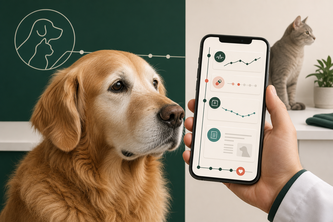
Continuum: Pet Health Memory is a self-reported personal project by one developer (Aldana Belen Rodriguez) that describes itself as a private health memory and care tracker for pets, built as a Progressive Web App (PWA). It allows pet owners to record symptoms, medications, vet visits, procedures, test results, expenses, and more — with the goal of helping them prepare clear, shareable health stories when visiting veterinarians.
What changed
The project was submitted to the OpenAI 2026 hackathon on Devpost. It is described as a working prototype, not a commercial product or service. The author states that it was built using AI tools like GPT-5.6 through Codex and various web technologies including Next.js, React, Supabase, and Tailwind CSS.
Single most important open question
Is there any evidence of actual user adoption, revenue, or traction beyond the single developer's personal use case? The description does not indicate whether the app has been used by others, nor does it provide data on customer acquisition, retention, monetization, or market demand.
What The Product Actually Is
The description states that Continuum is a private health memory and care tracker for pets, built as a Progressive Web App (PWA). It supports multiple pets and non-conventional species. Users can record symptoms, vet visits, medications, physiotherapy, behavior changes, diet changes, procedures, test results, expenses, reminders, and care instructions.
Key features include:
- Ability to attach photos and documents.
- Sections organized around common questions (Today, Timeline, What Changed, Vet Visit Mode, Vet Packet).
- Vet Packet functionality that can be printed, saved as PDF, shared, or exported as HTML.
- Longevity section for preventive care, routines, mobility, appetite, hydration, quality-of-life notes.
- Supports local-first data storage using IndexedDB and syncs via Supabase.
- Does not diagnose illnesses or recommend treatments; it helps owners record observations and prepare questions for veterinarians.
The app is described as a working prototype, not a commercial product. It uses AI tools (Codex + GPT-5.6) in its development process but does not rely on paid AI APIs for core functionality.
Positioning & Claim Evolution
The author positions Continuum as:
- A tool that helps pet owners organize scattered health information into a single, shareable story.
- Not a replacement for veterinary advice or diagnosis.
- Designed to reduce stress during vet visits, especially when information is fragmented across calendars, WhatsApp, photos, and memory.
Claims made:
- “Pets can’t tell a vet what changed.”
- “Continuum turns scattered symptoms, medications, records, routines, and costs into a clear, shareable health story when it matters most.”
These claims reflect an intent to solve a personal problem (the author’s own dog) rather than a market need validated by users or customers. The positioning is based on empathy with pet owners who struggle with fragmented care data.
There is no evidence of brand positioning beyond the personal narrative, nor any indication that the app has evolved from a prototype into a scalable product or platform.
Target Customer & ICP
The description states:
- The target audience includes pet owners caring for senior pets, chronically ill pets, rescue animals with incomplete histories, or those who see different vets and therapists.
- The app supports more than one pet and also non-conventional species.
- It is designed to help users prepare for vet visits by organizing information clearly.
The author identifies herself as the primary user (Orejas, a mixed-breed dog), suggesting that the initial use case was personal. There is no evidence of a defined ICP beyond this single user or a broader market segment.
No data on demographics, geographic reach, or customer personas are provided.
Business Model & Pricing Evidence
Not evidenced.
The description does not mention:
- Any pricing model.
- Revenue streams.
- Monetization strategy.
- Subscription plans or freemium offerings.
- Paid features beyond the basic app functionality.
It is clear from the write-up that the app is currently a personal project, not a commercial offering. The author emphasizes that it works without paid AI APIs and supports local-first data storage, implying no immediate monetization path.
Technical & Delivery Signals
The description states:
- Built with Next.js, React, TypeScript, Tailwind CSS.
- Uses Supabase for authentication, PostgreSQL database, cross-device sync, and private document storage.
- Implements Row Level Security to keep records separate per account.
- Stores data locally first using IndexedDB, with fallbacks for offline use.
- Supports PWA behavior including service workers and web share API.
- Uses Playwright for automated browser testing.
- Developed using Codex + GPT-5.6, though the AI is used for development, not core app features.
Technical signals:
- Local-first architecture with cloud sync.
- Privacy-focused design (private file storage, account-scoped data).
- Responsive UI for mobile and desktop.
- No mention of native apps or platform-specific integrations.
Inferences:
- The use of Supabase suggests a backend-as-a-service approach.
- The PWA nature implies accessibility without app store distribution.
- AI was used in development but not integrated into the core user experience.
Traction & Maturity Signals
Not evidenced.
The description does not provide any evidence of:
- User adoption or active users.
- Customer feedback or testimonials.
- Revenue or monetization metrics.
- Growth indicators (e.g., number of accounts, usage frequency).
- Product maturity beyond prototype stage.
The author notes that the app is a working prototype, and that she built it for herself before considering others. The demo profiles (Milo the dog and Juno the bearded dragon) are temporary and do not represent real users.
Competitive Context
Not evidenced.
There is no mention of:
- Competitors in the pet health tracking space.
- Similar products or platforms.
- Market size or competitive landscape.
- Differentiation strategy from existing tools.
The description does not reference any external market analysis, competitor offerings, or positioning relative to other solutions.
Open Questions & Risks
Risk 1: Lack of commercial traction or user validation
- The app is described as a personal project with no evidence of real users or adoption.
- No revenue, customers, or market feedback are mentioned.
Risk 2: Limited scalability or product-market fit
- The author built it for one person (her dog), and there is no indication that others have found value in it.
- No mention of user testing, feature requests, or iterative improvements from a broader audience.
Risk 3: Dependency on AI tooling without clear commercial viability
- While the app was built using AI tools like Codex/GPT-5.6, these were used for development and not integrated into core functionality.
- There is no indication that this dependency will translate into a sustainable business model.
Risk 4: No monetization or business model
- The app appears to be non-commercial, with no pricing structure or revenue plan.
- It lacks any indication of how it might evolve into a scalable product or service.
Questions the description leaves open
- What is the actual user base beyond yourself? Have others started using this?
- How do you plan to monetize or scale this beyond personal use?
- Are there any competitors in the pet health tracking space, and how does Continuum differentiate from them?
- What specific feedback have you received from users (if any)?
- Do you have a roadmap for expanding beyond the current PWA version?
- How do you intend to ensure data privacy and security at scale?
- What are your long-term goals for the product — is it intended to become a commercial offering?
Overall Assessment
Not evidenced.
There is no evidence of:
- Financials.
- Revenue or ARR.
- Funding rounds or investor interest.
- Strategic partnerships or go-to-market plans.
- Commercial traction or market validation.
The project is described as a personal prototype, built by one individual for her own use case. It has not been validated in the marketplace, nor does it show signs of being a viable commercial opportunity at this stage.
Confidence Level: Low
This analysis is based entirely on self-reported information from the author and lacks any independent verification or evidence of traction, customers, revenue, or market demand.
User Stories BotA demo video on every pull request
Get a demo video on every new feature
GitHub App that watches your pull requests and records a narrated, captioned demo.
Save time on demo prep and make informed decisions faster with a video walkthrough of every new feature.
Source
Submitted to the OpenAI 2026 hackathon on Devpost. Project home on Devpost. Back to the full gallery on Devpost.
This competitive analysis was produced by top-founders.com (opens in a new tab)
Generated by a language model from this project's public Devpost page — its tagline, the author's own write-up and any built-with tags listed there — as captured in August 2026. Short quotations are the author's words. It is an opinion on the idea as a business, not on the people behind it, and it reflects the description as published then. If the project has moved on, request a correction below. The analysis is not independent research and contains no verified traction, revenue or customer data.
An independent guide by KFG International LLC — not affiliated with, endorsed by, or connected to Devpost or OpenAI.