

Archive position — measured, not model output
1 like on Devpost
505 of the 7,850 archived projects have more likes, and 1,758 share exactly 1 — so this project's #868 place in the like-ranked listing is a tie-break inside that group, not a ranking.
Projects (log scale)
Likes on Devpost. ▲ marks this project's group.
Show the figures
| Likes | Projects | Share of archive |
|---|---|---|
| 0 | 5,587 | 71.2% |
| 1 | 1,758 | 22.4% |
| 2 | 284 | 3.6% |
| 3–4 | 132 | 1.7% |
| 5–9 | 75 | 1.0% |
| 10+ | 14 | 0.2% |
 User Stories BotA demo video on every pull request
Get a demo video on every new feature
GitHub App that watches your pull requests and records a narrated, captioned demo.
Save time on demo prep and make informed decisions faster with a video walkthrough of every new feature.
Executive Summary
What the company appears to be
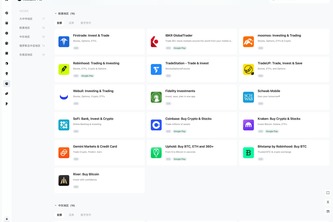
The project described as "Competitor Copilot" (also known as "Recode") is a self-reported automated research platform focused on global stock and crypto trading applications. It collects, structures, and presents metadata, versions, ratings, reviews, screenshots, and product changes from Apple App Store and Google Play across five regional markets.
What changed
The author states that the project was built for the OpenAI 2026 hackathon. It includes an automated workflow using Python scripts and GitHub Actions to collect and process data, with a focus on traceability and verification of source data.
Single most important open question — the commercial due-diligence read
Is there any evidence of product-market fit or demand from actual users or customers beyond the hackathon submission? The description does not indicate any revenue, customer base, or adoption metrics.
What The Product Actually Is
The description states that Recode is a competitive research website focused on stock brokerage, securities, and cryptocurrency trading applications worldwide.
It organizes these apps into five regional markets:
- Greater China
- Europe and North America
- Middle East
- Russia and Central Asia
- Southeast Asia
For each application, it presents:
- Basic product and platform information
- Current version and historical release records
- App ratings and publicly available reviews
- Product interface screenshots
- Version update summaries
- Review summaries and Chinese translations
- Product, industry, UX, and visual design analysis
- Traceable update history
Data is collected from Apple App Store and Google Play. The platform uses Python scripts for data collection and normalization, with GitHub Actions supporting scheduled and manual updates.
Evidence
- The description explicitly states the product's purpose and features.
- It describes how the data is structured and updated.
- It mentions that the system stores independent data directories per app for maintainability and auditability.
Inference The platform appears to be a tool for product and design teams to track competitor apps, but no evidence indicates whether this is being used by such teams or if it has any commercial traction.
Positioning & Claim Evolution
The author states that the inspiration behind Recode was the difficulty of maintaining consistent, traceable competitor research in fast-evolving trading applications. The platform aims to provide structured, continuously updated information across global markets.
It positions itself as a solution for product and design teams who need to monitor app changes over time, including interface updates, feature additions, and user feedback.
Evidence
- The write-up explicitly describes the problem it solves.
- It emphasizes traceability, automation, and consistency in competitor research.
Inference The positioning is focused on internal R&D or product teams within trading firms or app development companies. No evidence suggests a broader commercial audience or external sales strategy.
Target Customer & ICP
The description states that Recode targets "product and design teams" working on securities and cryptocurrency trading applications.
It also mentions that the platform supports teams designing and operating digital asset trading products, suggesting a focus on product managers, UX designers, and developers in financial tech or fintech sectors.
Evidence
- The write-up identifies target users as product and design teams.
- It refers to teams working on "securities and digital asset trading products."
Inference There is no evidence of actual customers or user feedback. The ICP appears to be internal R&D or product teams, but there’s no indication of adoption or engagement beyond the hackathon context.
Business Model & Pricing Evidence
The description does not provide any information about pricing, monetization, or business model.
Evidence
- No mention of subscriptions, fees, licensing, or revenue streams.
- No indication of whether Recode is offered as a SaaS product, open-source tool, or internal utility.
Inference There is no evidence that the project has moved beyond prototype or hackathon stage. The business model remains undefined.
Technical & Delivery Signals
The platform uses Python scripts to collect and normalize data from Apple App Store and Google Play. It implements a modular data structure with independent directories for each app, allowing maintainability and auditability.
GitHub Actions are used for automation, including scheduled and manual triggers, with verified changes automatically committed back to the repository.
Data reliability is emphasized through:
- Requiring verified identifiers before presenting cross-platform matches
- Not showing Google Play entries unless valid data has been retrieved
- Separating source data from generated summaries and analysis
Evidence
- The description details technical architecture.
- It outlines workflows for data collection, normalization, and publishing.
- It mentions the use of GitHub Actions and Python-based automation.
Inference The system is built with a focus on traceability and quality control. However, there’s no evidence of scalability or production deployment beyond the hackathon prototype.
Traction & Maturity Signals
The description does not include any data on user adoption, customer engagement, revenue, or usage metrics.
Evidence
- The project was submitted to a hackathon.
- No mention of active users, customers, or product traction.
- No evidence of commercial deployment or market validation.
Inference This is likely an early-stage prototype or proof-of-concept. There are no signs of product-market fit or real-world usage beyond the author’s own development efforts.
Competitive Context
The description does not mention any direct competitors or competitive landscape.
Evidence
- No reference to existing tools or platforms offering similar competitor research for trading apps.
- No indication of market positioning relative to other solutions.
Inference Without evidence of prior competition, it’s unclear whether Recode addresses a gap in the market or replicates an existing solution. The competitive environment remains unknown.
Open Questions & Risks
- No commercial traction or revenue: The project is described as a hackathon submission with no evidence of monetization or customer base.
- Limited scope and data sources: Only Apple App Store and Google Play are mentioned; other platforms (e.g., Windows, web apps) are not covered.
- Unclear scalability: While automation is implemented, there’s no indication of how the system would scale to support a large number of apps or users.
- No external validation: No third-party reviews, user feedback, or market testing are reported.
- Founder-only team: The project is built by one person, which may limit execution speed and capacity.
Evidence
- The project was submitted to a hackathon.
- No mention of funding, customers, or partnerships.
- Only one team member listed (Kingwe Cheung).
Inference The lack of traction, scalability planning, and external validation raises concerns about commercial viability. The single-founder model may also limit long-term growth.
Questions the description leaves open
- What is the actual demand for this type of competitor research in your target market?
- Have you identified any paying customers or potential users beyond yourself?
- How do you plan to monetize Recode, if at all?
- What are the technical limitations of scaling this system to cover more apps or platforms?
- Are there any existing tools that already solve this problem, and how does Recode differentiate itself?
- What is your roadmap for expanding beyond the current five markets and data sources?
Overall Assessment
Confidence Level Low The description indicates a self-reported hackathon project with no evidence of traction, revenue, or customer base.
Assessment There is insufficient evidence to support an investment or partnership decision. The project appears to be a prototype or proof-of-concept with no demonstrated commercial viability or market demand.
Reasoning
- No revenue, customers, or adoption metrics.
- No indication of a scalable business model.
- No external validation or competitive analysis.
- Limited team size and scope suggest early-stage development.
This is not a product ready for investment or partnership unless further evidence emerges showing traction, commercial interest, or a clear path to monetization.
User Stories BotA demo video on every pull request
Get a demo video on every new feature
GitHub App that watches your pull requests and records a narrated, captioned demo.
Save time on demo prep and make informed decisions faster with a video walkthrough of every new feature.
Source
Submitted to the OpenAI 2026 hackathon on Devpost. Project home on Devpost. Back to the full gallery on Devpost.
This competitive analysis was produced by top-founders.com (opens in a new tab)
Generated by a language model from this project's public Devpost page — its tagline, the author's own write-up and any built-with tags listed there — as captured in August 2026. Short quotations are the author's words. It is an opinion on the idea as a business, not on the people behind it, and it reflects the description as published then. If the project has moved on, request a correction below. The analysis is not independent research and contains no verified traction, revenue or customer data.
An independent guide by KFG International LLC — not affiliated with, endorsed by, or connected to Devpost or OpenAI.