

Archive position — measured, not model output
0 likes on Devpost
2,263 of the 7,850 archived projects have more likes, and 5,587 share exactly 0 — so this project's #3,410 place in the like-ranked listing is a tie-break inside that group, not a ranking.
Projects (log scale)
Likes on Devpost. ▲ marks this project's group.
Show the figures
| Likes | Projects | Share of archive |
|---|---|---|
| 0 | 5,587 | 71.2% |
| 1 | 1,758 | 22.4% |
| 2 | 284 | 3.6% |
| 3–4 | 132 | 1.7% |
| 5–9 | 75 | 1.0% |
| 10+ | 14 | 0.2% |
 User Stories BotA demo video on every pull request
Get a demo video on every new feature
GitHub App that watches your pull requests and records a narrated, captioned demo.
Save time on demo prep and make informed decisions faster with a video walkthrough of every new feature.
Executive Summary
Project: codex-fractal
Self-reported basis: The analysis is based entirely on the author's own description of the project, submitted to the OpenAI 2026 hackathon on Devpost. No external verification or independent data is available.
Commercial due-diligence read: This appears to be a solo developer project attempting to extend Codex’s capabilities by enabling more granular parallelization and orchestration of tasks across sub-agents and full agents. It is not evidenced to have any revenue, customers, or traction. The author states intent but does not demonstrate execution or market validation.
Key open question: Is there a real need for this kind of orchestration tool in the Codex ecosystem, or is it an experimental idea that has not yet proven its utility?
What The Product Actually Is
The description states:
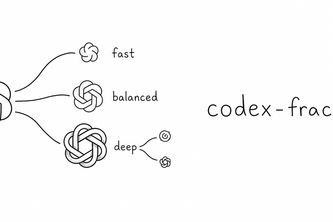
- codex-fractal is a system designed to add "automagical" parallelization to Codex.
- It enables breaking down tasks into smaller pieces that can be handled at varying levels of intelligence.
- It supports routing and orchestration of these tasks across sub-agents and full agents.
- The tool is built using Codex, JavaScript, and other tools like SOL 5.6 Ultra, Terra, and Claude Code.
Inference: Based on the description, it seems to be a developer tool or plugin that enhances Codex’s task execution by enabling smarter parallelism and agent-based workflows.
Not evidenced: No actual product demo, architecture details, or functionality examples are provided.
Positioning & Claim Evolution
The author states:
- The project addresses a gap in the current Codex app: the lack of ability to break out work into other full agents.
- It aims to provide “smart parallelization” and “auto routing for model and reasoning level.”
- The author sees this as an “obvious next step” that is not yet available in the Codex experience.
Inference: The positioning is that of a tool that enhances Codex’s native capabilities, particularly around task decomposition and orchestration. It is framed as a missing feature or enhancement rather than a new product category.
Not evidenced: No claims about market demand, competitive differentiation, or prior user feedback are made.
Target Customer & ICP
The description states:
- The author works with Codex regularly.
- The tool is intended for people who “build with the Codex app all the time.”
- It is aimed at those who want to tap into more of the app server functionality and leverage it across distributed projects.
Inference: The target customer appears to be developers or power users of Codex, possibly in AI-assisted development workflows. The ICP seems to be early-stage adopters or enthusiasts of Codex who are looking for deeper customization or automation.
Not evidenced: No specific personas, user segments, or customer data are provided.
Business Model & Pricing Evidence
The description states:
- The author is continuing to work on the project and hopes to add more users.
- It is not clear if there is a monetization strategy or pricing model in place.
Inference: There is no evidence of any business model, pricing, or revenue streams. The project appears to be experimental or personal development.
Not evidenced: No pricing, monetization, or commercialization plans are mentioned.
Technical & Delivery Signals
The description states:
- Built with Codex, JavaScript, SOL 5.6 Ultra, Terra, and Claude Code.
- The author tried building it as an MCP server but faced limitations in the app server functionality.
- It supports thread renaming and model-level routing.
Inference: The tool is built using a mix of AI tools and developer frameworks, with some integration into Codex’s ecosystem. It shows early-stage technical development.
Not evidenced: No code samples, performance metrics, or delivery artifacts are provided.
Traction & Maturity Signals
The description states:
- The author is continuing to work on the project.
- It was submitted to a hackathon (OpenAI 2026).
- The author hopes to add more users and collaborators to dogfood it.
Inference: This is an early-stage, personal project with no demonstrated traction or adoption. It is not evidenced to have any users, customers, or real-world usage.
Not evidenced: No metrics, user base, or product maturity data are available.
Competitive Context
The description states:
- The author sees a gap in Codex’s current functionality.
- It aims to improve upon what Codex can do out of the box.
Inference: The project is positioned as an enhancement to Codex, not a competitor. It may be part of a broader ecosystem of tools that extend AI app capabilities.
Not evidenced: No competitive landscape or market positioning beyond Codex is described.
Open Questions & Risks
- Solo developer project: Only one team member (the author) is mentioned.
- No traction or revenue: The project has not demonstrated any adoption or monetization.
- Unproven utility: The author states it’s an “obvious next step,” but no evidence of market need or user validation is provided.
- Limited scope: It appears to be a hackathon-level prototype, not a scalable product.
Inference: The project is experimental and lacks commercial viability or scalability. It may be a useful idea, but there is no evidence it has moved beyond the concept stage.
Questions the description leaves open
- What specific tasks or workflows does codex-fractal aim to improve?
- How does it integrate with existing Codex workflows?
- Have you tested this with others? If so, what feedback did you get?
- Is there a plan for monetization or user acquisition beyond personal use?
- What are the technical limitations of current Codex that make this necessary?
Overall Assessment
Not evidenced: No commercial or strategic value is demonstrated in the description.
Inference: At this stage, codex-fractal appears to be a solo developer experiment with no clear path to product-market fit or commercial viability. It may evolve into something valuable, but as of now, it lacks evidence of traction, demand, or scalability.
Confidence level: Low — based on minimal self-reported evidence and lack of external validation.
User Stories BotA demo video on every pull request
Get a demo video on every new feature
GitHub App that watches your pull requests and records a narrated, captioned demo.
Save time on demo prep and make informed decisions faster with a video walkthrough of every new feature.
Source
Submitted to the OpenAI 2026 hackathon on Devpost. Project home on Devpost. Back to the full gallery on Devpost.
This competitive analysis was produced by top-founders.com (opens in a new tab)
Generated by a language model from this project's public Devpost page — its tagline, the author's own write-up and any built-with tags listed there — as captured in August 2026. Short quotations are the author's words. It is an opinion on the idea as a business, not on the people behind it, and it reflects the description as published then. If the project has moved on, request a correction below. The analysis is not independent research and contains no verified traction, revenue or customer data.
An independent guide by KFG International LLC — not affiliated with, endorsed by, or connected to Devpost or OpenAI.