

Archive position — measured, not model output
0 likes on Devpost
2,263 of the 7,850 archived projects have more likes, and 5,587 share exactly 0 — so this project's #3,235 place in the like-ranked listing is a tie-break inside that group, not a ranking.
Projects (log scale)
Likes on Devpost. ▲ marks this project's group.
Show the figures
| Likes | Projects | Share of archive |
|---|---|---|
| 0 | 5,587 | 71.2% |
| 1 | 1,758 | 22.4% |
| 2 | 284 | 3.6% |
| 3–4 | 132 | 1.7% |
| 5–9 | 75 | 1.0% |
| 10+ | 14 | 0.2% |
 User Stories BotA demo video on every pull request
Get a demo video on every new feature
GitHub App that watches your pull requests and records a narrated, captioned demo.
Save time on demo prep and make informed decisions faster with a video walkthrough of every new feature.
Executive Summary
What the company appears to be
Chorsu is a self-reported macOS task management tool built as a local-first application with no cloud, API keys, or account requirements. It allows users to capture tasks via a global shortcut and automatically routes them into projects using deterministic rules and on-device signals. The app supports natural language time phrases and dependency linking, resurfacing blocked work when actionable.
What changed
The author reports building Chorsu during the OpenAI 2026 hackathon (Build Week), using Codex as an engineering collaborator to refactor and expand functionality. It was submitted to Devpost as a hackathon project with no evidence of prior traction or commercial deployment.
Single most important open question
Is there any evidence that users are actively adopting or paying for this tool, or that it has moved beyond the prototype stage?
What The Product Actually Is
The description states that Chorsu is a local-first macOS task router. It uses a configurable global shortcut to open a lightweight capture panel over whatever application the user is in. Users type one task in plain English and press Return.
Key features include:
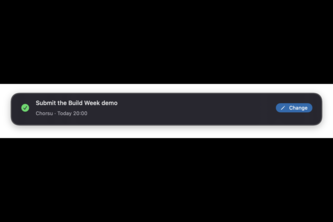
- Natural time phrases like “at 8 PM” or “tomorrow morning” are parsed into local reminders.
- Tasks are ranked into projects using deterministic rules and on-device signals.
- If routing is uncertain, the panel expands into a keyboard-first project chooser.
- Dependency phrases such as “after,” “once,” and “when” can link prerequisites.
- Blocked tasks stay out of the Today view until their prerequisite is complete, then resurface with local notifications.
- The main interface focuses on Today, Upcoming, and Projects views.
- Tasks can be completed via notifications, menu-bar list, or keyboard shortcuts.
The app stores everything locally on the Mac and does not require an account, cloud service, or API key.
Evidence All of this is self-reported by the author. No third-party verification or usage data is provided.
Positioning & Claim Evolution
The description states that Chorsu aims to "protect the thought they are supposed to protect", contrasting with most task apps that interrupt the user’s workflow. It positions itself as a tool for capturing tasks quickly without needing to choose projects, schedule, or remember follow-ups.
It also claims:
- No account, no cloud, no API keys.
- One capture creates exactly one task — no inbox to clean up later.
- Uses deterministic parsing and local signals before resorting to AI.
- On-device models assist asynchronously when available but do not block the capture flow.
- The app is designed for keyboard-first workflows, with support for menu bar visibility and notifications.
This suggests a shift from traditional task managers toward a more integrated, frictionless, and privacy-focused approach.
Evidence These are claims made by the author. No evidence of prior product adoption or customer feedback is provided.
Target Customer & ICP
The description does not name specific customers or personas. However, it implies a target audience that:
- Works on macOS.
- Values local-first, privacy-preserving tools.
- Prefers keyboard-first workflows.
- Needs to capture tasks quickly without interrupting their current activity.
- May be interested in dependency-aware task management.
It also suggests users who are comfortable with natural language input and want automation that doesn’t silently misfile work.
Evidence No explicit customer segmentation or persona data. The positioning is inferred from the stated features and use case.
Business Model & Pricing Evidence
There is no evidence of a business model or pricing structure in the description. The app is described as:
- Free to use.
- Local-only with no cloud, API keys, or accounts.
- Built for personal productivity, not enterprise or commercial use.
The author does not mention monetization plans, subscriptions, or paid features.
Evidence Not evidenced. This is a self-reported product with no indication of revenue streams.
Technical & Delivery Signals
The app is built natively in Swift 6, using:
- SwiftUI for the main interface.
- AppKit for the fast floating capture panel.
- SwiftData for persistence.
- UserNotifications for reminders and alerts.
It uses:
- Deterministic parsing and local project ranking.
- Apple Foundation Models for optional assistance (asynchronous, untrusted input).
- Atomic transactions for task creation and updates.
- Additive schema changes and immutable snapshots.
- Extensive Swift Testing coverage.
- Offline usability when on-device intelligence is unavailable.
The author reports using Codex as an engineering collaborator during Build Week to refactor and implement features like semantic project ranking, temporal parsing, and concurrency hardening.
Evidence All technical details are self-reported. No evidence of production deployment or performance metrics.
Traction & Maturity Signals
There is no evidence of traction, adoption, or user base. The project:
- Was submitted to a hackathon (Devpost).
- Has only one team member.
- Is described as a prototype built during Build Week.
- Has no mention of downloads, users, or feedback.
The author notes that the app was preserved from a pre-Build Week baseline, but there is no indication it has been used beyond development or testing.
Evidence Not evidenced. No data on usage, adoption, or product maturity beyond prototype stage.
Competitive Context
The description does not reference any competitors directly. However, based on the stated features — local-first task management, keyboard-first capture, dependency-aware workflows, and no cloud requirements — Chorsu appears to be positioned in a niche that overlaps with:
- Local-first productivity tools.
- Minimalist task managers (e.g., Things, Todoist, Notion).
- AI-assisted task routing (e.g., Obsidian, Roam Research, AI-powered task apps).
It differs from many competitors by emphasizing:
- No account or cloud.
- Deterministic parsing over AI-driven decisions.
- Keyboard-first and notification-based workflows.
Evidence No competitive analysis or market positioning data. This is inferred from the stated features.
Open Questions & Risks
Key risks and open questions based on the description:
- No traction or user feedback: The app appears to be a prototype, with no evidence of real-world usage.
- Single founder: The team size is listed as one person, which may limit scalability or product development speed.
- Limited commercialization: No mention of monetization, pricing, or business model.
- Unproven market fit: The positioning is novel but untested in the market.
- Dependency on Apple Intelligence: While optional, reliance on on-device AI models may limit functionality if those are not available or perform poorly.
Evidence All inferences based on self-reported description and lack of external data.
Questions the description leaves open
- What is the current status of Chorsu? Is it a working prototype, or has it been released to users?
- Have you received any feedback from early adopters or beta testers?
- Are there plans to monetize the product, and if so, how?
- How do you plan to scale beyond a single developer?
- What is your roadmap for expanding functionality or addressing dependencies on Apple Intelligence?
- Are there any technical limitations or edge cases that have not been addressed in the current version?
Overall Assessment
There is no evidence of product-market fit, traction, revenue, or customer adoption. The project is described as a hackathon submission with no commercial deployment or user base.
The author states that Chorsu is a local-first macOS task router built for keyboard-first workflows and privacy-conscious users. However, the description does not indicate whether it has moved beyond prototype stage or gained any traction.
Confidence Level Low — based entirely on self-reported information with no external validation.
Assessment Not ready for investment or partnership consideration at this time. The project lacks evidence of commercial viability or user adoption. Further diligence would require access to actual usage data, customer feedback, or product metrics.
User Stories BotA demo video on every pull request
Get a demo video on every new feature
GitHub App that watches your pull requests and records a narrated, captioned demo.
Save time on demo prep and make informed decisions faster with a video walkthrough of every new feature.
Source
Submitted to the OpenAI 2026 hackathon on Devpost. Project home on Devpost. Back to the full gallery on Devpost.
This competitive analysis was produced by top-founders.com (opens in a new tab)
Generated by a language model from this project's public Devpost page — its tagline, the author's own write-up and any built-with tags listed there — as captured in August 2026. Short quotations are the author's words. It is an opinion on the idea as a business, not on the people behind it, and it reflects the description as published then. If the project has moved on, request a correction below. The analysis is not independent research and contains no verified traction, revenue or customer data.
An independent guide by KFG International LLC — not affiliated with, endorsed by, or connected to Devpost or OpenAI.