

Archive position — measured, not model output
0 likes on Devpost
2,263 of the 7,850 archived projects have more likes, and 5,587 share exactly 0 — so this project's #4,815 place in the like-ranked listing is a tie-break inside that group, not a ranking.
Projects (log scale)
Likes on Devpost. ▲ marks this project's group.
Show the figures
| Likes | Projects | Share of archive |
|---|---|---|
| 0 | 5,587 | 71.2% |
| 1 | 1,758 | 22.4% |
| 2 | 284 | 3.6% |
| 3–4 | 132 | 1.7% |
| 5–9 | 75 | 1.0% |
| 10+ | 14 | 0.2% |
 User Stories BotA demo video on every pull request
Get a demo video on every new feature
GitHub App that watches your pull requests and records a narrated, captioned demo.
Save time on demo prep and make informed decisions faster with a video walkthrough of every new feature.
Executive Summary
What the company appears to be
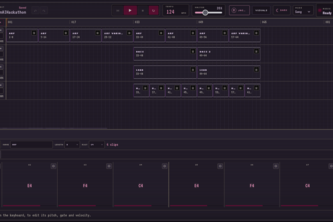
Klinto Studio / Chiptune Workstation is a browser-based digital audio workstation (DAW) designed for creating chiptune music and pixel art visualizations. It allows users to build virtual synthesizers, compose patterns using a sequencer, and share their creations with customizable visualizers. The platform supports both local and cloud storage via Firebase.
What changed
The author states they have been working on this project for several years, initially developing a virtual synth using the Web Audio API. They aim to complete a full DAW experience that is beginner-friendly and easy to use.
Single most important open question
Is there any evidence of user adoption or feedback from early users beyond the founder's own account?
What The Product Actually Is
The description states:
- Klinto Studio is a browser-based digital audio workstation.
- It enables users to create virtual synths and patterns using a sequencer.
- Users can share their creations along with customizable visualizers.
- It supports local or cloud storage (Firebase).
- Built using HTML5, CSS, JavaScript, Cloudflare, and Firebase.
Inference: The product is a web-based tool for chiptune music creation, likely aimed at hobbyists or beginners in music production. It does not appear to be a commercial SaaS offering but rather an experimental or personal project.
Positioning & Claim Evolution
The description states:
- Klinto Studio aims to be "beginner friendly and easy to use."
- The author has used FL Studio and Ableton for years, indicating familiarity with professional DAWs.
- It is positioned as a tool for making 8-bit/chiptune style music.
Inference: The positioning appears to be that of an accessible entry point into chiptune music creation, targeting individuals who may not have access to or experience with traditional DAWs. However, there is no evidence of how this compares to existing tools in the market.
Target Customer & ICP
The description states:
- The tool is intended for those who want to make chiptune music.
- It aims to be beginner-friendly and easy to use.
- The author wants to get it in front of people and see what they think.
Inference: Based on the self-reported intent, the target customer seems to be amateur or novice musicians interested in chiptune genres. There is no evidence of segmentation beyond this general category.
Business Model & Pricing Evidence
The description states:
- No mention of pricing.
- No indication of monetization strategy.
- The project was submitted to a hackathon and is described as a personal endeavor.
Not evidenced: There is no evidence of any business model or pricing structure. The author's focus is on building something they personally want, not on selling it.
Technical & Delivery Signals
The description states:
- Built with HTML5, CSS, JavaScript.
- Uses Firebase for cloud storage and authentication.
- Cloudflare used in deployment.
- Codex was used to write product documents and code.
- Claude Design was used for UI design.
- Challenges included misunderstanding by Codex and difficulty deploying online.
Inference: The technical stack suggests a lightweight, web-based application built with modern frontend technologies. The use of AI tools like Codex and Claude indicates an experimental approach to development but does not imply scalability or robustness.
Traction & Maturity Signals
The description states:
- Only one team member (Jack V).
- Submitted to the OpenAI 2026 hackathon.
- No mention of users, downloads, or engagement metrics.
- The author expresses excitement about iterating based on feedback.
Not evidenced: There is no evidence of traction, user adoption, or any form of market validation. The project appears to be in early development and lacks measurable milestones.
Competitive Context
The description states:
- The author has used FL Studio and Ableton for years.
- They are building a tool for chiptune music creation.
- No mention of competitors or how this differs from existing tools.
Inference: While the author references industry-standard DAWs like FL Studio and Ableton, there is no evidence of competitive analysis or differentiation. The project may compete with other browser-based DAWs or niche chiptune tools, but this is not substantiated.
Open Questions & Risks
The description states:
- Only one team member.
- Reliance on AI tools (Codex, Claude) for development.
- Challenges in deployment and understanding by AI tools.
- No revenue, customer, or traction data.
Inference:
- Single-founder risk: The project is entirely driven by one person, which raises concerns about sustainability and scalability.
- AI dependency: Heavy reliance on AI tools may indicate a lack of deep technical control or long-term maintainability.
- No market validation: No evidence of user feedback, adoption, or commercial viability.
Questions the description leaves open
- What specific problems are you solving for users that existing tools don’t?
- How do you plan to monetize this product if at all?
- Have you received any feedback from early users beyond your own testing?
- What is the roadmap for expanding beyond the current features (e.g., MIDI support)?
- Are there plans to scale beyond a single developer?
Overall Assessment
The description states:
- This is a personal project submitted to a hackathon.
- No evidence of revenue, customers, or traction.
- The author expresses excitement about future development but no concrete steps toward commercialization.
Not evidenced: There is insufficient evidence to support an investment or partnership opportunity. The project appears to be in early conceptual or prototyping stages with no demonstrated market demand or business model. It lacks the indicators typically associated with a viable commercial venture.
User Stories BotA demo video on every pull request
Get a demo video on every new feature
GitHub App that watches your pull requests and records a narrated, captioned demo.
Save time on demo prep and make informed decisions faster with a video walkthrough of every new feature.
Source
Submitted to the OpenAI 2026 hackathon on Devpost. Project home on Devpost. Back to the full gallery on Devpost.
This competitive analysis was produced by top-founders.com (opens in a new tab)
Generated by a language model from this project's public Devpost page — its tagline, the author's own write-up and any built-with tags listed there — as captured in August 2026. Short quotations are the author's words. It is an opinion on the idea as a business, not on the people behind it, and it reflects the description as published then. If the project has moved on, request a correction below. The analysis is not independent research and contains no verified traction, revenue or customer data.
An independent guide by KFG International LLC — not affiliated with, endorsed by, or connected to Devpost or OpenAI.