

Archive position — measured, not model output
0 likes on Devpost
2,263 of the 7,850 archived projects have more likes, and 5,587 share exactly 0 — so this project's #5,433 place in the like-ranked listing is a tie-break inside that group, not a ranking.
Projects (log scale)
Likes on Devpost. ▲ marks this project's group.
Show the figures
| Likes | Projects | Share of archive |
|---|---|---|
| 0 | 5,587 | 71.2% |
| 1 | 1,758 | 22.4% |
| 2 | 284 | 3.6% |
| 3–4 | 132 | 1.7% |
| 5–9 | 75 | 1.0% |
| 10+ | 14 | 0.2% |
 User Stories BotA demo video on every pull request
Get a demo video on every new feature
GitHub App that watches your pull requests and records a narrated, captioned demo.
Save time on demo prep and make informed decisions faster with a video walkthrough of every new feature.
Executive Summary
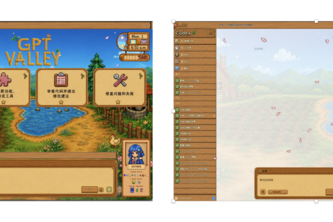
The company appears to be a solo developer project named "GPT Valley", which is a custom visual skin for Codex — a tool used in AI development environments. The author describes it as an immersive, game-inspired interface that includes pixel-art elements and interactive animations like a petal rain effect triggered by pressing Enter.
The key open question is whether this project has any commercial traction or adoption beyond its creator’s own use case, or if it remains a personal experiment with no evidence of market demand or monetization potential.
This analysis is based entirely on the self-reported description provided by the author — no external verification, revenue data, customer base or usage metrics are available.
What The Product Actually Is
The description states that GPT Valley is a custom visual skin for Codex. It redesigns the interface with:
- Pixel-art backgrounds
- Wooden panels
- Custom icons
- Character portraits
- Typography
- Game-inspired decorative elements
It also includes an interactive feature: a petal rain animation that activates when the user presses Enter.
The author describes how they built it by designing visual assets and implementing custom styling, connecting the animation to keyboard input.
Inference: The product is a UI/UX enhancement for an existing platform (Codex), not a standalone software solution. It modifies appearance and behavior but does not change core functionality.
Positioning & Claim Evolution
The author positions GPT Valley as:
- A narrative-driven, emotionally engaging alternative to standard coding interfaces.
- An exploration of how visual design can influence user experience in AI development tools.
- A personal creative experiment aimed at making coding feel more enjoyable and less mechanical.
There is no indication that the author intends this to be a commercial product or part of a broader suite. The project appears to be self-contained, focused on aesthetics and interaction rather than utility or scalability.
Claim: The author claims GPT Valley transforms Codex into an immersive workspace.
Fact: Not evidenced — only described by the author as their intent.
Target Customer & ICP
The description does not name any specific customer segments or personas. However, it implies that the target audience is likely:
- Developers using Codex
- Users who value aesthetic and emotional design in their digital tools
- Individuals interested in personal customization of development environments
There is no evidence of segmentation, user research, or defined buyer personas.
Inference: Likely aimed at indie developers or early adopters of AI coding tools.
Not evidenced: No data on actual users, demographics, or usage patterns.
Business Model & Pricing Evidence
No business model or pricing information is provided in the description. The author does not mention any monetization strategy, licensing terms, or distribution plans.
Claim: There is no stated business model.
Fact: Not evidenced — only self-reported by the creator.
Technical & Delivery Signals
The author states that they:
- Designed and separated visual assets (backgrounds, panels, icons, characters)
- Implemented custom styling
- Added animated petal effect connected to keyboard input (Enter key)
They also mention challenges such as adapting design without compromising usability and ensuring smooth animations.
Inference: The project involves basic front-end development skills and some animation logic.
Not evidenced: No technical architecture, scalability considerations, or integration details beyond the author’s own implementation.
Traction & Maturity Signals
There is no evidence of traction, adoption, or user engagement beyond the creator's personal use. The project was submitted to a hackathon and has no known customer base, downloads, or feedback from others.
Claim: The project may have inspired others or been adopted by users.
Fact: Not evidenced — only described as a solo effort.
Competitive Context
The description does not reference any competitors or similar products. It is unclear whether there are existing tools that offer comparable visual skins or customization options for Codex or other AI coding platforms.
Inference: This may be unique in its approach to combining game-like aesthetics with developer tools.
Not evidenced: No competitive landscape, market positioning, or comparison data.
Open Questions & Risks
- Solo operation: With only one team member (the author), there is limited capacity for scaling or long-term maintenance.
- No commercial viability: The project appears to be a personal experiment with no signs of monetization or product-market fit.
- Limited scope: It enhances only the visual layer of Codex, not core functionality — raising questions about strategic value.
- Unproven demand: No evidence of user interest or adoption beyond the creator.
Inference: The lack of traction and commercial intent raises concerns about future viability as a product or business.
Not evidenced: No data to confirm these risks, but they are implied by the description.
Questions the description leaves open
- What is your vision for monetizing this skin or expanding its reach?
- Have you received any feedback from other developers using Codex who might be interested in adopting this skin?
- Are there plans to support additional platforms beyond Codex?
- How do you plan to maintain and update the skin over time, given that it's a solo effort?
- What inspired the choice of Stardew Valley as a theme — was there any user research or market validation behind that decision?
Overall Assessment
There is no evidence of commercial traction, revenue, or customer adoption. The project appears to be a personal creative endeavor with no indication of scalability or business intent.
Inference: This is not a viable investment or partnership opportunity at this stage.
Not evidenced: No financials, growth metrics, or strategic alignment data available.
User Stories BotA demo video on every pull request
Get a demo video on every new feature
GitHub App that watches your pull requests and records a narrated, captioned demo.
Save time on demo prep and make informed decisions faster with a video walkthrough of every new feature.
Source
Submitted to the OpenAI 2026 hackathon on Devpost. Project home on Devpost. Back to the full gallery on Devpost.
This competitive analysis was produced by top-founders.com (opens in a new tab)
Generated by a language model from this project's public Devpost page — its tagline, the author's own write-up and any built-with tags listed there — as captured in August 2026. Short quotations are the author's words. It is an opinion on the idea as a business, not on the people behind it, and it reflects the description as published then. If the project has moved on, request a correction below. The analysis is not independent research and contains no verified traction, revenue or customer data.
An independent guide by KFG International LLC — not affiliated with, endorsed by, or connected to Devpost or OpenAI.