

Archive position — measured, not model output
1 like on Devpost
505 of the 7,850 archived projects have more likes, and 1,758 share exactly 1 — so this project's #721 place in the like-ranked listing is a tie-break inside that group, not a ranking.
Projects (log scale)
Likes on Devpost. ▲ marks this project's group.
Show the figures
| Likes | Projects | Share of archive |
|---|---|---|
| 0 | 5,587 | 71.2% |
| 1 | 1,758 | 22.4% |
| 2 | 284 | 3.6% |
| 3–4 | 132 | 1.7% |
| 5–9 | 75 | 1.0% |
| 10+ | 14 | 0.2% |
 User Stories BotA demo video on every pull request
Get a demo video on every new feature
GitHub App that watches your pull requests and records a narrated, captioned demo.
Save time on demo prep and make informed decisions faster with a video walkthrough of every new feature.
Executive Summary
What the company appears to be
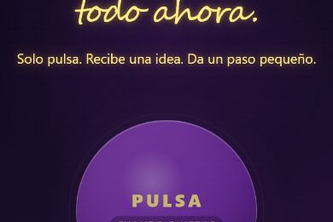
Botón Milagro is a self-reported micro-experience built around one button that delivers human-curated messages, music and AI-assisted content. It is described as a bilingual, mobile-friendly web application with accessibility features, offline support and a focus on presence, inspiration and small actions.
What changed
The project was submitted to the OpenAI 2026 hackathon and is presented as a prototype built during OpenAI Build Week using Codex and GPT-5.6. It includes an initial version of a daily miracle experience with plans for expansion into a full library of 365 messages, personalized paths, and a privacy-conscious "Motor del Ahora" system.
The single most important open question
Is there evidence of any traction, revenue or user engagement beyond the author’s own description? The project is presented as a prototype with no verified adoption or monetization model.
What The Product Actually Is
The description states that Botón Milagro is a bilingual, mobile-friendly micro-experience built around one button. Each press reveals:
- A simple truth;
- A deeper reflection;
- A short presence ritual;
- A conscious declaration;
- One real action that can be completed immediately;
- And a phrase that can be shared.
It also includes an optional instrumental soundtrack and is described as a lightweight web application built with HTML5, CSS3, JavaScript, JSON, and PWA technologies. It supports offline caching and accessibility features such as keyboard focus states and reduced-motion support.
The product is said to be built using Codex and GPT-5.6, which were used for both technical implementation and content structuring.
Inference The experience appears to be a digital meditation or self-help tool, designed to offer brief moments of clarity and actionable inspiration.
Positioning & Claim Evolution
The author states that Botón Milagro was inspired by the idea of turning inner struggle into clarity, inspiration and action. It aims to create a pause in modern life, encouraging users to reconnect with the present moment through human-curated content and AI-assisted design.
It positions itself as a micro-experience that invites reflection without promising solutions or replacing professional help. The tagline — “A one-button micro-experience that turns inner struggle into clarity, inspiration and action through human-curated messages, music and GPT-5.6” — reflects this intent.
The project also mentions evolving toward a “Miracle of the Day” experience, with plans for personalized paths and a privacy-conscious system called “Motor del Ahora.”
Inference The positioning is centered on mindfulness, emotional support and personal agency, framed through a minimalistic interface and AI-enhanced content delivery. It evolves from a prototype into a potential daily ritual or tool for emotional well-being.
Target Customer & ICP
The description does not explicitly define the target customer or ideal customer profile (ICP). However, it implies that the experience is intended for individuals seeking:
- Emotional clarity;
- A moment of pause in their day;
- Inspiration that leads to action;
- A sense of presence and mindfulness.
It also mentions a bilingual audience (Spanish and English), suggesting a global or multilingual user base.
The experience is described as being built for “the mind that may arrive expecting another battle”, implying users who are stressed, overwhelmed or seeking relief from inner conflict.
Inference The ICP likely includes emotionally aware individuals looking for brief, self-guided moments of reflection and inspiration, possibly in high-stress environments or during personal transitions. No specific demographics or user segments are defined.
Business Model & Pricing Evidence
There is no evidence in the description of a business model or pricing structure. The project is presented as a prototype built for a hackathon and does not mention monetization, subscriptions, paid features, or any revenue-generating mechanisms.
The author states that AI may help organize, test and adapt the experience, but that the final editorial voice and emotional responsibility remain human-directed.
Inference No commercial model has been established or described. The project appears to be in early development with no indication of how it would generate value or income.
Technical & Delivery Signals
The application is built as a lightweight web app, using:
- Semantic HTML;
- CSS3;
- Vanilla JavaScript;
- JSON for content structure;
- PWA technologies (offline caching, service workers);
- Accessibility features such as keyboard focus states and reduced-motion support.
It supports bilingual interaction (Spanish and English), responsive design, and is described as installable on devices after the first load.
The project was built during OpenAI Build Week using Codex and GPT-5.6, which were used for both architecture and content structuring.
Inference The technical approach is minimalistic and focused on accessibility and portability. It leverages modern web standards and AI tools to streamline development, but no evidence of scalability or infrastructure beyond the prototype exists.
Traction & Maturity Signals
There is no evidence of any traction, user engagement, or adoption metrics. The project is described as a prototype, submitted to a hackathon, and has not been independently verified for usage or impact.
The author mentions plans for expansion — such as a library of 365 messages and a “Motor del Ahora” system — but no data on current usage, retention, or user feedback is provided.
Inference The project is in an early stage with no measurable traction. It has not yet reached a market-ready or productized state.
Competitive Context
The description does not mention any direct competitors. However, it implies that Botón Milagro is positioned within the mindfulness, self-help and emotional well-being space, which includes apps like Headspace, Calm, and others in the meditation and personal development category.
It also references a “miracle” theme, suggesting a niche or thematic approach to emotional support, distinct from generic mindfulness tools.
Inference The competitive landscape is not clearly defined. It may be competing with general wellness apps or niche emotional support platforms, but no specific comparison or differentiation is made.
Open Questions & Risks
- No traction or revenue evidence: The project is a prototype with no verified adoption or monetization.
- Unproven business model: No indication of how the product would generate value or income.
- Highly subjective content: The experience relies on human-curated messages and emotional resonance, which may not scale or appeal universally.
- Limited technical depth: While it uses modern web tools, there is no evidence of backend infrastructure, data handling or analytics.
- Unclear long-term vision: The future plans are described in broad terms without a clear roadmap or execution strategy.
Inference The project is at a very early stage and lacks commercial viability indicators. It may be more of an artistic or experimental endeavor than a scalable product.
Questions the description leaves open
- What is the current user engagement or feedback from the prototype?
- How will the human-curated content be scaled or maintained over time?
- Is there any plan for monetization or revenue generation beyond the initial concept?
- What are the technical limitations of the current prototype, and how will they be addressed?
- How do you plan to validate emotional resonance with users across different cultures and languages?
- What is the timeline for moving from prototype to a productized version?
- Are there any partnerships or collaborations in place for content creation or distribution?
Overall Assessment
The project is described as a prototype built during a hackathon, with no evidence of traction, revenue, or user adoption. It is positioned as an emotional support tool using AI and human-curated content, but lacks any commercial or productization signals.
Confidence level: Low
There is no evidence of a business model, monetization strategy, or measurable impact. The project appears to be in the early ideation or prototyping phase, with no indication that it has moved beyond the experimental stage.
Assessment Not ready for investment or partnership at this time. Further development and traction are required before any commercial viability can be assessed.
User Stories BotA demo video on every pull request
Get a demo video on every new feature
GitHub App that watches your pull requests and records a narrated, captioned demo.
Save time on demo prep and make informed decisions faster with a video walkthrough of every new feature.
Source
Submitted to the OpenAI 2026 hackathon on Devpost. Project home on Devpost. Back to the full gallery on Devpost.
This competitive analysis was produced by top-founders.com (opens in a new tab)
Generated by a language model from this project's public Devpost page — its tagline, the author's own write-up and any built-with tags listed there — as captured in August 2026. Short quotations are the author's words. It is an opinion on the idea as a business, not on the people behind it, and it reflects the description as published then. If the project has moved on, request a correction below. The analysis is not independent research and contains no verified traction, revenue or customer data.
An independent guide by KFG International LLC — not affiliated with, endorsed by, or connected to Devpost or OpenAI.