

Archive position — measured, not model output
1 like on Devpost
505 of the 7,850 archived projects have more likes, and 1,758 share exactly 1 — so this project's #2,075 place in the like-ranked listing is a tie-break inside that group, not a ranking.
Projects (log scale)
Likes on Devpost. ▲ marks this project's group.
Show the figures
| Likes | Projects | Share of archive |
|---|---|---|
| 0 | 5,587 | 71.2% |
| 1 | 1,758 | 22.4% |
| 2 | 284 | 3.6% |
| 3–4 | 132 | 1.7% |
| 5–9 | 75 | 1.0% |
| 10+ | 14 | 0.2% |
 User Stories BotA demo video on every pull request
Get a demo video on every new feature
GitHub App that watches your pull requests and records a narrated, captioned demo.
Save time on demo prep and make informed decisions faster with a video walkthrough of every new feature.
Executive Summary
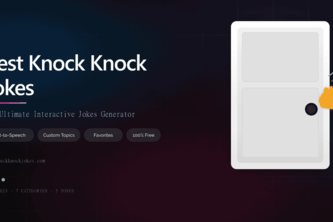
The description states that this is a self-reported project named "The Ultimate Interactive knock knock jokes machine", built as a static site with AI-assisted development using Astro, Cloudflare, and OpenAI tools. The author describes it as an online platform focused on organizing and delivering knock-knock jokes in a family-friendly, SEO-optimized format. It currently operates without backend infrastructure, relying on client-side storage for user preferences.
The project appears to be a personal or small-team effort with no evidence of commercial traction, revenue, or customer base. The author claims the site is built with AI tools and emphasizes content-first design, but provides no data on usage, engagement, or monetization.
Most important open question
Is there any evidence that this project has moved beyond the prototype stage into a product with users or revenue?
What The Product Actually Is
The description states that the product is "The Ultimate Interactive knock knock jokes machine", an online platform for discovering and enjoying knock-knock jokes. It is described as:
- A searchable library of knock-knock jokes
- Organized by categories (e.g., kids, dad jokes, holiday)
- Built with Astro static site generator
- Uses AI tools like Codex and GPT-5.6 in development
- Mobile-friendly and SEO-optimized
- Operates client-side only, using localStorage for favorites
It is not evidenced whether this product has a backend or API, or if it's currently live to users.
Inference Based on the description, it appears to be a static website built with modern web technologies, focused on delivering content in an organized way. The use of AI tools suggests an automated approach to content generation and site building, but no evidence indicates this has been scaled beyond the author’s own development environment.
Positioning & Claim Evolution
The description states that the project aims to be:
- "The internet's largest, fastest, and most enjoyable destination dedicated exclusively to knock knock jokes"
- A platform where anyone can instantly discover the perfect joke for any occasion
- A family-friendly, clean, and accessible humor library
- The best destination specifically for knock-knock jokes
It positions itself as a niche content site focused on one form of humor, with an emphasis on SEO, performance, and user experience.
The author also mentions future ambitions to turn it into an "interactive humor platform" with AI joke generation, social sharing, community contributions, and multilingual support. These are described as roadmap items rather than current features.
Inference The positioning is clearly that of a specialized content site, evolving from a static library toward a more interactive and community-driven experience. However, the claims about being "the best" or "largest" are self-reported without verification.
Target Customer & ICP
The description states that the target audience includes:
- Kids and parents
- Teachers
- Comedians
- Anyone looking for a good laugh
It also notes that the content is family-friendly, suitable for all ages, and designed to be shareable across platforms like WhatsApp, Instagram, Facebook, etc.
There is no evidence of specific segmentation or buyer personas beyond general age groups and use cases.
Inference The ICP seems to be broad but centered around casual humor seekers who value accessibility, ease of sharing, and clean presentation. No data on actual user demographics or behavior is provided.
Business Model & Pricing Evidence
The description does not provide any evidence of a business model or pricing structure.
It mentions that the site is built with AI tools and emphasizes SEO and performance, but does not describe monetization strategies such as ads, subscriptions, or paid features.
Inference There is no indication that this project has a defined revenue stream or pricing strategy. The focus appears to be on content delivery rather than commercial activity.
Technical & Delivery Signals
The description states that the platform was built using:
- Framework: Astro 6 (static site generation)
- Styling: Tailwind CSS v4 with Vercel-inspired design system
- Typography: Self-hosted Inter + JetBrains Mono
- Joke Data Pipeline: TypeScript → prebuild script → inlined JSON
- Architecture: 7 Astro components
- AI Tools Used: Codex, GPT-5.6 for code generation, design, SEO, and content creation
- Client-side only: No backend required; all data stored in localStorage
It also mentions performance optimizations like inlined CSS, deferred analytics, and responsive design.
Inference The technical stack indicates a modern, lightweight, client-side approach with AI-assisted development. However, there is no evidence of production deployment or scalability beyond the author’s own environment.
Traction & Maturity Signals
The description states that the site:
- Contains hundreds of categorized jokes
- Is mobile-friendly and SEO-optimized
- Has a growing joke database
- Was built in a short timeframe using AI tools
- Includes features like voice mode, social sharing, and community contributions (planned)
However, there is no evidence of user engagement metrics, page views, or actual usage data.
Inference The project shows signs of early development maturity with automated tooling and structured content. However, it lacks any demonstrated traction or adoption indicators.
Competitive Context
The description states that:
- Most existing knock-knock joke sites are outdated, poorly organized, or have intrusive ads
- The author aims to stand out by focusing on quality, organization, and user experience
- SEO competition exists from established humor publishers with significant authority
There is no mention of direct competitors or market share data.
Inference The competitive landscape appears niche but crowded with older, less optimized sites. The project positions itself as an improvement over these, though no evidence supports this claim.
Open Questions & Risks
Key risks and open questions based on the description:
- No revenue or customer data — the product is described only in concept form
- No live deployment or user base — all evidence points to a prototype or personal project
- Over-reliance on AI tools for development without clear validation of output quality or scalability
- Ambitious roadmap items (e.g., AI joke generator, multilingual support) not yet implemented
- Lack of monetization strategy or business model
Inference The biggest risk is that this remains a personal project with no commercial viability or traction. There is no indication it has progressed beyond the idea stage.
Questions the description leaves open
- Is this product currently live and accessible to users?
- What is the current user engagement or traffic data, if any?
- How many jokes are currently in the database, and how are they curated?
- Are there plans for monetization or revenue streams beyond advertising?
- What is the timeline for implementing the roadmap features (e.g., AI joke generator)?
- Has the team considered SEO performance metrics or organic traffic growth?
- What is the source of the knock-knock jokes — original content or repurposed material?
- Are there any partnerships, collaborations, or distribution channels planned?
Overall Assessment
The description states that this project was submitted to the OpenAI 2026 hackathon and is described as a self-developed tool with no evidence of commercial traction.
There is no evidence of revenue, customers, or product-market fit. The author claims it is built with AI tools and optimized for SEO, but provides no data on performance or adoption.
Inference This appears to be an early-stage prototype or personal project with no demonstrated business model or market validation. It does not meet the criteria for investment or partnership consideration at this time.
User Stories BotA demo video on every pull request
Get a demo video on every new feature
GitHub App that watches your pull requests and records a narrated, captioned demo.
Save time on demo prep and make informed decisions faster with a video walkthrough of every new feature.
Source
Submitted to the OpenAI 2026 hackathon on Devpost. Project home on Devpost. Back to the full gallery on Devpost.
This competitive analysis was produced by top-founders.com (opens in a new tab)
Generated by a language model from this project's public Devpost page — its tagline, the author's own write-up and any built-with tags listed there — as captured in August 2026. Short quotations are the author's words. It is an opinion on the idea as a business, not on the people behind it, and it reflects the description as published then. If the project has moved on, request a correction below. The analysis is not independent research and contains no verified traction, revenue or customer data.
An independent guide by KFG International LLC — not affiliated with, endorsed by, or connected to Devpost or OpenAI.