

Archive position — measured, not model output
1 like on Devpost
505 of the 7,850 archived projects have more likes, and 1,758 share exactly 1 — so this project's #674 place in the like-ranked listing is a tie-break inside that group, not a ranking.
Projects (log scale)
Likes on Devpost. ▲ marks this project's group.
Show the figures
| Likes | Projects | Share of archive |
|---|---|---|
| 0 | 5,587 | 71.2% |
| 1 | 1,758 | 22.4% |
| 2 | 284 | 3.6% |
| 3–4 | 132 | 1.7% |
| 5–9 | 75 | 1.0% |
| 10+ | 14 | 0.2% |
 User Stories BotA demo video on every pull request
Get a demo video on every new feature
GitHub App that watches your pull requests and records a narrated, captioned demo.
Save time on demo prep and make informed decisions faster with a video walkthrough of every new feature.
Executive Summary
What the company appears to be
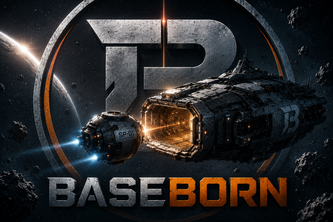
BaseBorn is a self-reported 2D multiplayer space-survival game built from scratch during OpenAI Build Week. The author states it is a real-time browser-based game where players begin in a Survey Pod beside a derelict spacecraft, mine Ether to repair and evolve their ship, and compete or cooperate in a shared universe.
What changed
The project description reflects an author-driven development effort focused on building a complete multiplayer game within a hackathon timeframe. It includes self-reported technical architecture, gameplay mechanics, and AI-assisted development practices.
Single most important open question
Is there any evidence of actual user engagement, monetization, or product-market fit beyond the author's own account?
Note: This analysis is based entirely on the self-reported description provided by the author. No external verification, traction data, revenue figures, customer names, or independent sources are available.
What The Product Actually Is
The description states that BaseBorn is a real-time multiplayer space-survival game for desktop and mobile browsers. It is built using React 19, TypeScript, Vite, Canvas 2D rendering, and Node.js with WebSockets. The game features:
- A persistent universe of 400,000 × 400,000 space environment
- Real-time multiplayer movement and combat
- Shared Ether drops from asteroid mining
- Ship recovery and Survey Pod integration
- Core-stat progression and weapon evolution
- Multiplayer teams, leadership, and shared ownership
- Server-authoritative validation of gameplay systems
The game is described as a Progressive Web App (PWA) with support for keyboard, controller, touch, and mobile controls.
Claim: The product is a browser-based multiplayer survival game.
Evidence: Author's own write-up.
Positioning & Claim Evolution
The author positions BaseBorn as a space-survival game that begins with minimal resources and evolves through player decisions. It is described as inspired by shared .io worlds, ship-building systems, and progression mechanics where choices affect both performance and appearance.
Key claims include:
- Players start from the same ruins but build unique ships.
- The journey from a fragile pod to a specialized spacecraft happens through gameplay.
- The game emphasizes risk-and-reward structures based on Ether rarity and map distribution.
- It supports both individual play and team cooperation.
Claim: BaseBorn is a player-driven progression survival game with shared-world multiplayer.
Evidence: Author's own write-up.
Target Customer & ICP
The description does not explicitly define a target customer or ideal customer profile (ICP). However, it implies an audience interested in:
- Browser-based multiplayer games
- Space-survival and sandbox gameplay
- Progression systems with customization options
- Real-time competitive or cooperative play
It is unclear whether the game targets casual players, hardcore gamers, or a specific demographic.
Claim: The target customer is likely fans of browser-based multiplayer survival games.
Inference: Based on genre positioning and gameplay elements.
Evidence: Not directly stated.
Business Model & Pricing Evidence
There is no evidence in the description of any business model or pricing strategy. The author does not mention monetization, subscriptions, in-game purchases, or advertising.
Claim: No business model or pricing information is provided.
Evidence: Author's own write-up.
Technical & Delivery Signals
The project was built using:
- Client: React 19, TypeScript, Vite, Canvas 2D, PWA
- Server: Node.js 22, WebSockets (ws), server-authoritative validation
- AI tools: Codex and GPT-5.6 used for planning, implementation, testing, and documentation
- Deployment: Railway, GitHub Actions CI
The author describes:
- Separation of systems for modularity
- Server-authoritative multiplayer synchronization
- Multiplayer load testing with 24 clients
- Automated smoke tests and persistence verification
Claim: The game uses modern web technologies and AI-assisted development.
Evidence: Author's own write-up.
Traction & Maturity Signals
There is no evidence of traction, user engagement, or product-market fit beyond the author’s own account. No metrics on active users, retention, revenue, or adoption are provided.
Claim: No traction or maturity signals are evident.
Evidence: Author's own write-up.
Competitive Context
The description does not provide any information about competitors or market positioning. It is unclear how BaseBorn compares to existing games in the space-survival or multiplayer sandbox genres.
Claim: No competitive context is provided.
Evidence: Author's own write-up.
Open Questions & Risks
- The project is a single-person effort, which raises questions about scalability and long-term maintenance.
- The use of AI tools like Codex and GPT-5.6 suggests a high degree of author control but may indicate limited external validation or team input.
- No evidence of monetization, user feedback, or product-market fit.
- The game is described as built during a hackathon — implying a prototype rather than a mature product.
Claim: Risks include lack of team structure, no monetization strategy, and unproven traction.
Inference: Based on project scope and author’s self-reporting.
Questions the description leaves open
- What is the long-term vision for BaseBorn beyond this prototype?
- How do you plan to scale multiplayer performance or add features like persistent world save states?
- Are there any plans for monetization or user acquisition strategies?
- What are your thoughts on expanding into a full-fledged game studio or platform?
- Can you describe how the AI tools were used in practice and whether they replaced human decision-making?
Claim: These questions aim to probe deeper into strategy, scalability, and business direction.
Inference: Based on project scope and lack of evidence.
Overall Assessment
There is no evidence of revenue, customers, or traction. The project appears to be a single-developer prototype built during a hackathon, with no indication of commercial viability or market readiness.
Claim: No investment or partnership case can be made from the provided information.
Evidence: Author's own write-up.
User Stories BotA demo video on every pull request
Get a demo video on every new feature
GitHub App that watches your pull requests and records a narrated, captioned demo.
Save time on demo prep and make informed decisions faster with a video walkthrough of every new feature.
Source
Submitted to the OpenAI 2026 hackathon on Devpost. Project home on Devpost. Back to the full gallery on Devpost.
This competitive analysis was produced by top-founders.com (opens in a new tab)
Generated by a language model from this project's public Devpost page — its tagline, the author's own write-up and any built-with tags listed there — as captured in August 2026. Short quotations are the author's words. It is an opinion on the idea as a business, not on the people behind it, and it reflects the description as published then. If the project has moved on, request a correction below. The analysis is not independent research and contains no verified traction, revenue or customer data.
An independent guide by KFG International LLC — not affiliated with, endorsed by, or connected to Devpost or OpenAI.