

Archive position — measured, not model output
0 likes on Devpost
2,263 of the 7,850 archived projects have more likes, and 5,587 share exactly 0 — so this project's #2,875 place in the like-ranked listing is a tie-break inside that group, not a ranking.
Projects (log scale)
Likes on Devpost. ▲ marks this project's group.
Show the figures
| Likes | Projects | Share of archive |
|---|---|---|
| 0 | 5,587 | 71.2% |
| 1 | 1,758 | 22.4% |
| 2 | 284 | 3.6% |
| 3–4 | 132 | 1.7% |
| 5–9 | 75 | 1.0% |
| 10+ | 14 | 0.2% |
 User Stories BotA demo video on every pull request
Get a demo video on every new feature
GitHub App that watches your pull requests and records a narrated, captioned demo.
Save time on demo prep and make informed decisions faster with a video walkthrough of every new feature.
Executive Summary
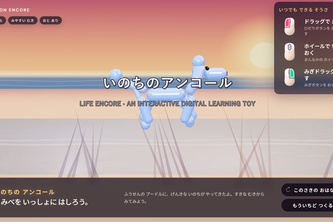
The description states that "Balloon Encore: Life Encore" is an interactive 3D learning-toy experience built for children, using balloon art as a metaphor for making, care, loss, and beginning again. The author describes it as a single-user application with a poodle construction sequence followed by a beach animation, designed to be emotionally resonant and educationally meaningful.
What changed: The project description reflects an iterative development process where the creator used GPT-5.6 and Codex to build and refine the experience, shifting from an instant transformation to a gradual, ordered inflation and assembly of a balloon poodle. This evolution appears to have been driven by design goals around emotional framing and physical realism.
The single most important open question: Is there any evidence of user testing or feedback loops beyond the author’s own development process? The description does not indicate whether the toy has been tested with children, nor how its emotional arc was validated in practice.
What The Product Actually Is
The description states that "Balloon Encore: Life Encore" is an interactive 3D experience where a child selects a balloon color, inflates it via a hand pump, and twists it into a poodle shape. After completion, the poodle comes to life on a beach scene with animated behaviors and camera movements.
It supports multiple languages (Japanese, English, Simplified Chinese, Korean) and is built using TypeScript, Three.js, Vite, OrbitControls, and Web Audio API.
The author claims that the experience includes:
- A one-balloon poodle construction sequence
- A beach animation with layered parallax
- Child-friendly controls for desktop and mobile
- Emotional arc treating loss and renewal
Inference: The product is described as a single-user application, not a commercial software-as-a-service or marketplace. It appears to be a prototype or personal project rather than a scalable product.
Positioning & Claim Evolution
The description states that the project was inspired by balloon art’s transformation process and aims to teach children about making, care, loss, and beginning again through an emotionally resonant experience.
It evolved from an instant trick into a gradual, ordered construction sequence. The author notes that this change was intentional: “That loop replaced an early instant transformation with a visibly connected pump and gradual inflation.”
The positioning appears to be:
- A child-oriented educational toy
- An emotionally grounded narrative tool
- A creative use of 3D technology for storytelling
Inference: The project positions itself as a non-commercial, artistic or experimental endeavor. It is not described as targeting educators, institutions, or monetized users.
Target Customer & ICP
The description states that the experience is designed for children and includes child-friendly language in four localized interfaces (Japanese, English, Simplified Chinese, Korean).
It also notes that the interface supports both desktop and mobile touch gestures, suggesting a broad age range of potential users.
Inference: The target customer is likely young children or parents/educators who might use it with children. However, no explicit segmentation or persona data is provided.
Business Model & Pricing Evidence
Not evidenced.
The description does not mention any pricing model, monetization strategy, or commercial intent beyond the author’s own development process.
Technical & Delivery Signals
The description states that the application was built using:
- TypeScript
- Three.js
- Vite
- OrbitControls
- Web Audio API
It also mentions that GPT-5.6 and Codex were used in the development loop, with Codex running the app in a browser to reproduce defects and inspect behavior.
The author notes challenges such as:
- Preserving continuity of one balloon during construction
- Responsive 3D composition across screen sizes
- Directionally consistent parallax
Accomplishments include:
- A full poodle construction sequence
- Responsive interaction on desktop and mobile
- Emotional behaviors for the poodle
- Multi-language support
Inference: The technical stack suggests a prototype or personal project, not a scalable SaaS platform. The use of AI tools like GPT-5.6 and Codex implies an experimental or iterative development approach.
Traction & Maturity Signals
Not evidenced.
There is no mention of users, customers, downloads, engagement metrics, or adoption data beyond the author’s own account.
The project was submitted to a hackathon (OpenAI 2026), but this does not indicate traction or commercial viability.
Competitive Context
Not evidenced.
No competitors or market context are mentioned in the description. The project appears to be self-contained and not positioned within an existing marketplace or product category.
Open Questions & Risks
- Lack of user validation: No evidence of testing with children or educators.
- Unproven emotional impact: While described as emotionally resonant, there is no data on how the experience affects its users.
- No commercialization path: The project seems to be a personal or experimental effort without any indication of monetization or scalability.
- Unclear production readiness: The use of AI tools like GPT-5.6 and Codex suggests an experimental development process, not a mature product pipeline.
Questions the description leaves open
- Did you test this experience with children? If so, what feedback did you receive?
- How was the emotional arc validated—was it based on theory or empirical observation?
- Are there plans to expand beyond the current poodle preset?
- What is your long-term vision for this project? Is it intended to be commercialized or remain a personal endeavor?
- Have you considered how to make this accessible to children with different abilities or needs?
Overall Assessment
Not evidenced.
There is no indication of commercial intent, funding, or traction beyond the author’s own development process. The project appears to be an experimental or artistic prototype rather than a scalable business opportunity. It lacks any evidence of revenue, customers, or market demand.
The description states that this was submitted to a hackathon and does not suggest it is part of a larger product line or commercial strategy. Therefore, there is no basis for evaluating its potential as an investment or partnership target at this time.
User Stories BotA demo video on every pull request
Get a demo video on every new feature
GitHub App that watches your pull requests and records a narrated, captioned demo.
Save time on demo prep and make informed decisions faster with a video walkthrough of every new feature.
Source
Submitted to the OpenAI 2026 hackathon on Devpost. Project home on Devpost. Back to the full gallery on Devpost.
This competitive analysis was produced by top-founders.com (opens in a new tab)
Generated by a language model from this project's public Devpost page — its tagline, the author's own write-up and any built-with tags listed there — as captured in August 2026. Short quotations are the author's words. It is an opinion on the idea as a business, not on the people behind it, and it reflects the description as published then. If the project has moved on, request a correction below. The analysis is not independent research and contains no verified traction, revenue or customer data.
An independent guide by KFG International LLC — not affiliated with, endorsed by, or connected to Devpost or OpenAI.