

Archive position — measured, not model output
0 likes on Devpost
2,263 of the 7,850 archived projects have more likes, and 5,587 share exactly 0 — so this project's #2,742 place in the like-ranked listing is a tie-break inside that group, not a ranking.
Projects (log scale)
Likes on Devpost. ▲ marks this project's group.
Show the figures
| Likes | Projects | Share of archive |
|---|---|---|
| 0 | 5,587 | 71.2% |
| 1 | 1,758 | 22.4% |
| 2 | 284 | 3.6% |
| 3–4 | 132 | 1.7% |
| 5–9 | 75 | 1.0% |
| 10+ | 14 | 0.2% |
 User Stories BotA demo video on every pull request
Get a demo video on every new feature
GitHub App that watches your pull requests and records a narrated, captioned demo.
Save time on demo prep and make informed decisions faster with a video walkthrough of every new feature.
Executive Summary
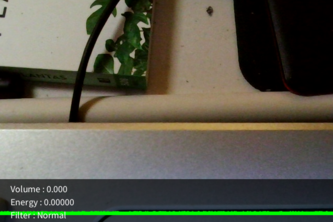
ARVideo is a self-reported audio-reactive video processing tool built for creative use in environments like dance floors. The project was submitted to the OpenAI 2026 hackathon by a single developer, Jorge Giro. It captures live webcam video and microphone audio, applies filters based on sound levels and beat detection, and overlays visual effects synchronized with music.
The author states that it uses Processing 4, Java mode, Minim (for audio), and Video libraries, with development aided by GPT-5.6 and CODEX. No revenue, customers, or adoption data are provided; the project is described as a hackathon submission.
The single most important open question
Is there any evidence that this tool has been used beyond the hackathon context, or whether it has evolved into a product with commercial potential?
What The Product Actually Is
- The description states ARVideo captures live webcam video and microphone audio.
- It smooths microphone volume, applies video filters based on sound level, and performs gradual crossfade transitions between filters.
- It detects musical beats using a simple energy-based detector and overlays a pulse effect on beat detection.
- The tool is built in Processing 4, using Java mode, with libraries such as Minim and Video.
- Development was assisted by GPT-5.6 and CODEX.
Inference: Based on the description, ARVideo appears to be a creative tool for real-time video manipulation synchronized with audio input, likely intended for use in live performance or entertainment settings.
Positioning & Claim Evolution
- The tagline is: AUDIO-REACTIVE VIDEO PROCESSOR.
- The author’s write-up describes it as useful for "nice to use in a disco", suggesting a focus on entertainment and creative expression.
- It was submitted to a hackathon, implying it is an experimental or prototype product, not yet a commercial offering.
Claim: ARVideo is positioned as a tool for audio-reactive video editing in live settings like dance floors.
Not evidenced: No claims about scalability, enterprise use, or broader market positioning are made.
Target Customer & ICP
- The author states it is useful for "disco, capturing video & audio from the dance area".
- It is implied to be used by individuals or small groups in creative or entertainment contexts, such as DJs or performers.
Inference: Likely target is individual creators or hobbyists in live performance or creative environments.
Not evidenced: No specific customer segments, personas, or buyer motivations are described.
Business Model & Pricing Evidence
- The project description does not mention any pricing, monetization, or business model.
- It is presented as a hackathon submission, not a commercial product.
Claim: No evidence of a business model or pricing strategy.
Not evidenced: No indication of how the tool would be sold, licensed, or offered to users.
Technical & Delivery Signals
- Built using Processing 4 in Java mode.
- Uses libraries: Video, Minim.
- Development was supported by GPT-5.6 and CODEX.
- The author notes that CODEX helped speed up development.
Inference: The tool is built with creative coding tools, suggesting it may be a prototype or proof-of-concept rather than a scalable product.
Not evidenced: No information on deployment, scalability, or production readiness.
Traction & Maturity Signals
- Submitted to the OpenAI 2026 hackathon.
- The author states they are proud of familiarizing themselves with CODEX, suggesting it is a learning project.
- There is no mention of users, customers, or adoption beyond the developer.
Claim: This is a prototype or experimental tool.
Not evidenced: No evidence of traction, usage, or product-market fit.
Competitive Context
- The description does not reference any existing tools or competitors.
- It is a self-contained hackathon project, with no indication of prior market analysis or competitive positioning.
Inference: No known direct competitors are mentioned.
Not evidenced: No evidence of existing solutions in the audio-reactive video space.
Open Questions & Risks
- The tool is described as a single-developer hackathon project, not a commercial product.
- No evidence of traction, revenue, or user base.
- The author’s own write-up suggests it was built for learning and experimentation.
- No indication of how the tool would scale or be monetized.
Open question: Lack of commercial viability or product-market fit.
Not evidenced: No evidence of a path to market or sustainable business model.
Questions the description leaves open
- What is the intended use case beyond the hackathon?
- Has this tool been tested in real-world environments, and if so, how?
- Are there any plans to commercialize ARVideo, and what would that look like?
- How does it compare to existing tools for audio-reactive video processing?
- What are the technical limitations or scalability concerns of the current implementation?
Overall Assessment
- The project is not evidenced as a commercial product.
- It is described as a hackathon submission, with no evidence of traction, revenue, or adoption.
- The author’s own account indicates it was built for learning and experimentation.
Assessment: Not ready for investment or partnership.
Not evidenced: No indication of commercial potential, scalability, or market demand.
User Stories BotA demo video on every pull request
Get a demo video on every new feature
GitHub App that watches your pull requests and records a narrated, captioned demo.
Save time on demo prep and make informed decisions faster with a video walkthrough of every new feature.
Source
Submitted to the OpenAI 2026 hackathon on Devpost. Project home on Devpost. Back to the full gallery on Devpost.
This competitive analysis was produced by top-founders.com (opens in a new tab)
Generated by a language model from this project's public Devpost page — its tagline, the author's own write-up and any built-with tags listed there — as captured in August 2026. Short quotations are the author's words. It is an opinion on the idea as a business, not on the people behind it, and it reflects the description as published then. If the project has moved on, request a correction below. The analysis is not independent research and contains no verified traction, revenue or customer data.
An independent guide by KFG International LLC — not affiliated with, endorsed by, or connected to Devpost or OpenAI.