

Archive position — measured, not model output
4 likes on Devpost
89 of the 7,850 archived projects have more likes, and 39 share exactly 4 — so this project's #93 place in the like-ranked listing is a tie-break inside that group, not a ranking.
Projects (log scale)
Likes on Devpost. ▲ marks this project's group.
Show the figures
| Likes | Projects | Share of archive |
|---|---|---|
| 0 | 5,587 | 71.2% |
| 1 | 1,758 | 22.4% |
| 2 | 284 | 3.6% |
| 3–4 | 132 | 1.7% |
| 5–9 | 75 | 1.0% |
| 10+ | 14 | 0.2% |
 User Stories BotA demo video on every pull request
Get a demo video on every new feature
GitHub App that watches your pull requests and records a narrated, captioned demo.
Save time on demo prep and make informed decisions faster with a video walkthrough of every new feature.
Executive Summary
What the company appears to be
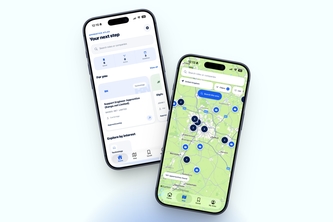
Apprentice Atlas is a self-reported mobile application built during a hackathon (Devpost submission) that helps students and post-secondary individuals in Germany and the UK discover apprenticeships and early-career opportunities. It uses official data sources, AI-powered explanations, and a map-based interface to guide users from uncertainty to actionable next steps.
What changed
The project was developed as part of a hackathon (Build Week) with no evidence of prior traction or commercial deployment. The team built it using React Native, Expo, Supabase, and GPT-5.6, with an emphasis on AI grounding, privacy, and native UX. It is described as a bilingual app for Germany and the UK.
Single most important open question
Is there any evidence of user adoption, revenue, or commercial traction beyond the hackathon prototype?
What The Product Actually Is
The description states that Apprentice Atlas is a bilingual, map-first mobile app designed to help students and post-secondary individuals in Germany and the UK discover apprenticeships and early-career opportunities. It allows users to:
- Explore official opportunities via map or list.
- Search by role, company, interest, location, and opportunity type.
- Read AI-generated plain-language explanations (GPT-5.6).
- Receive fit guidance ("Good if you...", "Not so good if you...").
- Ask practical questions about roles.
- Save and track applications through calendar integration.
- Export application progress and account data.
- Use the app in English or German.
It is built with Expo SDK 57, React Native, TypeScript, and integrates with:
- Apple Maps (iOS)
- Supabase Auth, Postgres, Storage, Row Level Security, RPCs, Edge Functions
- OpenAI API with GPT-5.6
- Official data sources from Bundesagentur für Arbeit (Germany) and Find an apprenticeship Display Advert API v2 (UK)
The app is described as a native mobile experience, not a web application.
Evidence
- The author’s own write-up describes the product.
- Technology stack is self-declared.
- No third-party validation or user data provided.
Positioning & Claim Evolution
The description states that Apprentice Atlas aims to address a real problem: students and post-secondary individuals are expected to make career decisions before knowing what opportunities exist. It positions itself as an alternative to traditional job boards, which assume users already know what to search for.
Key claims include:
- The app helps users move from uncertainty to one concrete next step.
- It provides plain-language explanations, fit guidance, and practical question answering.
- AI is used not as a chatbot but to ground answers in the actual job listing.
- It supports anonymous browsing, with saved jobs and tracking requiring sign-in.
The positioning evolves from a tool for discovery to one that supports a full application journey—from exploration to planning to execution.
Evidence
- The author's own write-up.
- No external validation or market positioning data provided.
Target Customer & ICP
The description states that the app targets:
- Students and people leaving university without a degree
- Specifically in Germany and the UK
- Users who are uncertain about their next career step
- Individuals seeking to understand roles in plain language before applying
It is described as a bilingual experience for these two countries.
Evidence
- The author’s own write-up.
- No evidence of customer segmentation, personas, or market research beyond self-reporting.
Business Model & Pricing Evidence
The description does not provide any information about:
- Revenue model
- Pricing structure
- Monetization strategy
- Customer acquisition costs
- Sales process or go-to-market plan
It is unclear whether the app will be monetized through subscriptions, partnerships, grants, or other means.
Evidence
- Not evidenced.
- The project is described as a hackathon prototype with no commercial traction.
Technical & Delivery Signals
The product is built using:
- Expo SDK 57
- React Native and TypeScript
- Expo Router
- Apple Maps (iOS)
- Supabase Auth, Postgres, Storage, Row Level Security, RPCs, Edge Functions
- OpenAI API with GPT-5.6
Key technical features include:
- Server-side data normalization from official APIs
- AI outputs grounded in canonical job records
- Structured schemas and prompts to prevent invented content
- Native mobile experience (iOS)
- Anonymous browsing with account-based tracking
- EAS Build and TestFlight for distribution
The team used Codex as a persistent engineering partner throughout the build process, helping with implementation, testing, and iteration.
Evidence
- The author’s own write-up.
- Technology tags provided by the author.
- No evidence of production deployment or performance metrics.
Traction & Maturity Signals
There is no evidence of:
- Revenue
- Customers
- User adoption
- Product-market fit
- Commercial traction beyond the hackathon prototype
- Any form of live deployment or user feedback
The app was built during a Build Week hackathon, and the team plans to continue development beyond that time.
Evidence
- Not evidenced.
- The project is described as a prototype with no commercial history.
Competitive Context
The description does not provide any information about:
- Competitors
- Market size or dynamics
- Competitive advantages
- Differentiation from existing platforms
It only states that the app is different from traditional job boards, which assume users already know what to search for.
Evidence
- Not evidenced.
- No competitive analysis provided.
Open Questions & Risks
Several risks and open questions are implied by the self-reported nature of the project:
- No commercial traction or revenue: The app is described as a hackathon prototype with no evidence of adoption or monetization.
- Unverified AI outputs: While the system uses structured prompts, there is no independent verification that AI outputs are accurate or consistent.
- Limited data sources: Only official APIs from Germany and the UK are used; no evidence of broader coverage or scalability.
- Dependency on external tools: Heavy reliance on Expo, Supabase, and OpenAI may pose risks if those services change or become unavailable.
- Unproven UX maturity: The team acknowledges early versions felt like web apps, suggesting that the final product may not yet be fully polished.
Evidence
- Inferred from self-reported description.
- No independent validation of claims.
Questions the description leaves open
- What is your plan for scaling beyond Germany and the UK?
- Have you validated the app with real users, especially students or post-secondary individuals?
- How do you intend to monetize this product?
- What are the key challenges in integrating official data sources from multiple countries?
- Can you provide evidence of user engagement or retention beyond the prototype phase?
- How do you ensure that AI-generated content remains accurate and unbiased over time?
- Are there any legal or compliance considerations around using official APIs and user data?
Overall Assessment
Not evidenced.
The project is described as a hackathon prototype, with no evidence of revenue, customers, or commercial traction. The team has not yet demonstrated product-market fit or scalability beyond the initial build.
While the idea addresses a real need and the technical execution appears solid, there is no basis for assessing investment or partnership viability at this stage.
The description states that the app is source-available under the PolyForm Noncommercial License 1.0.0, which limits commercial use without a separate license.
Confidence level Low — based entirely on self-reported information with no external validation or traction data.
User Stories BotA demo video on every pull request
Get a demo video on every new feature
GitHub App that watches your pull requests and records a narrated, captioned demo.
Save time on demo prep and make informed decisions faster with a video walkthrough of every new feature.
Source
Submitted to the OpenAI 2026 hackathon on Devpost. Project home on Devpost. Back to the full gallery on Devpost.
This competitive analysis was produced by top-founders.com (opens in a new tab)
Generated by a language model from this project's public Devpost page — its tagline, the author's own write-up and any built-with tags listed there — as captured in August 2026. Short quotations are the author's words. It is an opinion on the idea as a business, not on the people behind it, and it reflects the description as published then. If the project has moved on, request a correction below. The analysis is not independent research and contains no verified traction, revenue or customer data.
An independent guide by KFG International LLC — not affiliated with, endorsed by, or connected to Devpost or OpenAI.