

Archive position — measured, not model output
1 like on Devpost
505 of the 7,850 archived projects have more likes, and 1,758 share exactly 1 — so this project's #574 place in the like-ranked listing is a tie-break inside that group, not a ranking.
Projects (log scale)
Likes on Devpost. ▲ marks this project's group.
Show the figures
| Likes | Projects | Share of archive |
|---|---|---|
| 0 | 5,587 | 71.2% |
| 1 | 1,758 | 22.4% |
| 2 | 284 | 3.6% |
| 3–4 | 132 | 1.7% |
| 5–9 | 75 | 1.0% |
| 10+ | 14 | 0.2% |
 User Stories BotA demo video on every pull request
Get a demo video on every new feature
GitHub App that watches your pull requests and records a narrated, captioned demo.
Save time on demo prep and make informed decisions faster with a video walkthrough of every new feature.
Executive Summary
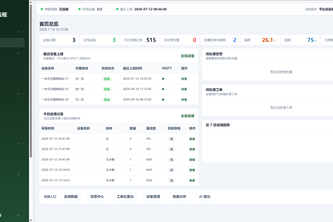
The description states that the project is an IoT cloud platform named "AIOT cloud platform", built for smart agricultural pest monitoring. The author, a single student, describes using AI tools (GPT, Codex) to develop the system end-to-end, integrating device connectivity, computer vision, alerting, AI recommendations, and maintenance workflows. The system includes features like MQTT-based IoT communication, ONNX inference, BullMQ for async tasks, role-based access control, and a feedback loop between human review and model training.
The author claims this project is both an IoT platform and an experiment in learning and building with AI — demonstrating how AI can accelerate development for someone without prior experience in complex systems. The system supports multiple user roles (admin, farmer, engineer, etc.), integrates device health monitoring, and includes a demo mode that works without live AI or hardware.
What Changed: The author reports starting with no knowledge of concepts like concurrency, message queues, or RBAC, and ending with an end-to-end working system that implements these features using AI-assisted development.
Single Most Important Open Question: Is this project a viable product or platform for real-world deployment, or is it primarily a demonstration of AI-assisted learning?
Note: All claims are self-reported and unverified. No evidence of revenue, customers, traction, or commercial viability is provided.
What The Product Actually Is
The description states that the platform is designed for smart agricultural pest monitoring. It integrates:
- IoT device connectivity via MQTT
- Computer vision using ONNX Runtime
- Alert handling and rule configuration
- AI-generated recommendations (via Ollama or configurable LLM)
- Device control capabilities (18 categories of remote commands)
- Video and snapshot streaming
- Device health evaluation
- Maintenance work orders
- Knowledge base for AI recommendations
- Unified API gateway with English aliases
- Five-role RBAC (administrators, farmers, plant protection personnel, hardware engineers, AI training specialists)
The system is described as forming a complete operational loop:
Device data collection → cloud ingestion → AI recognition → low-confidence human review → pest alerting → AI recommendation generation → user action → result recording → training data feedback.
It also supports a demo mode that can run without real devices or live AI models, using a "Fake Ollama" mode.
Inference: The system appears to be a full-stack IoT platform with backend services, database integration, and frontend dashboards — built by one person using AI tools for development.
Positioning & Claim Evolution
The author states that the project is not only an IoT platform but also a complete experiment in learning and building collaboratively with AI. The inspiration came from their own experience as a student who had no prior knowledge of system design concepts such as concurrency, race conditions, or access control.
They report evolving from simply asking AI to write code to working with AI to analyze and solve problems — using tools like GPT for understanding principles and Codex for inspecting code and suggesting implementation plans.
The positioning is that the platform demonstrates how AI can lower the barrier to entry into complex technical fields such as IoT development, especially for students or newcomers.
Inference: The project positions itself as a proof-of-concept for AI-assisted learning and rapid prototyping in complex domains like IoT and AI integration — rather than a commercial product.
Target Customer & ICP
The description states that the platform is designed for smart agricultural pest monitoring, integrating with environmental sensors, pest detection devices, and video feeds. It supports multiple user roles including:
- Administrators
- Farmers
- Plant protection personnel
- Hardware engineers
- AI training specialists
These roles are assigned different permissions according to responsibilities.
Inference: The primary users appear to be agricultural stakeholders (farmers, plant protection experts) and technical teams managing IoT devices and AI models. However, no explicit customer segmentation or market targeting is described beyond the use case of pest monitoring.
Business Model & Pricing Evidence
There is no evidence in the description of a business model or pricing strategy. The author only describes the platform’s functionality and development process.
Not evidenced
Technical & Delivery Signals
The project was built using:
- Technology stack: bullmq, mysql, nestjs, python
- Development approach: AI-assisted (GPT, Codex)
- Key technical components:
- MQTT for device communication
- ONNX Runtime for computer vision
- BullMQ for async task processing
- Role-based access control (RBAC)
- API gateway with English aliases
- Mini program API support
- Device health evaluation and anomaly handling
- Work order management system
The author reports using AI tools to inspect project structure, propose implementation plans, and refactor code iteratively.
Inference: The technical stack suggests a modern full-stack architecture with backend services in Node.js (NestJS), database in MySQL, and asynchronous job processing via BullMQ. The use of ONNX for inference indicates integration with machine learning workflows.
Traction & Maturity Signals
There is no evidence of traction or maturity beyond the author’s own development experience. No customers, revenue, usage metrics, or adoption data are provided.
Not evidenced
Competitive Context
The description does not mention any competitors or direct market comparisons. The platform is described as being built for a specific agricultural use case and lacks information on existing solutions in the IoT or AIoT space.
Not evidenced
Open Questions & Risks
- Single Developer: The team size is listed as 1, which raises concerns about scalability, maintenance, and long-term support.
- Self-Reported Only: All claims are unverified; there is no independent evidence of performance, reliability, or commercial viability.
- Demo Mode Dependency: The system includes a demo mode that works without real devices or AI models — suggesting it may not be fully functional in production environments.
- AI Tool Reliance: Heavy reliance on AI tools for development implies potential fragility if those tools change or become unavailable.
- Lack of Commercialization Evidence: No evidence of monetization, partnerships, or customer engagement beyond the author’s personal experience.
Inference: The project appears to be a prototype or academic exercise rather than a commercial-grade solution, with significant risks related to sustainability and scalability.
Questions the description leaves open
- What is the actual production readiness of this system? Has it been tested in real-world conditions?
- How does the platform handle failures in device communication or AI model inference?
- Are there any plans for scaling beyond a single developer or prototype environment?
- Is there a plan to monetize or commercialize this platform, and if so, how?
- What are the limitations of the current AI-assisted development approach, and how might they affect long-term maintainability?
- How would the system behave under high load or concurrent device usage?
- Are there any known issues with integrating ONNX models in production or handling edge cases in computer vision?
Overall Assessment
The description states that this project was submitted to the OpenAI 2026 hackathon, indicating it is likely a student-led prototype or hackathon submission. There is no evidence of commercial traction, revenue, or customer adoption.
Assessment: Not suitable for investment or partnership at this stage. The platform shows promise as an experimental tool for AI-assisted development and learning but lacks the maturity, scalability, or commercial viability required for serious investment or strategic partnership consideration.
Confidence Level: Low — based entirely on a single self-reported description with no external validation or data points.
User Stories BotA demo video on every pull request
Get a demo video on every new feature
GitHub App that watches your pull requests and records a narrated, captioned demo.
Save time on demo prep and make informed decisions faster with a video walkthrough of every new feature.
Source
Submitted to the OpenAI 2026 hackathon on Devpost. Project home on Devpost. Back to the full gallery on Devpost.
This competitive analysis was produced by top-founders.com (opens in a new tab)
Generated by a language model from this project's public Devpost page — its tagline, the author's own write-up and any built-with tags listed there — as captured in August 2026. Short quotations are the author's words. It is an opinion on the idea as a business, not on the people behind it, and it reflects the description as published then. If the project has moved on, request a correction below. The analysis is not independent research and contains no verified traction, revenue or customer data.
An independent guide by KFG International LLC — not affiliated with, endorsed by, or connected to Devpost or OpenAI.