

Archive position — measured, not model output
0 likes on Devpost
2,263 of the 7,850 archived projects have more likes, and 5,587 share exactly 0 — so this project's #2,583 place in the like-ranked listing is a tie-break inside that group, not a ranking.
Projects (log scale)
Likes on Devpost. ▲ marks this project's group.
Show the figures
| Likes | Projects | Share of archive |
|---|---|---|
| 0 | 5,587 | 71.2% |
| 1 | 1,758 | 22.4% |
| 2 | 284 | 3.6% |
| 3–4 | 132 | 1.7% |
| 5–9 | 75 | 1.0% |
| 10+ | 14 | 0.2% |
 User Stories BotA demo video on every pull request
Get a demo video on every new feature
GitHub App that watches your pull requests and records a narrated, captioned demo.
Save time on demo prep and make informed decisions faster with a video walkthrough of every new feature.
Executive Summary
What the company appears to be
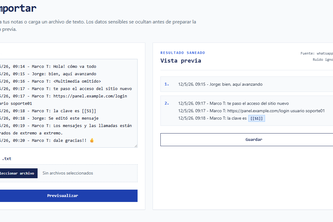
AIOrden is a privacy-first, installable Progressive Web App (PWA) designed for full-stack developers and IT freelancers. It classifies chaotic technical notes into structured records using AI, with strict secret redaction and secure storage. The app is built entirely by an individual developer using AI tools like Codex and GPT-5.6.
What changed
The author states that this project was built as part of a hackathon submission (OpenAI 2026) and represents a tool they personally need in their daily workflow. It is not described as having launched commercially or gained users beyond the creator.
Single most important open question — the commercial due-diligence read
Is there evidence that AIOrden has traction, revenue, or adoption beyond its creator? The description contains no data on customers, usage, monetization, or product-market fit beyond self-reported personal utility.
What The Product Actually Is
The description states that AIOrden is:
- A privacy-first PWA (Progressive Web App)
- Designed for full-stack developers and IT freelancers
- Used to classify chaotic technical notes into structured records
- Built with a client-side secret redaction system, where credentials are replaced with tokens (
[[S#]]) before being processed by AI - Uses GPT-5.6 (or gpt-5.6-sol) for classification, running inside the app as an edge function
- Stores classified data in a PostgreSQL database with row-level security and audit trails
- Implements RBAC (Role-Based Access Control) and AES-256-GCM encryption
- Includes features such as:
- Versioned JSON contract for structured output
- Human review gate before records are saved
- Installable offline-ready app shell
- Freshness tracking for links and resources
Inference The product is described as a secure, offline-first knowledge base tool, built using AI-assisted development practices.
Positioning & Claim Evolution
The description states that:
- AIOrden was built to solve the problem of chaotic technical note management
- It aims to turn unstructured data into searchable, secure records without leaking secrets
- The author positions it as a privacy-first tool, not just a slogan but an architectural decision
- It is described as a personal utility, not yet commercialized or scaled
Inference The positioning is centered on developer productivity and data privacy, with a strong emphasis on security by design. There is no evidence of a broader market positioning, branding, or messaging beyond the creator’s personal use case.
Target Customer & ICP
The description states:
- AIOrden targets full-stack developers and IT freelancers
- It addresses the need to organize scattered technical knowledge from sources like WhatsApp threads, emails, YouTube, bookmarks, etc.
- The user is described as someone who frequently works with credentials and remote access setups
Inference The ICP appears to be a small group of technical professionals who manage large volumes of unstructured data and require secure, searchable knowledge management.
Business Model & Pricing Evidence
The description states:
- AIOrden is described as a personal tool built for daily use
- No pricing information, monetization strategy or business model is mentioned
- The app is presented as a self-contained PWA, not a SaaS product with subscriptions or tiers
Inference There is no evidence of a commercial business model. It is implied to be a personal project, not yet monetized.
Technical & Delivery Signals
The description states:
- Built using Codex CLI + GPT-5.6 (gpt-5.6-sol) as the sole implementer
- The app was built across ~59 Codex sessions, with 318 passing tests (222 unit, 80 integration, 16 end-to-end)
- Stack includes:
- Frontend: React + Vite + TypeScript
- Backend: Supabase (Auth, Postgres with RLS, Deno Edge Functions)
- AI: GPT-5.6 running in an edge function
- Validation: Zod and Ajv schemas for output validation
- Secret redaction happens client-side, with real-time token replacement (
[[S#]]) - Server-side leak scanner blocks any secret from being returned by the model
Inference The technical implementation is described as AI-driven, secure, and validated through automated testing. It shows a strong understanding of privacy-by-design principles.
Traction & Maturity Signals
The description states:
- This is a hackathon project submitted to OpenAI 2026
- The author built it for personal use, not commercial launch
- No evidence of users, customers, or adoption beyond the creator
- No mention of revenue, usage metrics, or product-market fit
Inference There is no traction or maturity evidence. It is a personal prototype, not yet launched or tested in production.
Competitive Context
The description states:
- The app addresses the problem of unstructured technical note management
- It uses AI to classify and organize data
- It emphasizes privacy and security as key differentiators
Inference The competitive context is likely developer knowledge management tools, possibly including:
- Notion, Obsidian, Roam Research, or similar tools
- But with a focus on security-first architecture and AI classification
- No mention of direct competitors or market positioning beyond self-description
Open Questions & Risks
The description states:
- The app is built by a single developer, not a team
- It is described as a personal project, not yet commercialized
- AI-driven development was used, but there is no evidence of long-term maintainability or scalability
- The use of GPT-5.6 (or gpt-5.6-sol) raises questions about model availability and cost in production
Inference
- Single-person team risk: No evidence of a scalable or team-based development process.
- AI dependency risk: Reliance on proprietary models like GPT-5.6 may not be sustainable or reproducible.
- No commercial traction: No evidence of product-market fit, revenue, or user adoption.
Questions the description leaves open
- What is the current status of AIOrden? Is it being used by others beyond the creator?
- How does the team plan to scale beyond a single developer?
- Are there any plans for monetization or commercial launch?
- What are the long-term sustainability concerns around using proprietary models like GPT-5.6?
- How is the AI classification validated in practice, and how often do errors occur?
- What is the plan for ongoing maintenance and updates to the PWA?
Overall Assessment
The description states:
- AIOrden is a personal project built by one developer
- It is not described as having launched commercially or gained traction
- No evidence of revenue, customers, or product-market fit
Inference There is no commercial readiness or evidence of traction. The project is in an early stage and likely not ready for investment or partnership unless further development and validation occur.
User Stories BotA demo video on every pull request
Get a demo video on every new feature
GitHub App that watches your pull requests and records a narrated, captioned demo.
Save time on demo prep and make informed decisions faster with a video walkthrough of every new feature.
Source
Submitted to the OpenAI 2026 hackathon on Devpost. Project home on Devpost. Back to the full gallery on Devpost.
This competitive analysis was produced by top-founders.com (opens in a new tab)
Generated by a language model from this project's public Devpost page — its tagline, the author's own write-up and any built-with tags listed there — as captured in August 2026. Short quotations are the author's words. It is an opinion on the idea as a business, not on the people behind it, and it reflects the description as published then. If the project has moved on, request a correction below. The analysis is not independent research and contains no verified traction, revenue or customer data.
An independent guide by KFG International LLC — not affiliated with, endorsed by, or connected to Devpost or OpenAI.