

Archive position — measured, not model output
0 likes on Devpost
2,263 of the 7,850 archived projects have more likes, and 5,587 share exactly 0 — so this project's #2,562 place in the like-ranked listing is a tie-break inside that group, not a ranking.
Projects (log scale)
Likes on Devpost. ▲ marks this project's group.
Show the figures
| Likes | Projects | Share of archive |
|---|---|---|
| 0 | 5,587 | 71.2% |
| 1 | 1,758 | 22.4% |
| 2 | 284 | 3.6% |
| 3–4 | 132 | 1.7% |
| 5–9 | 75 | 1.0% |
| 10+ | 14 | 0.2% |
 User Stories BotA demo video on every pull request
Get a demo video on every new feature
GitHub App that watches your pull requests and records a narrated, captioned demo.
Save time on demo prep and make informed decisions faster with a video walkthrough of every new feature.
Executive Summary
What the company appears to be
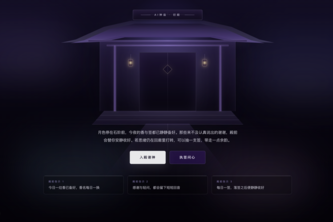
AI-SHRINE is a self-reported AI-powered digital shrine that aims to provide users with a reflective, ritualistic experience in moments of uncertainty. It is described as an application built using Next.js, React, TypeScript, and OpenAI models, designed to slow down interaction through symbolic actions before generating personalized readings.
What changed
The project description indicates a shift from traditional AI assistant interfaces toward emotionally resonant, context-aware experiences that encourage introspection rather than direct problem-solving. It positions itself as an experiment in reimagining AI's role in human decision-making.
Single most important open question
Is there evidence of user engagement or adoption beyond the hackathon submission? The description does not indicate any revenue, customers, or usage metrics — only a conceptual and technical framework.
Note: This analysis is based entirely on the self-reported project description provided by the authors. No external verification or historical data is available. All claims are labeled as "the description states" unless otherwise noted.
What The Product Actually Is
- The description states that AI-SHRINE is an “AI-powered digital shrine”.
- It is described as a tool for moments of uncertainty, where users engage in a short ritual.
- The experience includes:
- A symbolic message
- Context-aware interpretation
- A reflective question
- Practical guidance for the next step
- Interaction follows a structured pipeline:
- User Reflection → Context Understanding → Symbolic Interpretation → Emotional Reasoning → Actionable Guidance → Shrine Experience
- It uses OpenAI models to power the entire experience, not just text generation.
- The AI is said to understand context, construct symbolic meaning, and produce practical guidance that feels personal without pretending to know the future.
Inference: The product appears to be a prototype or proof-of-concept built for a hackathon. It is not described as having launched publicly or being used by end users beyond its creators.
Positioning & Claim Evolution
- The description states that AI-SHRINE reimagines traditional divination as an AI-powered reflection experience.
- It positions itself as an alternative to productivity-focused AI tools, focusing instead on emotional clarity and intentionality.
- The core claim is that AI should not replace human judgment but support better human judgment.
- It distinguishes itself from typical chatbots by introducing symbolic narratives and slowing down interactions.
- The project claims to explore a new category of “reflective AI experiences”.
- Future ambitions include expanding into voice-guided rituals, journals, multilingual support, and persistent memory.
Inference: This is a conceptual positioning shift — moving away from utility-driven AI toward emotionally meaningful interaction. However, no evidence exists that this has been tested or validated in the market.
Target Customer & ICP
- The description does not name specific customer segments.
- It implies a target audience who feels uncertain, overwhelmed, or emotionally stuck.
- Users are described as needing space to “slow down,” “reflect,” and “discover clarity.”
- There is no mention of demographics, industries, or use cases beyond general emotional states.
Not evidenced: No clear identification of ideal customer profile (ICP), including whether this is for individuals, enterprises, or specific user personas.
Business Model & Pricing Evidence
- The description does not state any business model.
- There is no mention of pricing, monetization strategies, or revenue streams.
- It is presented as a hackathon project with no indication of commercial viability or scalability.
Not evidenced: No evidence of how the product would generate value or income.
Technical & Delivery Signals
- Built with:
- Frontend: Next.js, React, TypeScript, CSS3, HTML5
- Backend/AI: OpenAI models
- Uses Codex for UI implementation and debugging.
- Interaction is structured through a multi-step reasoning pipeline.
- The AI is said to balance three objectives:
- Emotional resonance
- Symbolic storytelling
- Practical usefulness
- Challenges included balancing symbolism with utility, designing for slowness, and ensuring browser compatibility.
Inference: Technical architecture suggests a modern web application leveraging large language models. However, no evidence of production deployment or scalability.
Traction & Maturity Signals
- The project was submitted to the OpenAI 2026 hackathon.
- It is described as a prototype or proof-of-concept.
- No mention of user adoption, retention, or usage metrics.
- No indication of revenue, customers, or market traction beyond its own development.
Not evidenced: No evidence of traction, growth, or maturity beyond the initial build phase.
Competitive Context
- The description does not reference existing competitors.
- It does not compare AI tools in the space of emotional support or reflection.
- It positions itself as a novel approach to AI interaction — not a direct competitor to existing platforms like chatbots or wellness apps.
Not evidenced: No competitive landscape analysis or awareness of similar products.
Open Questions & Risks
- The project is described as a hackathon submission with no evidence of real-world usage.
- Risk of over-engineering the experience without validating user need.
- Lack of clarity on how the product would scale beyond a prototype.
- No indication of safety systems, data privacy practices, or ethical considerations around emotional AI.
- Potential risk that symbolic storytelling may not resonate across diverse audiences.
Inference: The lack of real-world testing and commercialization raises concerns about viability as a long-term product.
Questions the description leaves open
- What specific user problems are you solving, and how do you know these exist?
- Have you conducted any user research or interviews to validate the need for this type of experience?
- How do you plan to measure success beyond a prototype?
- Are there any ethical or safety considerations around using AI to guide emotional reflection?
- What is your roadmap for transitioning from a hackathon project to a scalable product?
- Do you have any early feedback from users who have interacted with the prototype?
Overall Assessment
- Not evidenced: No financials, traction, or customer data are available.
- The description presents AI-SHRINE as an experimental idea focused on emotional AI interaction.
- It is not clear whether this concept has market demand or can be monetized.
- Given the lack of evidence for adoption, revenue, or scalability, it is premature to assess investment potential.
Assessment: This is a conceptual prototype with no demonstrated traction. It may represent an interesting direction in AI product design but lacks commercial due-diligence signals at this stage. Further validation and evidence are required before considering any strategic move.
User Stories BotA demo video on every pull request
Get a demo video on every new feature
GitHub App that watches your pull requests and records a narrated, captioned demo.
Save time on demo prep and make informed decisions faster with a video walkthrough of every new feature.
Source
Submitted to the OpenAI 2026 hackathon on Devpost. Project home on Devpost. Back to the full gallery on Devpost.
This competitive analysis was produced by top-founders.com (opens in a new tab)
Generated by a language model from this project's public Devpost page — its tagline, the author's own write-up and any built-with tags listed there — as captured in August 2026. Short quotations are the author's words. It is an opinion on the idea as a business, not on the people behind it, and it reflects the description as published then. If the project has moved on, request a correction below. The analysis is not independent research and contains no verified traction, revenue or customer data.
An independent guide by KFG International LLC — not affiliated with, endorsed by, or connected to Devpost or OpenAI.